Pilates equipment for beginners: what you need at home
By The Pilates Verdict Team · October 6, 2026 · 13 min read
This article contains affiliate links. If you buy through them, we may earn a commission at no extra cost to you. As an Amazon Associate I earn from qualifying purchases. Learn more.
The list of Pilates equipment for beginners is short. Healthline says "the only equipment you really need to start a Pilates practice is a mat and, if you wish, a small towel to wipe off any sweat." Everything else is optional. This guide covers the order to add props, what each one does, and what can wait.
How we researched this: We don't test products. We compared instructor advice reported by NBC Select, Healthline, Garage Gym Reviews, Pilates Anytime and KatieCouric.com, guidance from the equipment brand Balanced Body, and one randomized trial comparing mat and equipment Pilates. The products come from our existing research roundups. All sources are listed at the end.
Our Top Picks
- Check price on Amazon
Most cushion
Retrospec Solana Yoga Mat 1"
1-inch cushion for rolling exercises.
- Check price on Amazon
Budget mat
Gaiam Classic Solid Color Yoga Mat (5mm)
Standard yoga mat; add a towel for rolling work.
- Check price on Amazon
First resistance tool
THERABAND Non-Latex Resistance Band Beginner Kit (Yellow, Red, Green)
Three non-latex band levels.
- Check price on Amazon
Pilates ring
ProBody Pilates Circle (14")
Standard 14-inch magic circle.
Consider a class before you buy
Healthline suggests beginners consider "participating in a Pilates class at a studio or gym with a qualified instructor." It says instructors teach "foundations of form, breath, and movement, which are crucial for minimizing injury," and that home practice can be just as beneficial after that. Balanced Body, which sells Pilates equipment, also recommends studio classes so you "get acquainted with Pilates exercises."
You don't have to take a class to start. A few sessions can help you learn which props you'll actually use, though. If you're booking one, read what to expect at your first reformer class.
Pilates equipment for beginners: a 4-step starter kit
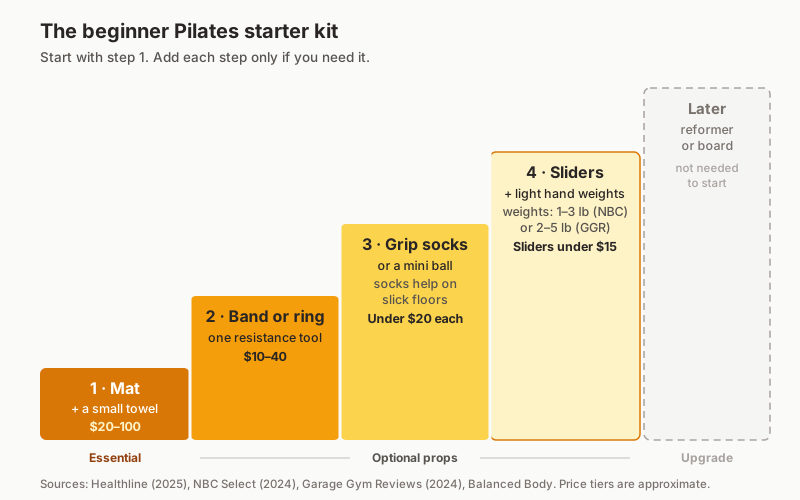
Pilates Anytime notes that Joseph Pilates "invented the Mat repertoire first," and that those exercises are the foundation of his whole method. Balanced Body says "most home users start with Pilates mat videos." So build out from the mat.
Tap the diagram to enlarge
1. A mat (or a mat plus a towel)
This is the one item every source agrees on. The sources disagree on thickness, though:
- Thick mat: Club Pilates master instructor Vanessa Johnson told NBC Select "you'll want to use a thick, supportive mat," about three-quarters of an inch thick. That's from an older (January 2024) NBC Select guide.
- Not a standard yoga mat: Healthline says "a yoga mat is too thin because you might feel pain or discomfort during rolling exercises." It suggests a thicker mat, or a towel over a yoga mat.
- A yoga mat is fine to start: Garage Gym Reviews (GGR) puts a yoga mat on its basic list.
If you already own a yoga mat, try a towel on top before you buy anything. If rolling exercises still hurt, a thicker mat is the next step. See our best Pilates mats roundup for thickness options, or our Pilates mat vs. yoga mat explainer.
2. One resistance tool: a band or a ring
Pick one to start. Neither is required, but they add the most variety for the cost.
- Long resistance band: Pilates Anytime says the long band is "great for stretching the hamstrings and lower back." NBC Select notes that bands add tension and come in several resistance levels. Ashley Patten, Katie Couric's Pilates instructor, uses Therabands "when Katie is feeling stiff or tired, but also when she's on the road," according to KatieCouric.com.
- Pilates ring (magic circle):
- What it does: Marisa Fuller, owner of Studio Pilates, told NBC Select the ring "adds extra resistance to exercises to tone muscles."
- Size: NBC Select's ring guide says the standard ring is 14 inches, and rings range from 12 to 15 inches in diameter. Instructor Kristen Lilley of Asphalt Green told NBC Select that "smaller rings are great for petite individuals and those with limited range of motion."
- Resistance: Johnson recommends a medium-strength ring no matter your level.
- If you buy only one prop: Patten picks the ring, according to KatieCouric.com. That's one instructor's view, not a consensus.
3. Grip socks if your floor is slick
Fuller told NBC Select that grip socks "prevent your feet from sliding on the machine," and recommends them mainly for reformer Pilates. For home practice, GGR says grippy socks help with balance on slick surfaces. If you practice barefoot on a mat, you may not need them yet. Our guide to whether you need grip socks covers the tradeoffs, and the best Pilates grip socks roundup compares pairs.
4. Optional extras: mini ball, sliders, light weights
- Mini ball (overball): Johnson told NBC Select a small ball "can support your body or engage specific muscles." NBC Select says inflatable Pilates balls are typically 5 to 6 inches in diameter. Pilates Anytime says the ball "invites the engagement of the surrounding muscles" when you place it between body parts. Small Pilates balls range roughly 5 to 9 inches, and sources differ on the best size.
- Sliders: GGR describes sliders as small fabric or foam discs that reduce friction between your body and the floor. Yahoo Health found its budget pick, the Synergee Core Sliders, worked on hardwood, laminate and low-pile rugs. It also noted they "may scuff certain floor finishes" and may be too small for larger feet. Compare six pairs in our best Pilates sliders guide.
- Light hand weights: Keep them light. Instructor Marcia Meade told NBC Select to stay at 1 to 3 pounds maximum. GGR suggests 2 to 5 pounds. Pilates Anytime says light hand weights "keep the emphasis on the entire body." If you'd rather load your legs, see the best ankle weights for Pilates.
Pilates equipment list: what each item does
| Item | What it does | Buy when | Price tier |
|---|---|---|---|
| Mat | Cushions floor work | Day one | $20–100 |
| Long band | Adds tension | Early | $10–30 |
| Ring | Adds resistance | Early | $20–40 |
| Grip socks | Grip on slick floors | If you slip | Under $10 to $20 |
| Mini ball | Support, engagement | Later | Under $20 |
| Sliders | Reduce floor friction | Later | Under $15 |
| Light weights | Light arm load | Later | Not rated |
Price tiers come from the products in our catalog. We don't list hand weights yet, so that row has no tier.
You'll also hear the names of studio apparatus. Pilates Anytime describes them this way:
- Reformer: "an elevated bed-like frame … that houses a gliding, cushioned platform called a carriage."
- Cadillac: "looks like a canopy bed, with a four-post metal frame."
- Wunda Chair: "a cushioned 'seat' … and a pedal that can be spring-loaded."
- Tower: combines elements "from the Reformer, Cadillac and mat."
- Barrels (Ladder Barrel, Spine Corrector, Small Barrel): "designed to provide support for the spine against gravity."
Balanced Body's props catalog groups the small stuff into circles and rings, balls, rollers, wedges and cushions, resistance bands, mats and foot tools.
What you can skip at first
A reformer or Pilates board. GGR says "you don't need this expensive, large, and intimidating piece of machinery to get started doing Pilates at home." Balanced Body says that "as you progress, you may choose to add a home Reformer, Pilates Chair or Barrel." When you're ready, start with whether a home reformer is worth it. Budget home reformers in our catalog start in the under-$300 to under-$500 tiers (see the best home Pilates reformers).
A Pilates bar kit. A bar with resistance cords sits between a band and a reformer in cost and bulk. It's an option once a band feels too easy; compare kits in our best Pilates bar kits roundup.
All-in-one bundles. This is our editorial advice, not a sourced finding: a bundle with a ring, ball, bands and sliders is only a deal if you'll use every piece. Buying one item at a time lets you learn what you like first.
A foam roller or yoga block. Pilates Anytime describes the foam roller as "a mainstay of athletic training and rehab, designed to smooth out the fascia." Patten uses lacrosse balls to release tension and a foam roller for warm-ups. They're useful, but they can wait. When you're ready, see our best foam rollers for Pilates.
Anything a household item can replace. Healthline says light weights can be household items, and a towel can go over a thin mat. Pilates Anytime says yoga blocks "can take the place of a Magic Circle or an Overball."
Mat Pilates vs equipment: what the research says
There's little research on Pilates props for healthy beginners. The closest study we found is a 2014 randomized controlled trial by da Luz and colleagues in Physical Therapy. It included 86 adults with chronic nonspecific low back pain, who did 12 sessions over 6 weeks of either mat Pilates or equipment-based Pilates.
- Both groups improved on pain and disability. At 6 months, the equipment group did better on disability and fear of movement (kinesiophobia), but not on pain intensity or global perceived effect.
- The equipment group used studio apparatus (Cadillac, Reformer, Ladder Barrel and Step Chair), not home props. The authors note that "Equipment-based Pilates is more expensive than Mat Pilates."
This is one trial in a clinical back-pain group. It doesn't tell you whether small props help healthy beginners. We didn't find a study showing that a ring, ball or band improves results for beginners. What it does show is that researchers have used plain mat Pilates as a real intervention. If you have back pain or another health condition, check with your doctor or physical therapist before you start. For a side-by-side of the two formats, see reformer vs. mat Pilates.
Space and setup
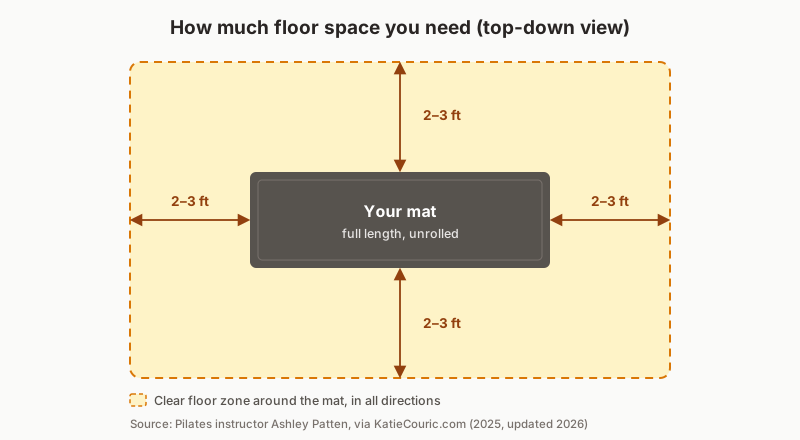
Patten advises "enough space for your mat and two to three feet around you in all directions." Measure that zone before you buy a longer or wider mat, and keep it clear of furniture edges.
Tap the diagram to enlarge
Best Pilates accessories for home beginners
These come from our deeper roundups. Follow the links for the full comparisons.
Thick mat
Retrospec Solana Yoga Mat 1"
A 1-inch foam mat, the thickest in our best Pilates mats roundup. That's thicker than the ¾ inch Johnson suggested to NBC Select, so it suits you if you want maximum cushion. Very thick foam can feel less stable, though; Pilates Anytime's mat guide warns that much thicker mats can make you feel like you're sinking.
Budget yoga-mat route
Gaiam Classic Solid Color Yoga Mat (5mm)
A standard 5 mm yoga mat. GGR treats a yoga mat as fine to start. Healthline suggests adding a towel on top for rolling exercises.
Long band
THERABAND Non-Latex Resistance Band Beginner Kit (Yellow, Red, Green)
A non-latex kit with three resistance levels (yellow, red, green). Compare it with Merrithew's Flex-Band two-pack in our resistance band guide.
Pilates ring
ProBody Pilates Circle (14")
A 14-inch ring, the standard size NBC Select describes. See our Pilates ring roundup for resistance levels and smaller sizes.
Mini ball
Trideer 9-Inch Pilates Ball
A 9-inch ball, at the larger end of the small-ball range. More options are in our best Pilates balls roundup.
Grip socks
Gaiam Grippy Studio Toeless Yoga Socks
Open-toe grip socks for slick floors or a future reformer class. More styles are in our best Pilates grip socks roundup.
Sliders
Synergee Core Sliders (2-pack, 7 in)
Yahoo Health's budget slider pick. It found they worked on hardwood, laminate and low-pile rugs, but noted they "may scuff certain floor finishes" and may be too small for larger feet. Synergee says each 7-inch slider has a plastic side for carpet and a foam side for hardwood.
Our verdict: what to buy first
- No mat yet: buy a thicker Pilates mat (the 1-inch Retrospec if you want maximum cushion, keeping in mind very thick foam can feel less stable).
- Already own a yoga mat: try a towel on top first; buy a thicker mat only if rolling still hurts.
- Mat sorted: add one band (THERABAND beginner kit) or one ring (ProBody 14-inch), not both.
If you'd like a book to follow on the mat, see our best Pilates books. Browse our Pilates at home guides for more.
Frequently Asked Questions
What equipment do I need for Pilates at home?
Healthline says a mat, plus an optional towel, is all you need to start. Garage Gym Reviews adds sliders, grip socks, resistance bands and light dumbbells as low-cost extras.
Can you do Pilates without any equipment?
Mostly, yes. Healthline says the only equipment you really need is a mat, and Pilates Anytime notes that Joseph Pilates created the mat repertoire first, as the foundation of his method.
Can I use a yoga mat for Pilates?
Sources disagree. Garage Gym Reviews treats a yoga mat as fine to start. Healthline says yoga mats are generally too thin for rolling exercises and suggests a thicker mat or a towel on top. A Club Pilates instructor quoted by NBC Select recommends a mat about ¾ inch thick.
How much does a beginner Pilates setup cost?
Based on the price tiers of products in our catalog, a mat plus one band or ring typically lands in the $30–140 range, and under $100 if you choose a mid-priced mat. Mats run $20–100, long bands $10–30 and rings $20–40.
Do beginners need a Pilates reformer?
No. Garage Gym Reviews says you don't need one to start Pilates at home, and Balanced Body describes a home reformer as something you may choose to add as you progress.
What is the most useful Pilates accessory?
There's no consensus. Instructor Ashley Patten picks the ring. Club Pilates instructor Vanessa Johnson recommends a medium-strength ring and a small ball (via NBC Select). Bands are a low-cost option that several sources include, such as Garage Gym Reviews' basic list.
How heavy should hand weights be for Pilates?
Light. Instructor Marcia Meade told NBC Select to stay at 1 to 3 pounds maximum, while Garage Gym Reviews suggests 2 to 5 pounds.
Sources
- NBC Select (Zoe Malin, January 2024): Everything you need for mat and reformer Pilates
- NBC Select (Zoe Malin, updated January 2024): Best Pilates rings
- Healthline (Roxy Menzies, medically reviewed by Danielle Hildreth, RN, CPT, July 2025): Pilates for beginners
- Garage Gym Reviews (Sarah Gardner, September 2024): How to do Pilates
- Balanced Body: Pilates at home and Pilates props and accessories
- Pilates Anytime (Alison Manheim, February 2020): Top 10 Pilates props for mat classes
- Pilates Anytime: Choosing a Pilates mat
- Pilates Anytime (Amanda Altman, January 2019): Guide to Pilates equipment
- KatieCouric.com (Katherine Pittman, with instructor Ashley Patten, updated February 2026): How to build an at-home Pilates studio
- Yahoo Health (Rachel MacPherson, May 2026): Best sliding discs
- Synergee: Core Sliders
- da Luz et al., Physical Therapy, 2014: Full text and PubMed
- da Luz et al., trial protocol, BMC Musculoskeletal Disorders, 2013: PMC
Related Articles
Buying Guide
Best Pilates Books for Beginners and Beyond (2026)
The best Pilates books for learning mat work at home, from beginner photo guides to anatomy and apparatus texts. 8 books compared by level, scope and edition.
October 6, 2026 · 15 min read
How-To
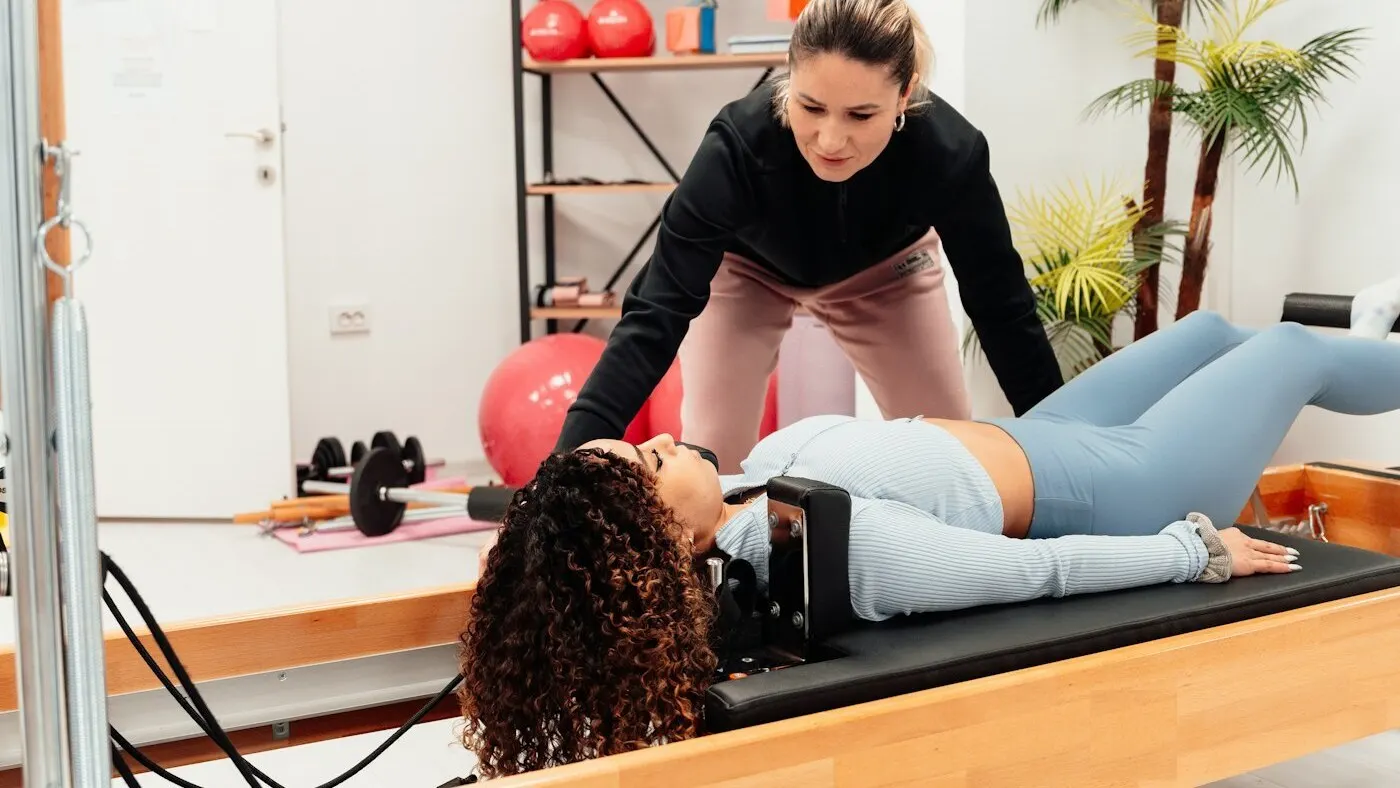
First reformer Pilates class: what to expect, step by step
What happens at a first reformer Pilates class: which class to book, how the springs and carriage work, what to wear, and how sore you'll be afterward.
October 6, 2026 · 12 min read
Buying Guide
Pilates Gifts They'll Use (2026): Ideas for Her, Him and Instructors
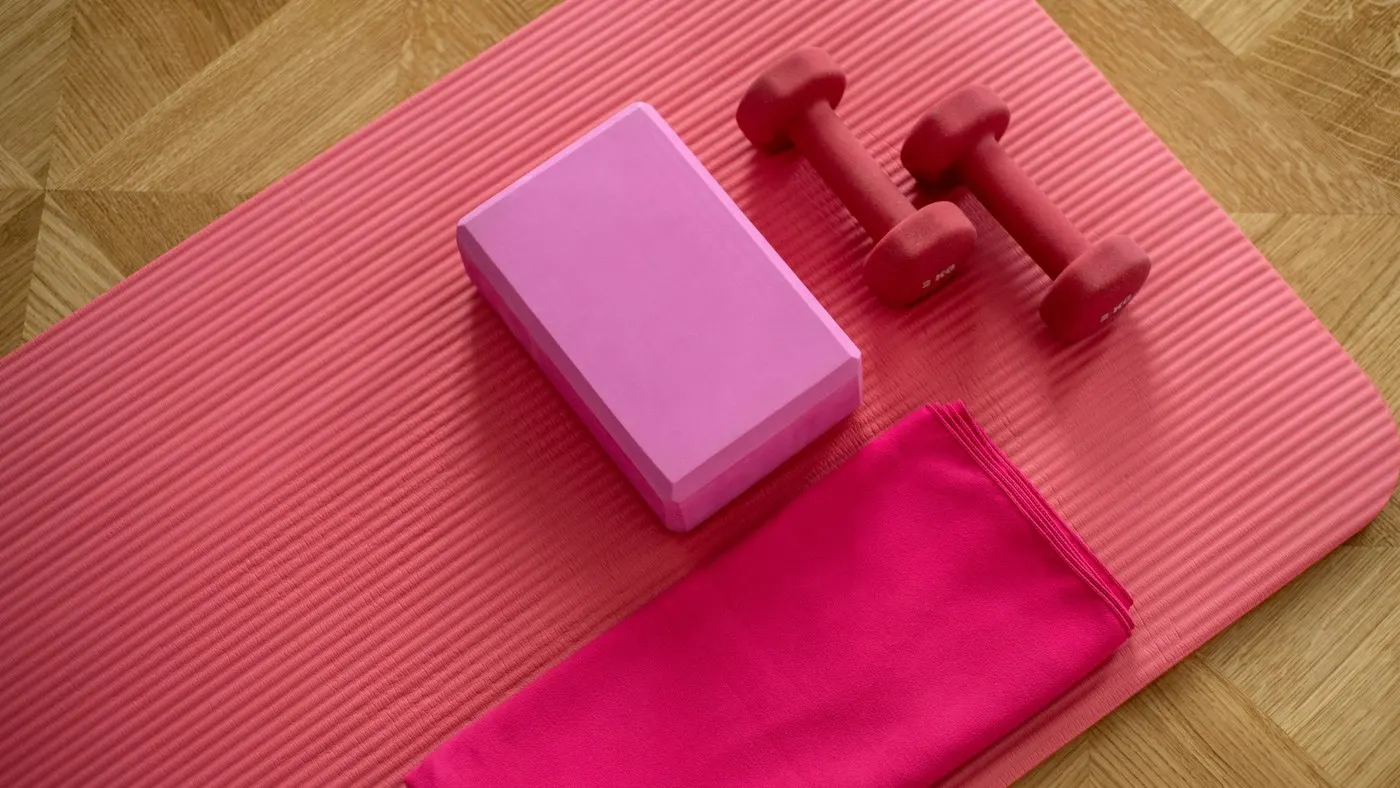
Pilates gift ideas for women, men, home practitioners and instructors, plus stocking stuffers, chosen from instructor advice reported by NBC Select.
October 6, 2026 · 17 min read
How-To
What to wear to Pilates: a simple checklist for mat and reformer
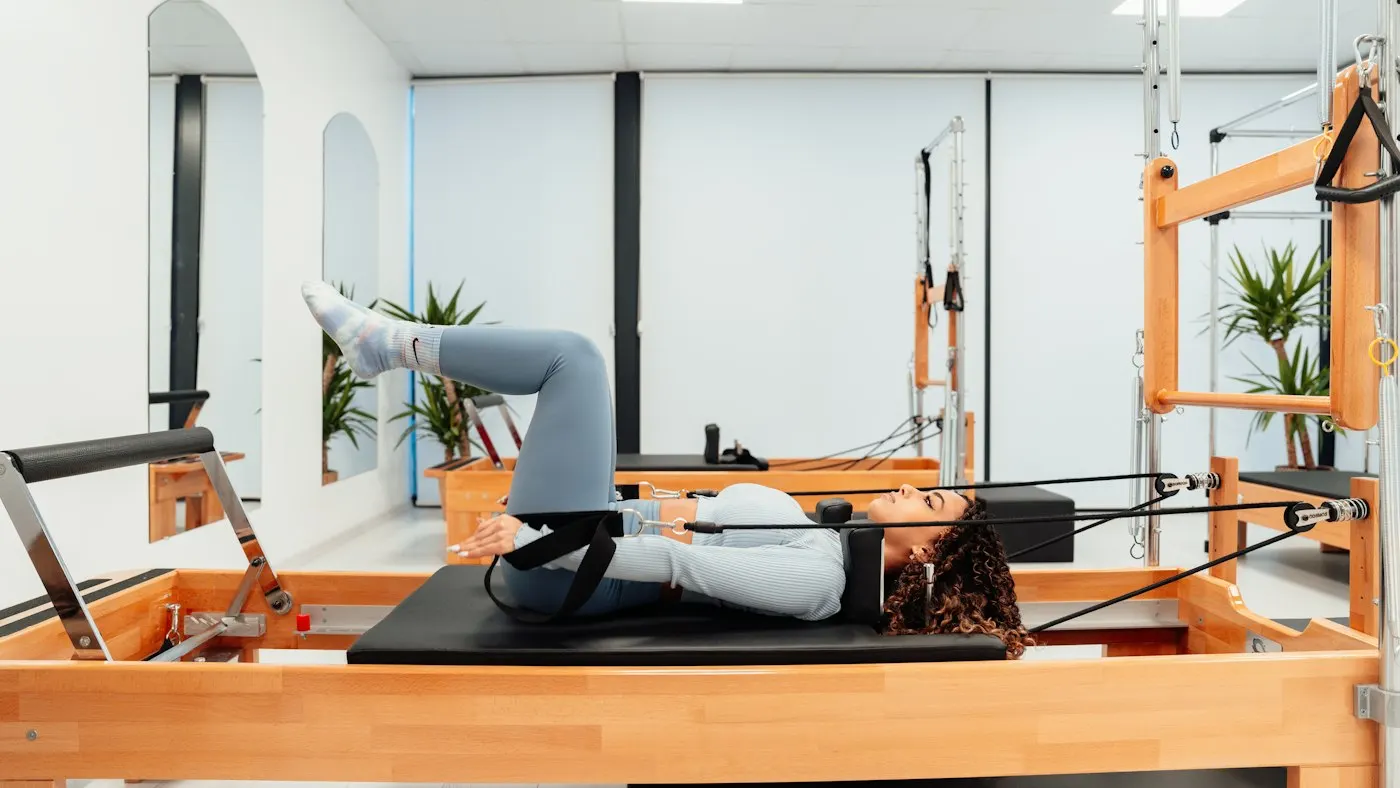
What to wear to Pilates: fitted, stretchy clothes with no zippers, grip socks for reformer class, and what to bring to your first class, per instructors.
October 6, 2026 · 12 min read