First reformer Pilates class: what to expect, step by step
By The Pilates Verdict Team · October 6, 2026 · 12 min read
This article contains affiliate links. If you buy through them, we may earn a commission at no extra cost to you. As an Amazon Associate I earn from qualifying purchases. Learn more.
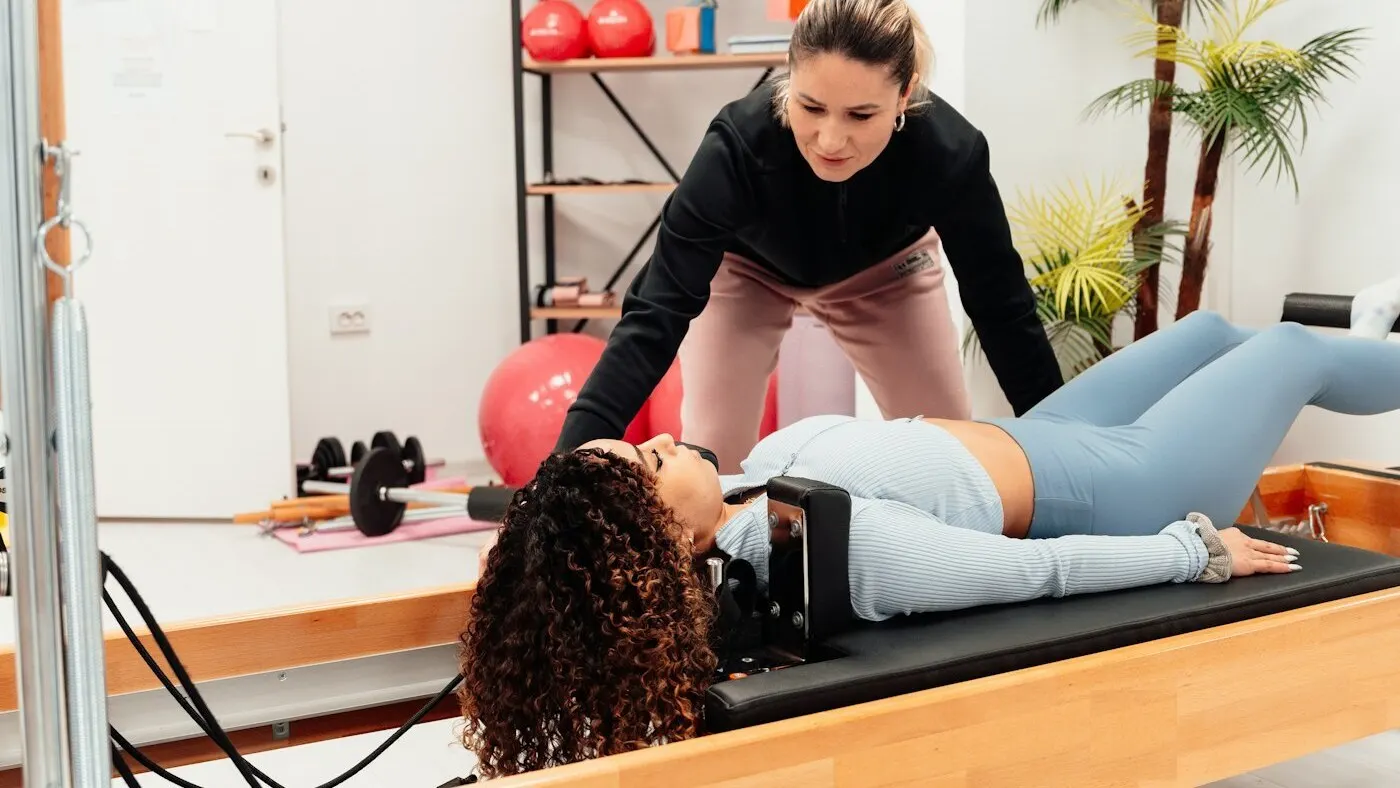
A reformer looks intimidating the first time you see one: a sliding carriage, a row of springs, ropes and a footbar. The good news is that your first reformer Pilates class is built to walk you through all of it, and the instructor sets the machine up with you.
Here's what to expect at your first reformer Pilates class, from booking to the soreness two days later.
How we researched this: We read Balanced Body's reformer guidance and spring specs, Merrithew's spring labels, Club Pilates' class, FAQ and beginner pages, health guidance from Cleveland Clinic, Medical News Today and ACOG, a 2025 reformer Pilates trial in Scientific Reports, and a first-person class review in Bustle. We did not take or test classes ourselves. All sources are listed at the end.
What to expect at your first reformer Pilates class, step by step
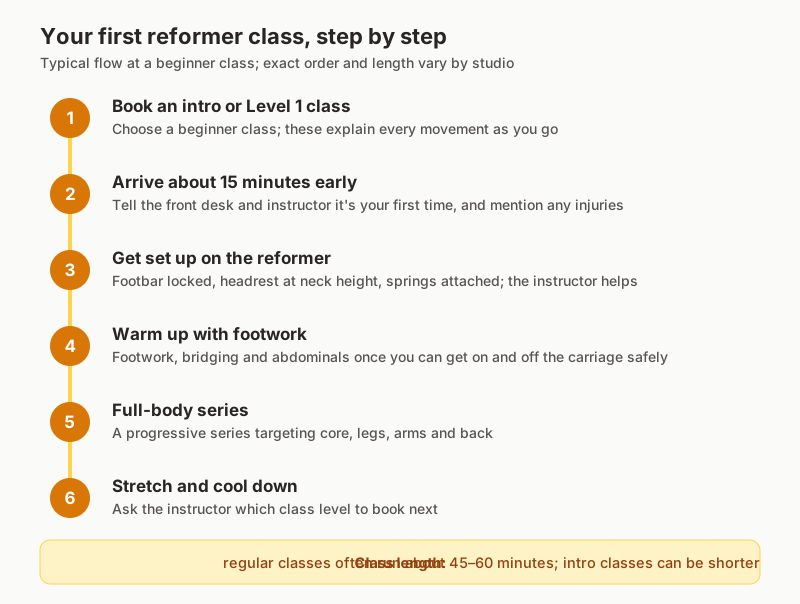
1. Book an intro or Level 1 class
Medical News Today's advice is simple: "Choose a beginner class." Studio level names vary, so look for "intro," "fundamentals" or "Level 1" rather than an advanced class.
Here's how one chain, Club Pilates, lays out its levels:
- Intro Class: free, 30 minutes, and "Always guided, every movement explained."
- Level 1: for people "New to Pilates or returning. Full guidance."
- Levels 1.5 and 2: "Ready for more challenge and variation."
- Level 2.5: "Advanced. Fluent in all equipment."
Other studios use names like "Fundamentals" or "Foundations" for the same entry point. In her Bustle review, Carolyn Steber says new participants should start at Level 1 or 1.5, while experienced exercisers can try Level 2 or 2.5.
One heads-up: Club Pilates says that after the intro class it looks forward to "setting up your program with you," so expect a conversation about memberships.
2. Arrive early and tell the instructor you're new
Club Pilates asks first-timers to "Arrive 15 min early" to meet the instructor and get set up on the reformer. Its beginner guide suggests 10 to 15 minutes and telling the front desk it's your first time.
If you have an injury, say so before class starts. Club Pilates' FAQ puts it plainly: "Talk to your instructor before class."
3. Get set up: footbar, headrest, springs
Before you start, Balanced Body says to check that "your footbar is securely locked, the headrest is at the appropriate height for your neck, and the specific spring configuration is attached correctly." In a beginner class, the instructor will walk you through each of these.
You don't need to memorize spring settings. Steber writes in Bustle that her instructor explained the springs "add or take away tension," and that you adjust them as class goes on.
4. Learn to get on and off the moving carriage
The carriage slides, which is the part that catches most newcomers off guard. According to Balanced Body, "A qualified instructor will guide you on how to safely mount and dismount the moving carriage without losing your balance." Take your time and follow the cues.
5. Warm up with footwork, then work through a full-body series
Club Pilates' beginner guide describes its Reformer Flow class this way: you "warm up with footwork, bridging and abdominals, segue into a full-body, progressive series targeting core, legs, arms, and back, then close with stretching."
Steber's 45-minute class included lying squats on spring resistance, biceps curls and arm circles with the straps, oblique twists on the floor, leg circles with foot straps, and hip-opening lunge stretches. Her instructor also noticed she favored her right side, which is a good example of the form feedback you can expect.
Balanced Body lists these common beginner exercises: Pelvic Clock, Footwork, Supine Arms, The Hundred Prep, Kneeling Abdominals, Roll Downs, Seated Arm Work, Swan on the Long Box, Elephant and Mermaid.
6. Cool down and stretch
Classes typically finish with stretching, per Club Pilates' class description. It's also a good moment to ask the instructor which class to book next.
How long is all this? It depends on the studio. Balanced Body describes sessions of 30 to 60 minutes, Club Pilates' intro class is 30 minutes, and Steber's regular class ran 45 minutes. So expect anywhere from 30 minutes (intro) to an hour, and check the class listing when you book.
Asking for modifications and studio etiquette
- Ask for an easier version. Cleveland Clinic's Judi Bar says "the exercises have to be at your level," so if a move feels uncomfortable, tell the instructor rather than pushing through.
- Follow house rules. Policies on wiping down the reformer, phones and towels vary, so ask the front desk what your studio expects.
Tap the diagram to enlarge
Reformer parts in 60 seconds
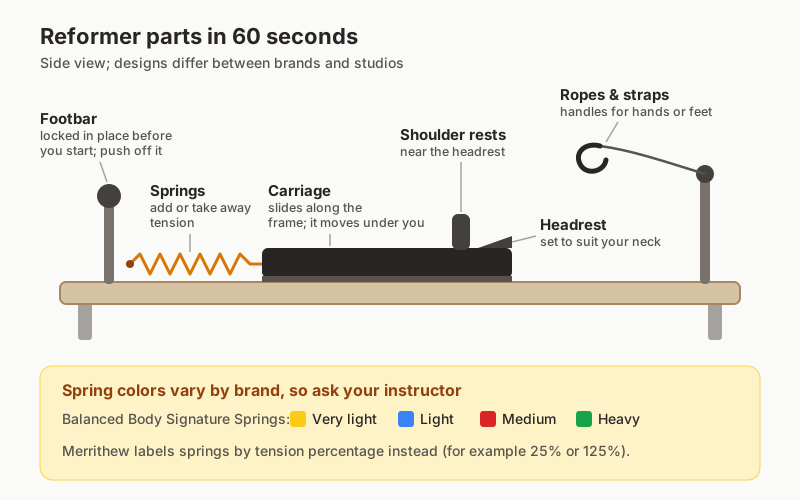
Balanced Body describes the reformer as equipment "outfitted with a sliding carriage, springs, ropes with handles, and a footbar to provide resistance and support for a variety of movements."
Tap the diagram to enlarge
| Part | What it does | Beginner tip |
|---|---|---|
| Carriage | Slides as you push or pull | Wait for cues to get on or off |
| Springs | Add resistance and support | Let the instructor set them |
| Footbar | Bar you press against | Check it's locked |
| Straps | Loops for hands or feet | Ask before switching |
| Headrest | Supports your neck | Adjust for comfort |
Spring colors aren't universal. On Balanced Body's Signature Springs, yellow is "Very Light," blue "Light," red "Medium" and green "Heavy." Merrithew labels its reformer springs by tension percentage instead (for example, "25%" or "125%"). So don't memorize colors from one studio and assume they carry over; ask the instructor.
What to wear and bring
- Fitted clothes. Balanced Body recommends "comfortable, form-fitting clothing" that won't catch in the reformer's moving parts, and no exposed zippers, metal rivets or plastic buttons that can tear the upholstery. See our full guide on what to wear to Pilates.
- Grip socks. Balanced Body says bare feet or grip socks are common, but many studios set the rule. Club Pilates says "Grip socks are required and available for purchase."
- A water bottle. Club Pilates' FAQ suggests bringing grip socks and "your reusable water bottle."
Many studio guides suggest not arriving on a full stomach, since much of a reformer class is spent lying on your back or front; a light snack a couple of hours before is a common studio tip. Check what your studio recommends.
Need socks before class? NBC Select named the Tavi Savvy its best overall Pilates sock and the Gaiam Grippy Studio its budget pick.
Check price at TaviFor more options, including budget pairs, see our best Pilates grip socks.
How hard is reformer Pilates for beginners, and will you be sore?
Don't assume the reformer is harder than mat work. Judi Bar, lead yoga therapist at Cleveland Clinic, says "Freeform Pilates can actually be harder on the back than using a reformer."
Either way, Bar says "the exercises have to be at your level — and you have to build up the difficulty slowly," and even fit people should start "slow and easy."
As for soreness, Cleveland Clinic's general guidance on delayed onset muscle soreness (DOMS), which isn't specific to Pilates, says soreness typically shows up one to three days after a workout and "rarely lasts more than five days." It recommends seeing a provider if pain lasts more than a week, is sharp and constant, comes with severe swelling, or if your urine is unusually dark or bloody.
Who should check with a doctor first
Cleveland Clinic advises talking to a healthcare provider before starting Pilates, especially "if you're injured or recovering from surgery." Medical News Today notes that, "Like any type of exercise, there is a risk that a person will injure themselves during reformer Pilates," and says people with conditions affecting mobility or bone strength should consult their healthcare team first.
If you're pregnant, talk to your ob-gyn before starting. ACOG lists modified Pilates among activities considered safe in a normal pregnancy and advises avoiding positions that require lying on your back for long periods.
How often to go after your first class
Club Pilates' beginner guide suggests starting with "two classes per week" and says "some members progress in six weeks; others take twelve. Both timelines are normal." Your instructor decides when you're ready to move up. Balanced Body, which makes reformers, suggests 30 to 60 minute sessions "2-3 times per week."
Cleveland Clinic's Bar adds that Pilates is "not necessarily a stand-alone exercise" and works best alongside strength and aerobic training.
What the research says
In a 2025 randomized trial in Scientific Reports, 47 women with overweight or obesity did reformer Pilates three times a week for eight weeks, starting with a familiarization session on the machine. Compared with a no-exercise control group, they improved in body composition, grip strength, trunk endurance, depression and anxiety scores, though sleep didn't change significantly.
The authors note the small sample, lack of dietary control and short duration.
Another small, single-center randomized trial, in 54 women with chronic low back and neck pain, compared six weeks of reformer Pilates with no exercise program, and a Medscape headline called the evidence limited. Medical News Today cites a 2022 review suggesting Pilates "is not necessarily better than other types of exercise" for strength, flexibility and balance.
Thinking about a reformer at home?
If your first class hooks you, it's tempting to buy a machine. Cleveland Clinic's Bar says reformers can be bought for home use, but it's important to work with an instructor first to learn correct alignment: "You can't just jump in, and your instructor needs to recognize that."
Once you have a few classes behind you, our guide to whether a home Pilates reformer is worth it covers cost, space and how often you'd need to use one.
For more beginner guides, browse Pilates at home.
Bottom line: your first-class checklist
- Book an intro or Level 1 class. Medical News Today says to choose a beginner class.
- Arrive 10 to 15 minutes early and say you're new. That's what Club Pilates asks of first-timers.
- Wear fitted clothes and grip socks. Balanced Body recommends form-fitting clothing, and many studios, including Club Pilates, require grip socks, so check your studio's rules.
- Flag injuries or pregnancy before class. Club Pilates says to talk to your instructor first, and Cleveland Clinic and ACOG advise checking with a provider.
- Expect some soreness one to three days later, and book a second class within the week. That timing matches Cleveland Clinic's DOMS guidance, and Club Pilates suggests starting with two classes per week.
Frequently Asked Questions
Is reformer Pilates good for beginners?
Yes, if you start in a beginner class. Medical News Today advises choosing a beginner class, and Club Pilates describes its Level 1 as "New to Pilates or returning. Full guidance." Cleveland Clinic's Judi Bar notes mat work isn't necessarily easier and can be harder on the back.
How long is a first reformer Pilates class?
It depends on the studio. Club Pilates' intro class is 30 minutes, Balanced Body describes sessions of 30 to 60 minutes, and the regular class reviewed by Bustle ran 45 minutes.
What should I wear to my first reformer class?
Balanced Body recommends form-fitting clothes without exposed zippers, rivets or buttons, plus grip socks or bare feet depending on studio rules. Club Pilates requires grip socks.
Do I need to know the springs before class?
No. The instructor sets them and explains how they add or take away tension. Colors vary by brand: on Balanced Body springs, green is heavy and yellow is very light, while Merrithew labels springs by tension percentage.
How sore will I be after reformer Pilates?
It varies. Cleveland Clinic says general exercise soreness (DOMS) starts one to three days later and rarely lasts more than five days. See a provider if pain lasts over a week, is sharp and constant, or your urine is unusually dark.
How often should beginners do reformer Pilates?
Club Pilates' beginner guide suggests starting with two classes per week, and Balanced Body suggests 30 to 60 minute sessions 2-3 times per week.
Related guides: do you need grip socks for Pilates?, reformer springs vs. cords and reformer vs. mat Pilates.
Sources
- Balanced Body: Everything you need to know about Reformer Pilates
- Balanced Body: Reformer Signature Springs
- Merrithew: Spring Center
- Club Pilates: Homepage, Classes and FAQ
- Club Pilates blog: Your first Reformer Pilates class: a beginner's guide
- Bustle (Carolyn Steber): I went to a Club Pilates class & here's my honest review
- Cleveland Clinic: Pilates 101
- Cleveland Clinic: Delayed onset muscle soreness (DOMS)
- Medical News Today: Reformer Pilates: benefits, risks, and how to start
- ACOG: Exercise during pregnancy
- Gökalp and Kirmizigil, Scientific Reports (2025): Effects of reformer pilates on body composition, strength, and psychosomatic factors in overweight and obese women
- PubMed: Reformer Pilates in chronic musculoskeletal pain
- Medscape (headline): Reformer Pilates: hype meets limited evidence
- NBC Select: The best Pilates socks for the mat and reformer
Related Articles
Buying Guide
Best Pilates Books for Beginners and Beyond (2026)
The best Pilates books for learning mat work at home, from beginner photo guides to anatomy and apparatus texts. 8 books compared by level, scope and edition.
October 6, 2026 · 15 min read
How-To
Pilates equipment for beginners: what you need at home
Pilates equipment for beginners: start with a mat, then add a band or ring. What each prop does, what to skip at first, and how much space you need at home.
October 6, 2026 · 13 min read
Buying Guide
Pilates Gifts They'll Use (2026): Ideas for Her, Him and Instructors
Pilates gift ideas for women, men, home practitioners and instructors, plus stocking stuffers, chosen from instructor advice reported by NBC Select.
October 6, 2026 · 17 min read
How-To
What to wear to Pilates: a simple checklist for mat and reformer
What to wear to Pilates: fitted, stretchy clothes with no zippers, grip socks for reformer class, and what to bring to your first class, per instructors.
October 6, 2026 · 12 min read