Wunda chair exercises for beginners: an 8-move routine
By The Pilates Verdict Team · October 13, 2026 · 25 min read
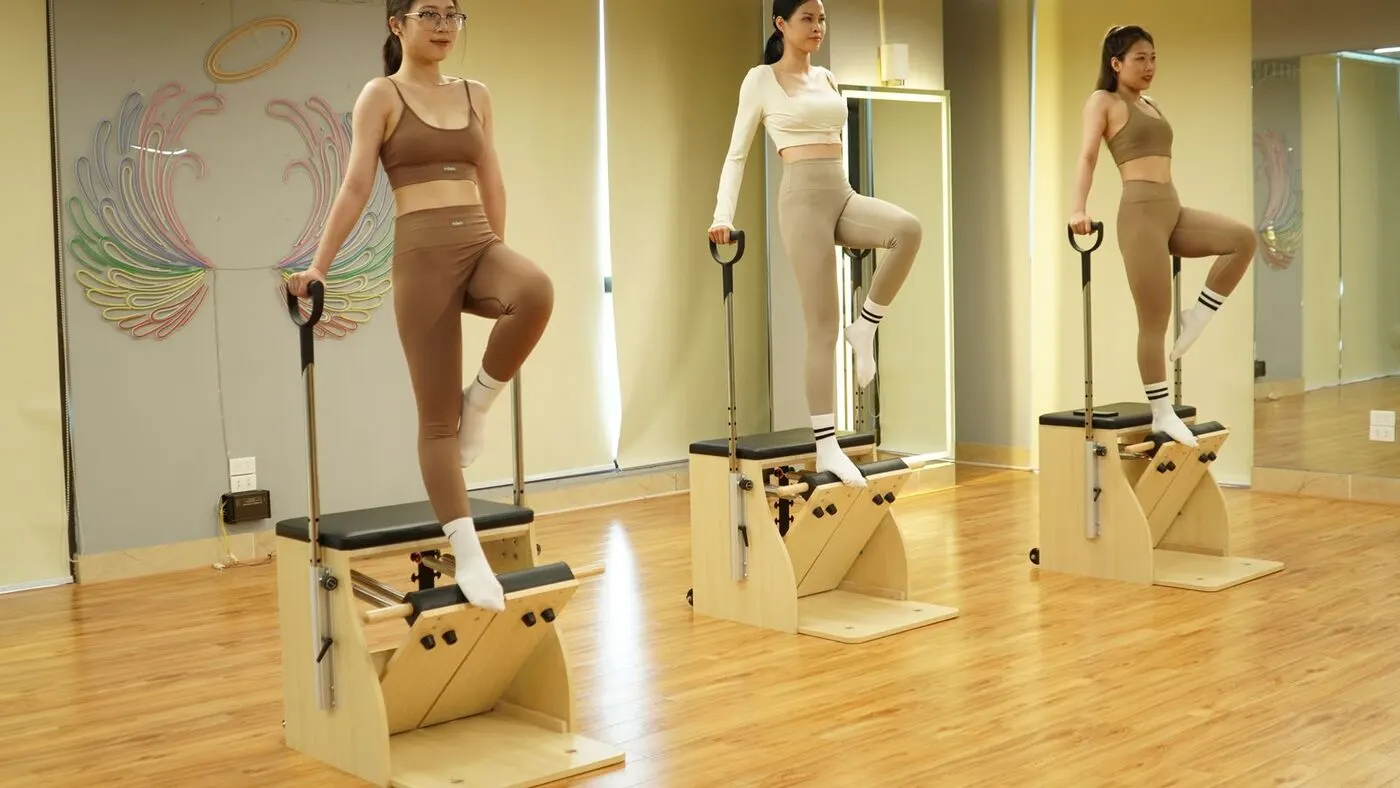
This article contains affiliate links. If you buy through them, we may earn a commission at no extra cost to you. As an Amazon Associate I earn from qualifying purchases. Learn more.
Wunda chair exercises pack a lot into a small box. Balanced Body says the chair is based on Joseph Pilates' original design for clients in "small New York City apartments," and calls it "the most challenging piece of Pilates equipment for building strength." You can sit, lie or stand on it, or on the floor beside it, and push the pedal with your hands or feet.
The catch is support. Pilates Anytime's Alison Manheim notes that on the chair "the back of the body is not supported as it is on the Reformer," which means less stability and more balance work. Teachers usually start students on a handful of moves, according to Pilates Anytime's Andrea Maida. Below are eight of them, in order, with spring settings, reps and cues from the sources that publish them.
Looking for seated exercises on an ordinary household chair? That's a different workout. This guide covers Pilates chair exercises on the apparatus (also called the Wunda, Combo or Stability Chair), the box with a spring-loaded pedal.
How we researched this: Most of the move list comes from Merrithew's STOTT PILATES Essential (beginner-level) Stability Chair repertoire. Spring settings and reps come from Balanced Body's chair user guide and manual sample and from Pilatesology's classical spring chart. Form cues come from Balanced Body and instructor Lesley Logan's exercise pages, the goal groupings from Merrithew's repertoire categories and Gratz's chair guide, and safety steps come from the Merrithew and Balanced Body owner's manuals. Health guidance comes from the Bone Health & Osteoporosis Foundation and ACOG, and we read two small published EMG studies. We don't coach or test workouts. Spring numbering differs by brand, so check your own chair. All sources are listed at the end.
Quick version:
- The routine: Seated footwork, Single-leg footwork, Standing roll-down, Standing leg press, Pull up, Push down one arm, Swan prep, Seated mermaid. Jump to the moves.
- "Beginner" doesn't mean easy. Pilates Anytime's Andrea Maida says she hesitates "to call any of the Wunda Chair repertoire 'easy.'" Here it means "first moves to learn."
- Springs: read your chair's own system (see the table below). On moves where you lift your body against the pedal, a lighter spring can make the move harder.
- Before you start: learn with a teacher if you can. Check with a doctor first if you're pregnant, injured or have osteoporosis.
- No chair yet? See best Pilates chairs or jump to combo vs Wunda.
Before you start: chair setup and safety
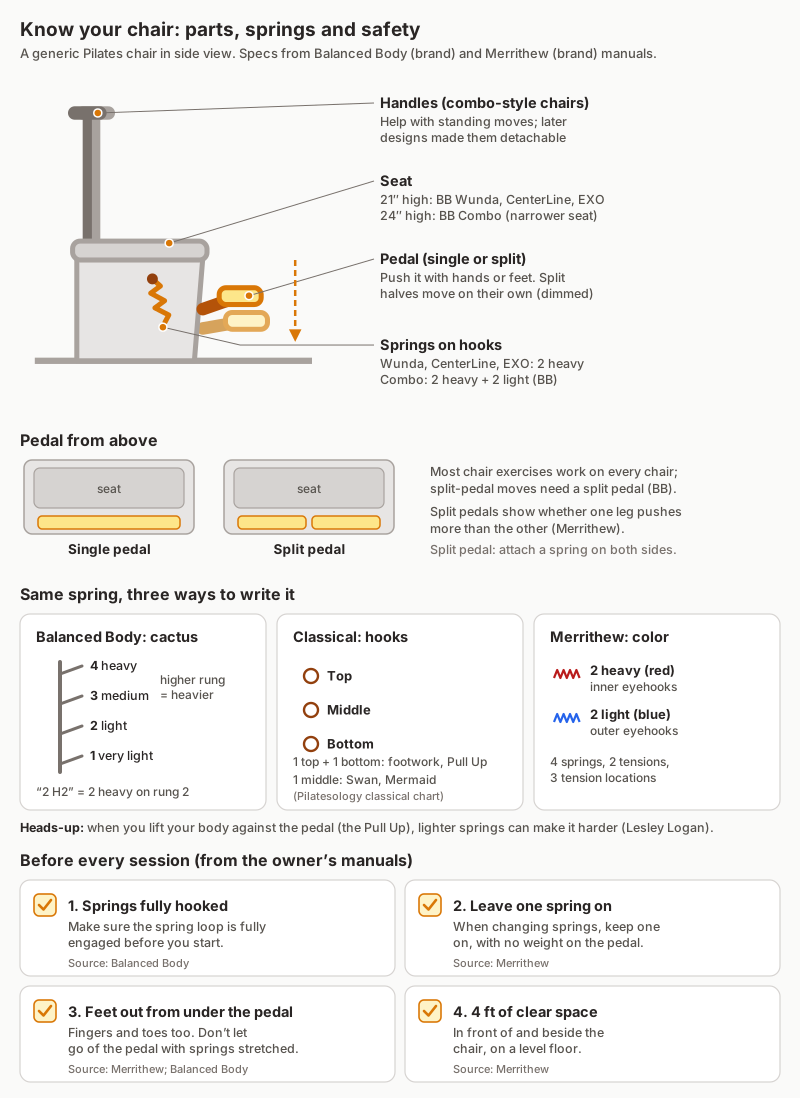
Tap the diagram to enlarge
Both major chair makers publish safety rules in their owner's manuals. Merrithew's Stability Chair manual says that "for inexperienced or first-time users, this equipment should only be used under the supervision of a trained professional," and to consult a physician before starting any exercise program.
The setup steps the two manuals agree on, or add:
- Hook the springs fully, and change them safely. Balanced Body: "Make sure the spring loop is fully engaged with the cactus before starting." Merrithew says to "always leave one spring on… to ensure the pedal does not fall," and not to have "any weight on the pedal(s) when changing springs." On a split pedal, "make sure a spring is attached on both sides, as pedal will fall if unsupported."
- Never let go of a loaded pedal. Balanced Body: "Don't release the pedal with the springs stretched." Merrithew warns that if the pedal is released suddenly, "the force of the springs may cause injury, or the exerciser may lose balance and fall."
- Fingers and toes out from under the pedal. Balanced Body says to keep feet out from under it during standing work and to "press the pedal down slowly to start each exercise." Pilates Anytime lists pinched fingers or toes among the chair's hazards.
- Give it room. Merrithew asks for 4 ft (1.2 m) of clear space in front of and beside the chair, on a level floor. Balanced Body says to put sticky pads under the chair or set it against a wall for moves where it could slide. Merrithew adds: "Never stretch off the side of the Chair or swing from the handles as this may cause it to tip."
- Bare feet or grip socks. Merrithew recommends "proper fitness apparel (including sticky socks)," while Balanced Body says "do not wear socks or slippery foot wear on the Chair." Neither brand suggests plain socks, so bare feet or grip socks is the safe overlap. See our best Pilates grip socks.
Merrithew also says to inspect springs weekly and replace them "every 24 months." Its chair lists a maximum user weight of 350 lb.
Cleveland Clinic's Judi Bar says Pilates exercises "have to be at your level… You can't just jump in," and stresses working with a qualified instructor. Pilates Anytime's Maida notes that students "often learn a handful of Wunda Chair exercises at first," sometimes on a more supportive High Chair before moving to the Wunda.
How to read chair spring settings
Spring instructions are the most confusing part of chair work, because each system labels them differently.
| System | Labels | Light → heavy | Example |
|---|---|---|---|
| Balanced Body | Cactus rungs 1–4 | Rung 1 → rung 4 | "2 H2" = 2 heavy, rung 2 |
| Classical | Top, middle, bottom hooks | Varies by chair; check the maker's chart | "1 Top, 1 Bottom" |
| Merrithew | Blue light, red heavy | Light → heavy springs | Red on inner hooks, blue on outer |
Balanced Body explains its cactus this way: "The lowest rung of the cactus is the number 1 or lightest position and the highest rung is the number 4 or heaviest position… higher=heavier, lower=lighter." Its Wunda, CenterLine and EXO chairs come with two heavy black springs; the Combo Chair adds two light white ones.
Merrithew's manual describes "four springs in two tensions and three spring tension locations," with heavy (red) springs on the inner eyehooks and light (blue) springs on the outer ones. It lists a maximum force of 72 lbf for a heavy spring and 37 lbf for a light one.
One thing that trips people up: heavier isn't always harder. On Lesley Logan's Pull Up page, the progression is to go lighter: "If it's easy change to one middle and one bottom or two bottoms or even no springs!" When you're lifting your body against the pedal, a lighter spring gives you less help.
Wunda chair exercises for beginners: the 8-move routine
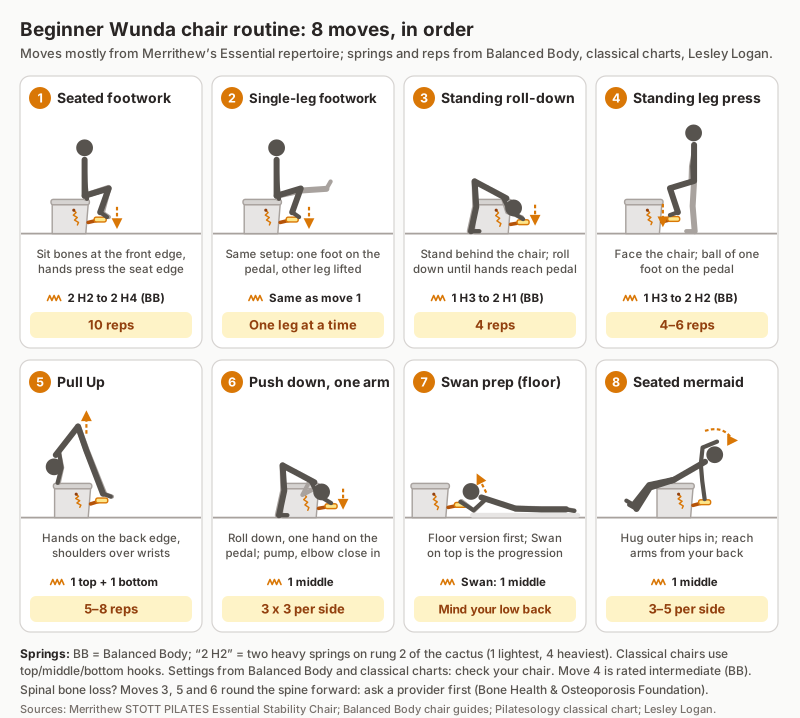
Tap the diagram to enlarge
Most of the moves are on Merrithew's STOTT PILATES Essential Stability Chair repertoire, its beginner level. Balanced Body's standing hamstring stretch, the classical Pull Up and a one-arm Push Down fill out the list. Difficulty labels disagree between sources. Balanced Body rates seated footwork "BEG," but Logan rates Footwork: Toes "Intermediate." Move slowly and stop any move that hurts.
1. Seated footwork
Balanced Body calls this Double Leg Pumps. "Sit with the sit bones at the front edge of the Chair and the feet on the pedals." Beginners can steady themselves by "pressing into the front edge of the Chair" with their hands.
Balanced Body's breathing cue: "Exhale: Press the pedal down maintaining pelvic stability and leg alignment. Keep the weight centered on the sit bones… Inhale: Return the legs." Logan adds: "Grow taller as you lift the pedal and stay tall as you lower it." For toes, she keeps the heels together and toes "about a fist distance apart."
- Springs: 2 heavy, rungs 2–4 (Balanced Body Wunda, EXO and Combo); 1 top + 1 bottom (classical chart).
- Reps: 10 (Balanced Body); 5–10 per variation (Logan).
- Foot positions: Balanced Body lists heels, balls, arches, V-feet, second position, flex/relevé and running in place.
- Modify if: you're tall or have hip or knee problems. Balanced Body suggests sitting on a small box. With knee problems, it says to "limit resistance and number of reps… Avoid if pain increases."
2. Single-leg footwork
This is on both Merrithew's Essential list ("Single leg") and Balanced Body's manual ("Single Leg Pumps"). Lesley Logan rates it "Beginner/Intermediate" and calls it "an excellent test of your connections on the chair." She runs it right after regular footwork: keep the same seat, reach one leg forward "from your center" at hip height, and press the pedal with the other foot. "Lifting tall through your center as you press the pedal down. Maintain that lift as you bring the pedal back up."
If one side is weaker or less controlled, Logan suggests repeating that side. On a split-pedal chair, Merrithew says the pedals can move independently, which lets a teacher see "whether they are pushing more with one leg."
- Springs: Logan doesn't list a separate setting; it follows regular footwork.
- Reps: 5–10 each side (Logan).
- Modify if: you have knee or hip issues. Logan says it's "not ideal for some knee or hip issues."
3. Standing roll-down to the pedal
Balanced Body calls this Hamstring Stretch 2 and labels it "BEGINNING • 4 REPS." Stand behind the chair. "Inhale: Reach the arms overhead. Exhale: Engage the abdominals and… roll down one vertebra at a time until the hands reach the pedal."
Bend and straighten the elbows 4 times, then "return by… uncurling the spine. Keep the weight on the center of the feet… Don't let the hips move back." Balanced Body says shorter people "may need to stand on pads or a small box." The classical equivalent is Push Down, at 1 middle spring.
- Springs: 1 heavy on rung 3 to 2 heavy on rung 1 (Balanced Body Wunda and EXO); 1 middle (classical Push Down).
- Reps: 4 (Balanced Body).
- Skip if: you have spinal osteoporosis. This is forward bending from the waist (see who should check first).
4. Standing leg press
Balanced Body calls this Standing Leg Pumps and rates it "INT • 4–6 REPS," but it's on Merrithew's Essential list, so it's a good first standing move as long as you have handles or a wall nearby. "Facing the Chair, stand with one foot on the floor and the ball of the other foot on the pedal… The hands can be on the handles (easier)." Then: "Exhale: Press the pedal down maintaining the alignment of the hip and leg."
Logan (Press Down Front) stands "about a foot" from the pedal and says to "double-check your shoulders are over your hips, your hips are over your ankles." She warns that it's easy to hike the hip on the pedal leg or lean out over the standing leg.
- Springs: 1 heavy on rung 3 to 2 heavy on rung 2 (Balanced Body Wunda and EXO); 1 top + 1 bottom (Logan).
- Reps: 4–6 (Balanced Body); 5 per side (Logan).
- Progress: Merrithew suggests adding a rotational disc or stability cushion under the standing foot.
5. Pull up
Teachers often compare this to the Elephant on the reformer, and Pilates Anytime notes they may cue students to "find your Elephant." Logan rates it "Beginner | Intermediate." Put your hands on the back edge of the chair, shoulder distance apart. Press the pedal down with one foot, then step the other foot on, and "lean your shoulders over your wrists."
Her cue: "As the pedal goes up you reach down, as the pedal goes down you lift up." Lower the pedal to about an inch off the floor.
- Springs: 1 top + 1 bottom (Logan and the classical chart). Lighter is harder.
- Reps: 5–8 (Logan).
- Skip or modify if: you have a wrist or shoulder injury. Logan says it "may not be ideal" for some. The rounded spine also matters for osteoporosis.
6. Push down, one arm
Merrithew's Essential list includes a seated triceps press, but we couldn't find a free published version of its cues, springs or reps. So this slot uses an arm move that does have published settings: the one-arm Push Down, which appears as "Push Down One Arm" near the top of the Jay Grimes order on Pilatesology's chart.
Lesley Logan calls it Push Down Front Single Arm and rates it "Beginner/Intermediate." Use one middle spring and the same standing setup as the Push Down (move 3), but with "one hand behind your head and one arm reaching from your back and to the ceiling." Round forward, place the straight arm on the pedal, and keep rolling down until you can no longer keep your reach through your legs.
Then pump the arm three times. Logan's cue: "Try to keep your elbow in close and control the spring open and closed." After the pumps, reach the straight arm into the pedal and lift the pedal from your center. Roll up and switch arms. She says the one-arm version shows "which side you lean on," and to repeat the weaker side.
- Springs: 1 middle (Logan).
- Reps: 3 sets of 3 on each side (Logan).
- Skip or modify if: you have shoulder issues. Logan says it "may not be suitable for some shoulder issues." Like move 3, it bends forward from the waist, which matters for spinal osteoporosis.
7. Swan prep
Merrithew's Essential list includes Swan Dive From Floor and Swan dive prep. Start on the floor version. A studio guide from Lowcountry Power Pilates suggests beginners start "by draping yourself over the chair."
The classical Swan on top of the chair, which Logan rates "Intermediate," is the progression. Hips go on top of the chair and hands on the pedal, so that "your shoulders are over your wrists and your legs are long and together." Her cue: "your legs are reaching out, not up and your chest is reaching forward not back."
- Springs: 1 middle for the on-top Swan (classical chart). Not given for the floor version.
- Skip or modify if: you have low back issues. Logan says the on-top Swan "may not be ideal for some lower back issues."
8. Seated mermaid
On Merrithew's Essential list, and set at 1 middle spring on the classical chart. Sit facing one side of the chair. Logan's cue: "Hug your outer hips in to hold up your legs, reach arms from your back." She says, "It's all about lifting tall out of your hips."
- Springs: 1 middle (classical chart).
- Reps: 3–5 per side (Logan).
- Modify if: holding your legs up is hard. Logan suggests a large ball under your feet to help you learn to hold them up, and says the move is "not ideal for some back issues." Kneeling Mermaid, also on Merrithew's Essential list, is the alternative.
Routine at a glance
| Move | Springs | Reps |
|---|---|---|
| 1. Seated footwork | 2 heavy, rung 2–4 (BB); 1T+1B | 10 |
| 2. Single-leg footwork | As footwork | 5–10 a side |
| 3. Standing roll-down | 1 H3 to 2 H1 (BB); 1 middle | 4 |
| 4. Standing leg press | 1 H3 to 2 H2 (BB); 1T+1B | 4–6 |
| 5. Pull up | 1T+1B | 5–8 |
| 6. Push down, one arm | 1 middle | 3×3 a side |
| 7. Swan prep | 1 middle (on top) | Not given |
| 8. Seated mermaid | 1 middle | 3–5 a side |
BB = Balanced Body; 1T+1B = one top, one bottom. Settings are starting points from the brand guides and classical chart. Check your own chair.
Combo chair vs Wunda chair: does it change the exercises?
Mostly, no. According to Balanced Body's chair manual, its Wunda, CenterLine and EXO chairs have two springs and one pedal (the EXO also comes split), while its Combo Chair has a split pedal, a narrower seat and 4 springs. Balanced Body's product pages list handles as included on the Combo and sold separately for the Wunda; the EXO isn't compatible with handles. The manual says "all of the Chairs can be used for most of the exercises in the manual except where the pedal is split."
The two features that matter:
- Handles. Merrithew says "handles provide support in some standing and sitting exercises." Balanced Body calls the hands-on-handles version of the standing leg press the easier one.
- Split pedals. Merrithew says split pedals "can move independently or, locked together, form one pedal," allowing you "to work bilaterally, unilaterally and reciprocally."
Lesley Logan says her 20-minute chair workout works on classical Wunda chairs, combo chairs and EXO chairs, though she says on a Malibu chair "some of the exercises will work really well and some won't."
Balanced Body Wunda Chair
- Pedal
- Single
- Handles
- Sold separately
- Spring system
- 2 heavy, cactus 1–4
Balanced Body Combo Chair
- Pedal
- Split (dowel for single)
- Handles
- Included, 4 heights
- Spring system
- 2 heavy + 2 light, cactus 1–4
Balanced Body EXO Chair
- Pedal
- Split or single
- Handles
- Not compatible
- Spring system
- 2 heavy, cactus 1–4
Merrithew Split-Pedal Stability Chair
- Pedal
- Split or locked
- Handles
- Included, adjustable
- Spring system
- 2 heavy red + 2 light blue
AeroPilates Precision Pilates Chair
- Pedal
- Split or single
- Handles
- Included
- Spring system
- 2 springs, tension dial
| Product | Pedal | Handles | Spring system | |
|---|---|---|---|---|
| Balanced Body Wunda Chair | Single | Sold separately | 2 heavy, cactus 1–4 | View |
| Balanced Body Combo Chair | Split (dowel for single) | Included, 4 heights | 2 heavy + 2 light, cactus 1–4 | View |
| Balanced Body EXO Chair | Split or single | Not compatible | 2 heavy, cactus 1–4 | View |
| Merrithew Split-Pedal Stability Chair | Split or locked | Included, adjustable | 2 heavy red + 2 light blue | View |
| AeroPilates Precision Pilates Chair | Split or single | Included | 2 springs, tension dial | View |
All of these are in the $1,000+ tier except the AeroPilates, which sits in the $500–1,000 tier.
If you want a home chair that matches Balanced Body's spring guide, the EXO uses the same cactus system as the Wunda. For handles, look at a combo-style chair. One caution on budget chairs: resistance labels like "3 resistance levels" don't map onto the classical settings above.
Check price on AmazonOur best Pilates chairs guide compares these in more detail. Logan's take on space: "A chair like this does not take up that much space. You can shove in the corner and you can do a full hour workout on it."
Wunda chair exercises PDF and the full classical order
If you want the full list, Pilatesology publishes a free Wunda Chair Classical Order & Spring Settings PDF. It starts like this:
- Footwork (Toes, Arches, Heels, Tendon Stretch): 1 top + 1 bottom.
- Push Down, Swan, Swan One Arm, Teaser on Top, Mermaid Seated, Backward Arms, Arm Frog, Mermaid Kneeling, Horseback, Push Up Bottom, Snake/Teaser Twist, Push Up Top: all 1 middle.
- Tendon Stretch, Mountain Climb, Pull Up, Table Top, Pull Up One Arm: 1 top + 1 bottom.
- Later: Flying Eagle, Going Up Front and Side, Corkscrew, Frog facing the chair and facing out (2 bottom), Pumping/Washer Woman, Leg Press Down (1 bottom), Push Up with feet on the pedal, and Star.
The same PDF includes a separate Jay Grimes order that starts Footwork, Push Down, Push Down One Arm, Pull Up, Spine Stretch Forward, Teaser on Floor, Swan.
For a shorter flow, Logan's 20-minute chair workout runs Footwork (Toes, Arches, Heels), Achilles Stretch, Press Down Front, Side and Cross Over, Pull Up, Single Leg Pull Up, Side Sit Ups, Swan, Single Arm Swan, Push Down Back, Table, Tendon Stretch and Push Down Front.
Merrithew's Essential Stability Chair Repertoire (3rd ed.) lists 22 beginner-level exercises across leg work, arm work, torso flexion, torso extension and lateral flexion. It runs 95 minutes and also uses a mat, reformer box, padded platform extender, mini ball, Flex-Band and stability ball.
Balanced Body offers a free chair user guide with sample exercises and a sample of its chair manual. Its manual counts "over 25 different exercise categories on the Chair."
Want our own one-page version? The chart below covers the eight beginner moves with springs, reps and safety checks. Tap to enlarge, or download the printable PDF.
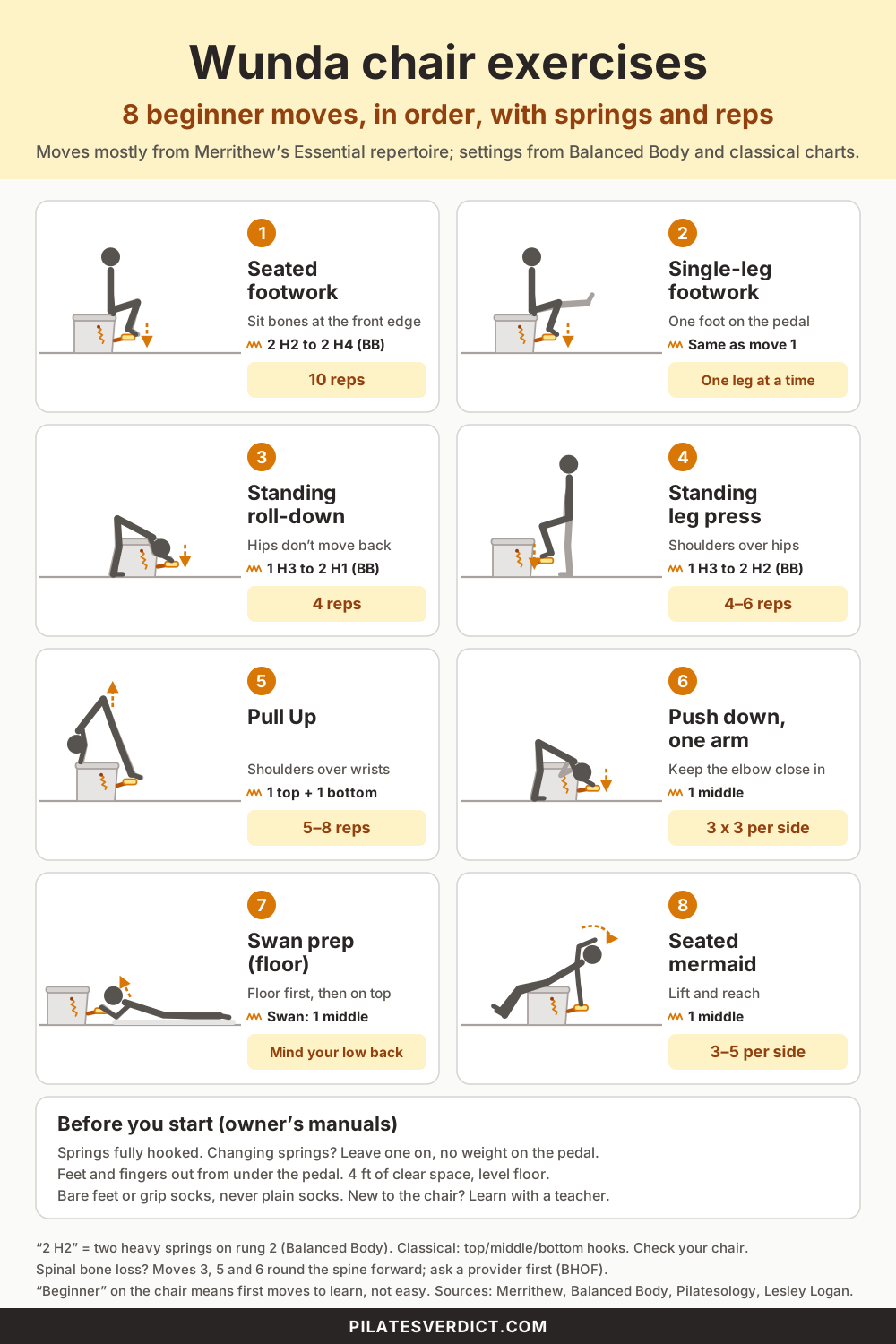
Tap the diagram to enlarge
Pilates chair exercises by goal
Gratz, a maker of classical Pilates apparatus, describes the chair as built for exercises "aimed at the core, lower, and upper body." Merrithew's Essential repertoire sorts its chair moves in a similar way: leg work, arm work, torso flexion, torso extension and lateral flexion. Grouped that way, here's where the moves in this guide (and the next ones) fit:
- Core: the Pull up, plus Mountain climb once you're ready. Gratz lists a hands-on-seat, feet-on-pedal pike and mountain climbers among its core-focused chair moves. In the small EMG study by Panhan and colleagues, Mountain climb showed the highest trunk muscle activity of the three moves tested.
- Legs and balance: seated and single-leg footwork and the standing leg press (all in Merrithew's leg work category), then Going up front. Panhan's 2023 study found Going up front and Mountain climb "activated the thigh core muscles in the moderate and high categories."
- Upper body and back: the one-arm push down, plus the triceps presses in Merrithew's arm work category, and Swan (its torso extension category), where your hands press the pedal.
What comes next
When the eight moves feel steady, the classical list and Logan's workout point to these next:
- Tendon stretch: Logan rates it "Intermediate/Advanced," at 1 top + 1 bottom.
- Mountain climb and Going up front: both on the classical list, and both measured in the EMG studies below.
- Teaser and Table: from the classical list and Logan's workout.
- The Hundred on the chair (core): Logan rates it "Intermediate" and does 10 breathing cycles lying on top of the chair, the long way (easier) or the short way (harder). She says the small surface "requires you to hold your entire center up on your own," and flags it as "not ideal for some neck or lower back issues."
The chair also pairs well with reformer work. If you're starting both, see our Pilates reformer exercises for beginners. For more routines, browse Pilates workouts.
What the research says
Research on the chair is thin. Two small EMG studies from the same Brazilian group measured muscle activity, not outcomes:
- Panhan et al., Journal of Bodywork and Movement Therapies (2021): 16 women (mean age about 28) did Going up front, Mountain climb and Swan on the Wunda chair. Mountain climb showed the highest trunk muscle activity, followed by Going up front and Swan, and all three recruited the measured muscles "with a moderate activity intensity."
- Panhan, Gonçalves and Cardozo, Journal of Chiropractic Medicine (2023): in 16 young female practitioners, Going up front and Mountain climb "activated the thigh core muscles in the moderate and high categories."
The 2023 study tested only young female Pilates practitioners, the 2021 abstract doesn't describe participants' experience, and neither measured strength, balance or pain over time. A trial comparing the short-term effects of Wunda chair and mat Pilates on balance in healthy women (NCT07583394) is listed as completed on ClinicalTrials.gov, with no results posted as of October 2026.
Who should modify or check first
- Osteoporosis: the Bone Health & Osteoporosis Foundation says people with spinal bone loss should not "bend forward from the waist," "twist and bend at the torso (trunk) to an extreme," or "do toe-touches, sit-ups or abdominal crunches." In this routine that affects the standing roll-down, the one-arm push down and the rounded spine in the Pull up, and later moves such as Teaser and twists. Ask a provider trained in osteoporosis for alternatives.
- Pregnancy: ACOG's exercise-during-pregnancy FAQ includes modified yoga and modified Pilates in its list of exercises that "experts agree… are safest for pregnant women," and says to avoid poses that require you "to be still or lie on your back for long periods." Merrithew says the chair's height makes it easy for pre- and postnatal clients to get on and off. Get clearance from your ob-gyn and work with a prenatal-trained teacher.
- Wrists and shoulders: Logan says the Pull up "may not be ideal" with some wrist or shoulder injuries, and the one-arm push down "may not be suitable for some shoulder issues."
- Low back: Logan flags the on-top Swan and seated Mermaid for some back issues.
- Knees: Balanced Body says to limit resistance and reps in footwork, sit on a box, and stop if pain increases.
Frequently Asked Questions
What is a Wunda chair?
It's a compact Pilates apparatus: a padded box with a spring-loaded pedal. Balanced Body says it's based on Joseph Pilates' original design for clients in 'small New York City apartments,' and Pilates Anytime's Alison Manheim writes that archival models could be flipped over to become an armchair. Later versions, often sold as combo or stability chairs, added split pedals and handles.
What muscles do Wunda chair exercises work?
Research is limited to two small EMG studies of women, not long-term outcomes. Panhan and colleagues found that Mountain climb, Going up front and Swan recruited abdominal and back muscles at moderate intensity (2021), and that Going up front and Mountain climb activated 'the thigh core muscles in the moderate and high categories' in young female practitioners (2023). Balanced Body calls the chair 'the most challenging piece of Pilates equipment for building strength.'
Can you do Wunda chair exercises at home?
Many people do. Lesley Logan says a chair 'does not take up that much space,' and Merrithew asks for 4 ft (1.2 m) of clear space in front of and beside it on a level floor. Merrithew also says first-time users should work under the supervision of a trained professional, so a few sessions with a teacher help. Our best Pilates chairs guide compares home options.
What are the best Wunda chair exercises for beginners?
Merrithew's beginner-level (Essential) STOTT PILATES chair repertoire includes footwork, single-leg footwork, standing leg press, seated triceps press, swan prep and mermaid. Balanced Body labels seated footwork (Double Leg Pumps) and a standing hamstring stretch as beginning-level, and Lesley Logan rates the Pull Up 'Beginner | Intermediate.' Pilates Anytime's teachers note that even these demand control, because the chair supports you less than a reformer does.
What springs should I use on a Wunda chair?
It depends on the brand and the move. Balanced Body uses cactus rungs 1 (lightest) to 4 (heaviest) and suggests two heavy springs on rungs 2–4 for seated footwork. Pilatesology's classical chart uses 1 top + 1 bottom for footwork and the Pull Up, and 1 middle for swan and mermaid. On moves where you lift your body against the pedal, lighter springs can make the move harder, according to Lesley Logan.
Is there a Wunda chair exercises PDF?
Pilatesology publishes a free 'Wunda Chair Classical Order & Spring Settings' PDF. Balanced Body offers a free sample of its chair manual and a chair user guide with sample exercises. Merrithew sells a full Stability Chair manual.
What's the difference between Wunda chair and combo chair exercises?
Mostly the equipment. A combo chair adds split pedals and handles. Balanced Body says its chairs can do most exercises in its manual except split-pedal ones, and Merrithew says split pedals allow one-sided and alternating work. Handles make standing moves easier, according to both brands.
Is the Pilates chair harder than the reformer?
Generally, yes, for balance. Pilates Anytime notes that on the chair 'the back of the body is not supported as it is on the Reformer,' so you get less stability and more of a balance challenge. Pilates Anytime's Andrea Maida hesitates to call any Wunda Chair exercise easy.
Sources
- Pilatesology: Wunda Chair Classical Order & Spring Settings, with Jay Grimes Order (PDF)
- Merrithew (brand): STOTT PILATES Essential Stability Chair Repertoire, 3rd ed.
- Merrithew (brand): Stability Chair owner's manual (PDF)
- Merrithew blog (Otiena Ellwand; brand): Your guide to the Merrithew Split-Pedal Stability Chair
- Balanced Body (brand): Introduction to the Chair, user guide with sample exercises (PDF)
- Balanced Body (brand): Chair: A Detailed Guide for Practicing Pilates, manual sample (PDF)
- Balanced Body (brand): Combo Chair, Wunda Chair and EXO Chair product pages
- Pilates Anytime (Alison Manheim): What's so Wundaful about the Wunda Chair?
- Pilates Anytime (Andrea Maida): The Wunda Chair: small but mighty
- Online Pilates Classes (Lesley Logan): 20 min Pilates workout, chair
- Online Pilates Classes (Lesley Logan): Footwork: Toes, Footwork: Single Leg, Press Down Front, Pull Up, Push Down Front Single Arm, Swan, Mermaid Seated Tendon Stretch and Hundred on the Wunda chair
- Gratz Pilates (brand): Pilates chair workouts to boost core strength
- Lowcountry Power Pilates (studio): Exercises on the Wunda Chair apparatus
- Panhan et al. 2021, J Bodyw Mov Ther (PubMed) and Panhan, Gonçalves and Cardozo 2023, J Chiropr Med (PubMed); 2023 full text (PMC)
- ClinicalTrials.gov: NCT07583394, Wunda Chair vs Mat Pilates: Balance Effects
- Cleveland Clinic (Judi Bar): Pilates 101
- Bone Health & Osteoporosis Foundation: Protecting your spine
- ACOG: Exercise during pregnancy (archived copy, Oct 6, 2026)
Update history
- : Published.
Found an error? See how we research and correct guides in our editorial policy.
Was this guide helpful?
Related Articles
How-To
Ankle weight Pilates exercises: an 8-move mat routine
Ankle weight Pilates exercises: an 8-move mat routine with reps, how heavy to go, the real benefits of Pilates with ankle weights and who should skip them.
October 13, 2026 · 19 min read
How-To
Pilates arm workout with weights: a 10-move standing arm series
A Pilates arm workout with weights you can do at home: the 10-move standing series with 1–3 lb dumbbells, a no-weights version and wrist-weight tips.
October 12, 2026 · 18 min read
How-To
Pilates board exercises for beginners: an 8-move home routine
Eight Pilates board exercises for beginners you can do at home, with form cues, reps, a 15–20 minute routine, setup checks and who should skip which moves.
October 12, 2026 · 15 min read
How-To
Pilates reformer exercises for beginners: 8 moves, springs and reps
Eight Pilates reformer exercises for beginners, in the order studios teach them, with spring settings, reps and form cues, plus how to do them at home.
October 11, 2026 · 20 min read