Reformer Pilates vs. Mat Pilates: Which Is Right for You?
By The Pilates Verdict Team · October 5, 2026 · 7 min read
This article contains affiliate links. If you buy through them, we may earn a commission at no extra cost to you. As an Amazon Associate I earn from qualifying purchases. Learn more.
Reformer and mat Pilates are built on the same method, but they feel very different. One uses a spring-loaded machine, the other uses only your body weight and a mat. The best choice depends on your budget, your body and where you want to practice.
How we researched this: We drew on clinical studies (Cochrane, Physical Therapy, PLOS ONE), guidance from Balanced Body and ACOG, and medically reviewed articles from Healthline. Study details and links are in the "What the research says" section.
The Short Answer
- Choose mat Pilates if you want the lowest cost, want to practice at home with almost no equipment, or want to learn the foundations first.
- Choose reformer Pilates if you want adjustable resistance and support, find getting up and down from the floor hard, or are working around an injury with a qualified instructor.
Balanced Body, one of the largest Pilates equipment makers, calls the two "complementary tools". Many people end up doing both.
Reformer vs. Mat at a Glance
| Mat Pilates | Reformer Pilates | |
|---|---|---|
| Resistance | Your body weight against gravity | Adjustable springs (assist or resist) |
| Equipment | A mat, plus optional small props | Reformer machine |
| Typical class price (US) | ~$15–35 drop-in | ~$25–60 drop-in ($50–75 in NYC) |
| Home setup | Mat + ring or bands | Machine from under $500 to $5,000+ |
| Class size | Can be large | Limited by the number of machines |
| Best for | Budget, home practice, learning the basics | Support and modifications, progressive resistance |
How They Differ
Resistance and support
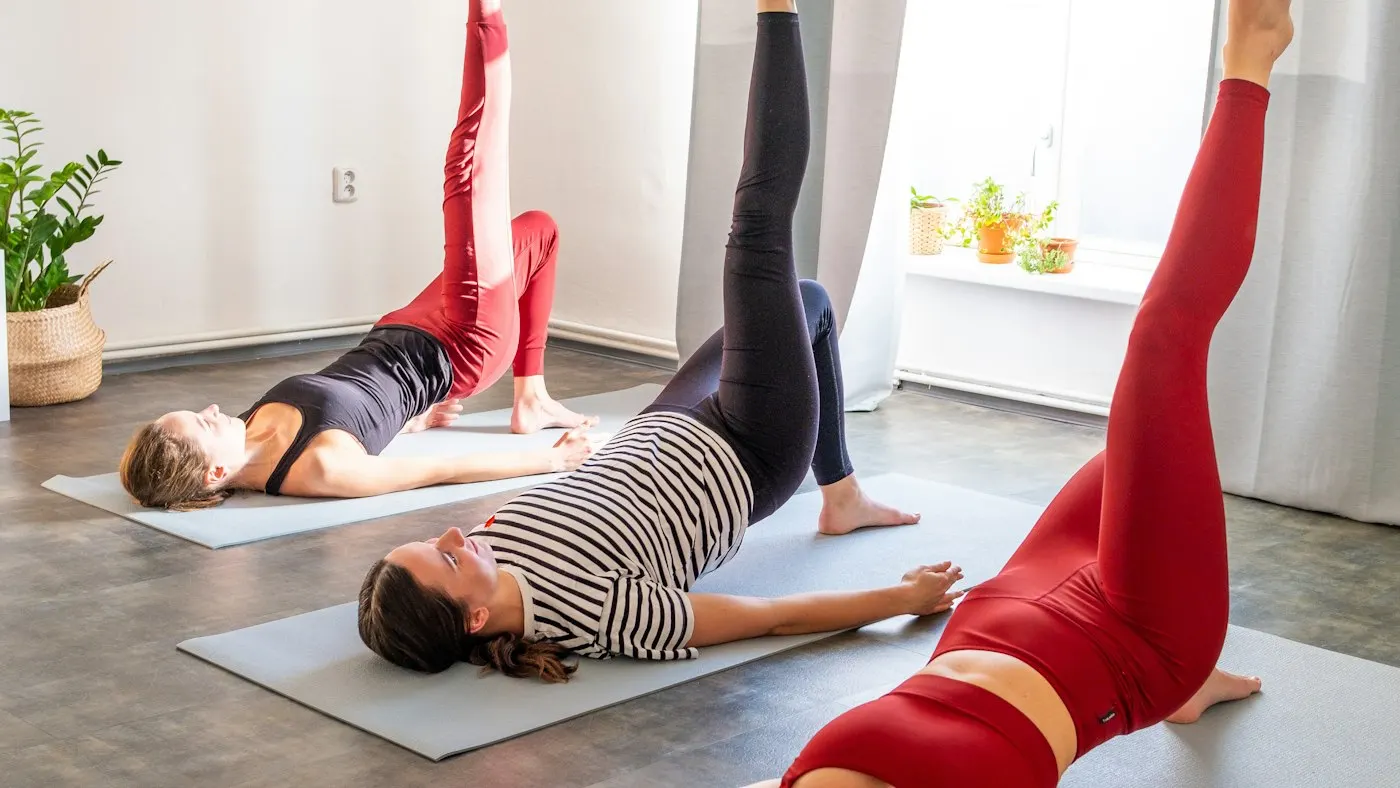
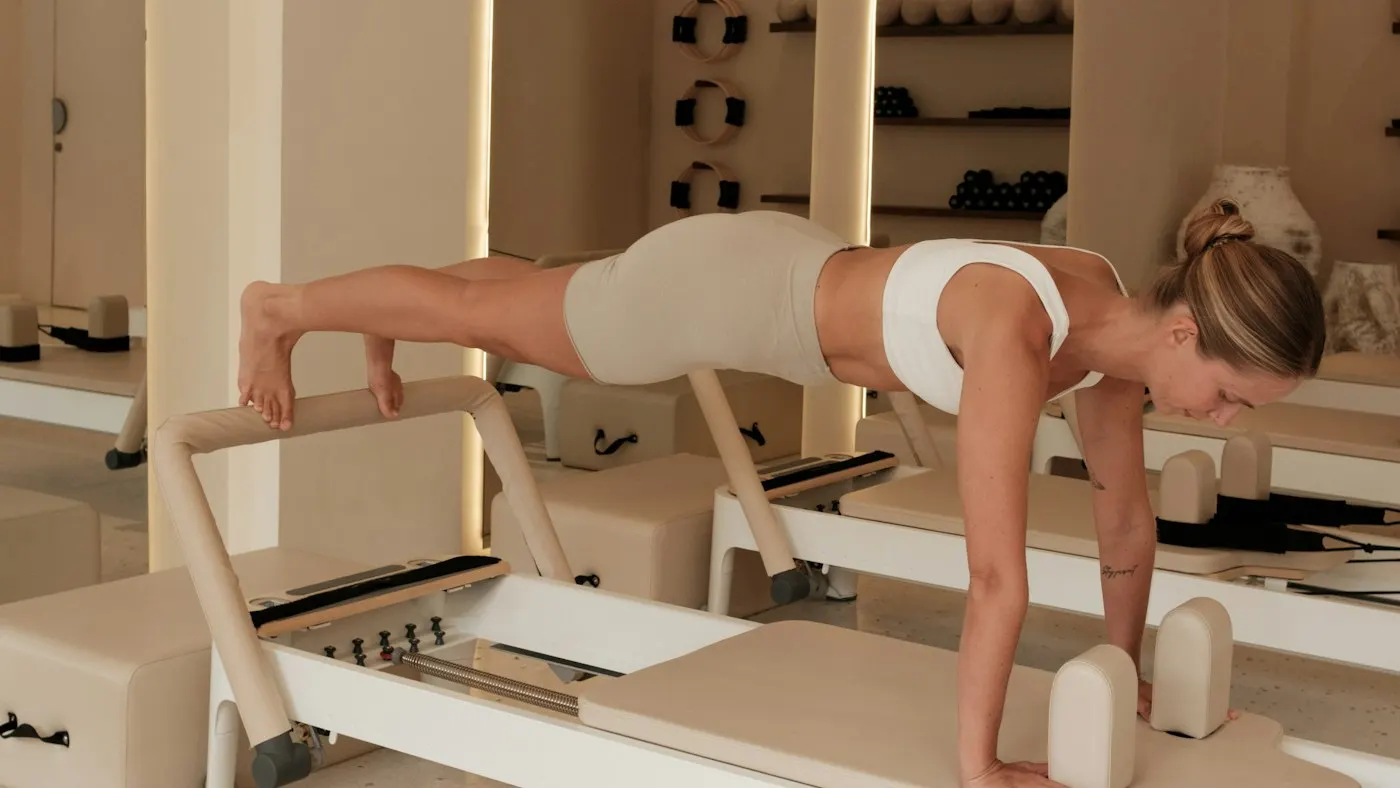
Mat Pilates works your body against gravity. The reformer adds springs that can work in both directions. Balanced Body says the springs "can provide assistance, lifting your body weight to help you develop control," or "supply resistance to challenge advanced movers." That flexibility is the reformer's biggest advantage: the same exercise can be scaled up or down by changing springs.
Difficulty for beginners
There's no single right starting point, and experts disagree:
- The case for the reformer: An instructor interviewed by NBC Select says the springs "can be adjusted to be more supportive… to really help beginners." Healthline notes that mat work offers less support for alignment and modifications, especially for people with injuries or limited mobility.
- The case for the mat: Balanced Body describes mat work as where "foundational movement skills are first introduced," because you learn to control your own body weight.
If you have an injury or limited mobility, a reformer class with a qualified instructor is often easier to adapt. If you're healthy and on a budget, starting on the mat works well.
Accessibility
Because the reformer sits off the floor, Balanced Body points out that it suits people who "find getting up and down from the floor uncomfortable." Some home models raise it even higher. See the AeroPilates Premier in our home reformer guide.
What the Research Says
The research on Pilates is promising, but most studies are small. Here's what it does and doesn't show.
- Back pain, reformer vs. mat: A 2014 randomized trial in Physical Therapy (da Luz et al.) split 86 adults with chronic low back pain into mat and equipment-based groups, with 12 sessions over 6 weeks. Both groups improved in pain and disability. At 6 months, the equipment group did better on disability and fear of movement, but not on pain intensity. It was a single clinic with a short program.
- Athletic performance: A 2025 PLOS ONE study of 30 amateur male soccer players (10 per group) found reformer training beat mat training on single-leg hop, agility and passing accuracy over 8 weeks. There was no difference in flexibility or sprint times. The authors flag the small, narrow sample.
- Pilates in general for back pain: A 2015 Cochrane review of 10 trials (510 people) found Pilates reduced pain and disability compared with minimal intervention. The evidence quality was low to moderate, and there was "no conclusive evidence that it is superior to other forms of exercise."
- Older adults: A 2021 meta-analysis of 39 studies in Physiotherapy found moderate improvements in balance, strength and flexibility, and a large effect on fall risk, with low-to-moderate certainty.
Bottom line: Both formats work. There's some early evidence that equipment-based Pilates has an edge for specific outcomes, but not enough to say the reformer is "better" overall.
What about calories?
Pilates isn't primarily cardio. In an ACE-sponsored study of 50-minute mat sessions, advanced classes reached about 62% of maximum heart rate, similar to brisk walking, and ACE concluded the cardiovascular benefits "appear to be limited." We couldn't find reliable calorie data for reformer classes, so be skeptical of specific numbers you see online.
Cost: Studio vs. Home
- Studio classes: Reformer drop-ins typically run about $25–60, and up to $50–75 in New York. Mat classes typically run about $15–35. Reformer classes cost more because every student needs a machine.
- Mat at home: You need little more than a good mat. Small props like a Pilates ring or resistance bands add resistance for very little money.
- Reformer at home: Machines range from cord-based foldables in the under-$500 tier to studio-grade spring reformers at $3,000–5,000+. Our home reformer guide compares six options.
If you're curious about reformer work at home but not ready to spend much, a budget foldable is the lowest-risk way to try it:
Check price on AmazonPregnancy and Special Situations
The American College of Obstetricians and Gynecologists (ACOG) lists modified Pilates among safe exercises during pregnancy. It advises avoiding long periods lying on your back and avoiding hot Pilates. Healthline notes the reformer allows more modifications, which can help during pregnancy or injury recovery. Always check with your doctor first.
Can You Do Pilates at Home Without a Reformer?
Yes. Balanced Body recommends starting with a supportive, high-density mat and a few small props, and taking lessons with a certified instructor before buying a reformer. Useful props include:
- Pilates ring (magic circle): adds resistance for inner thighs, arms and chest
- Resistance bands: add load to leg and arm work
- Small ball: for core and spine work
Browse our Pilates at home guides for more.
Frequently Asked Questions
Is reformer Pilates better than mat Pilates?
Neither is clearly better. Small trials show some advantages for equipment-based Pilates on specific outcomes, but both formats improve strength, flexibility and back pain. The best one is the one you'll do consistently.
Which is better for beginners, reformer or mat?
Sources differ. Reformer springs can be set to support beginners, while mat work teaches foundational control of your own body weight. If you have an injury or limited mobility, a reformer class with an instructor is often easier to adapt.
Is Pilates good for back pain?
A Cochrane review found low-to-moderate quality evidence that Pilates reduces chronic low back pain compared with minimal intervention, but no conclusive evidence that it beats other types of exercise.
Why is reformer Pilates more expensive?
Reformer classes need a machine for every student, so classes are smaller and drop-ins typically cost about $25–60, compared with about $15–35 for mat classes.
Can you do Pilates while pregnant?
ACOG lists modified Pilates as safe during pregnancy, but recommends avoiding long periods lying on your back and avoiding hot Pilates. Check with your doctor first.
The Verdict
Start with mat Pilates if you want the cheapest, simplest way in. Choose reformer Pilates if you want adjustable support and resistance, or find floor work hard. If you love reformer classes and want them at home, read our guide to the best home reformers.
Sources
- Healthline: Reformer vs. mat Pilates and Reformer Pilates
- Balanced Body: Ultimate guide to the Pilates reformer
- da Luz et al., Physical Therapy, 2014: PubMed
- Yılmaz et al., PLOS ONE, 2025: PMC
- Yamato et al., Cochrane Review, 2015: Cochrane Library
- Fernández-Rodríguez et al., Physiotherapy, 2021: ScienceDirect
- ACE: Pilates cardiovascular study
- ACOG: Exercise during pregnancy
- NBC Select: Best Pilates reformers