Pilates block exercises: 10 beginner moves with a yoga block
By The Pilates Verdict Team · October 16, 2026 · 22 min read
This article contains affiliate links. If you buy through them, we may earn a commission at no extra cost to you. As an Amazon Associate I earn from qualifying purchases. Learn more.
Pilates block exercises use an ordinary yoga block, one of the cheapest props you can add to mat Pilates, and the block does more than you might expect. According to Pilates Anytime, "In Pilates Mat classes, these firm but not rigid foam blocks can take the place of a Magic Circle or an Overball."
A block can make a move harder by giving you something to squeeze. It can also make a move easier by lifting your hips or giving your hands a higher surface to press into.
Below are 10 beginner Pilates block exercises, grouped by position, each with a block placement taken from a named Pilates source. Where a source gives reps, we say so. Where none does, we say that too.
How we researched this: We built this routine from block exercises published by Pilates Anytime (Alison Manheim), The Pilates Journal (Brad Inness of Ateom studio), Pilates Encyclopedia, FORM Fitness (India Hewitt), Yoga International (Rachel Land), Daily Burn and Tom's Guide. Block advice comes from NBC Select, OutdoorGearLab and Hugger Mugger. The research section draws on peer-reviewed studies, and safety notes come from the Bone Health & Osteoporosis Foundation, ACOG and FORM Fitness. We don't coach or test workouts. Where we could read only a search snippet of a source, we say so. Every source is listed at the end.
Quick version:
- What you need: one standard foam yoga block (4" x 6" x 9"), such as the Gaiam Yoga Essentials Block (see best Pilates blocks), and a mat with some cushion (see best Pilates mats). NBC Select quotes YogaSix master trainer Ansley Davis: "It's best to have two, but one will do the trick."
- Two jobs: support (sit on it, rest your hips or hands on it) and squeeze (press it between your thighs, palms or ankles).
- How hard to squeeze: steadily, not as hard as you can. A block is a light prop, not a strength tool.
- Check first if: you're pregnant, have osteoporosis, or have a back, neck or wrist problem.
No block yet? A light foam block is all this routine needs:
Check price on AmazonHow to use a yoga block in mat Pilates
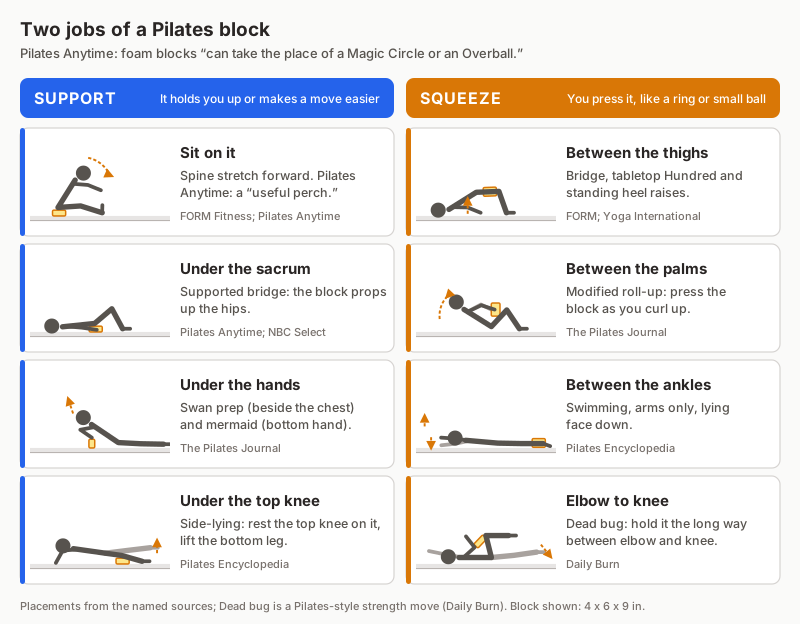
Support or squeeze
Pilates Encyclopedia says props can "make an exercise more challenging or assist you through challenging movements." A block does both.
Tap the diagram to enlarge
- Support: Pilates Anytime says a block "can prop up the sacrum in a Shoulder Bridge and provide a useful perch in any of the seated exercises." The Pilates Journal adds hands-on-block versions of swan prep and mermaid.
- Squeeze and feedback: squeezing a block between your thighs gives your legs something to hold. FORM Fitness instructor India Hewitt suggests it if your knees fall apart in a bridge or you're "learning inner thigh engagement."
A stand-in for a ring or ball
Because Pilates Anytime says a block can replace a Magic Circle or Overball, many ring and ball moves work with a block between the thighs. If you already own those, our Pilates ring exercises and Pilates ball exercises routines use similar set-ups.
Learn the move first
If a move below is new to you, try it without the block first. Our Pilates exercises at home for beginners routine covers the bodyweight basics.
10 Pilates block exercises for beginners (a mat routine)
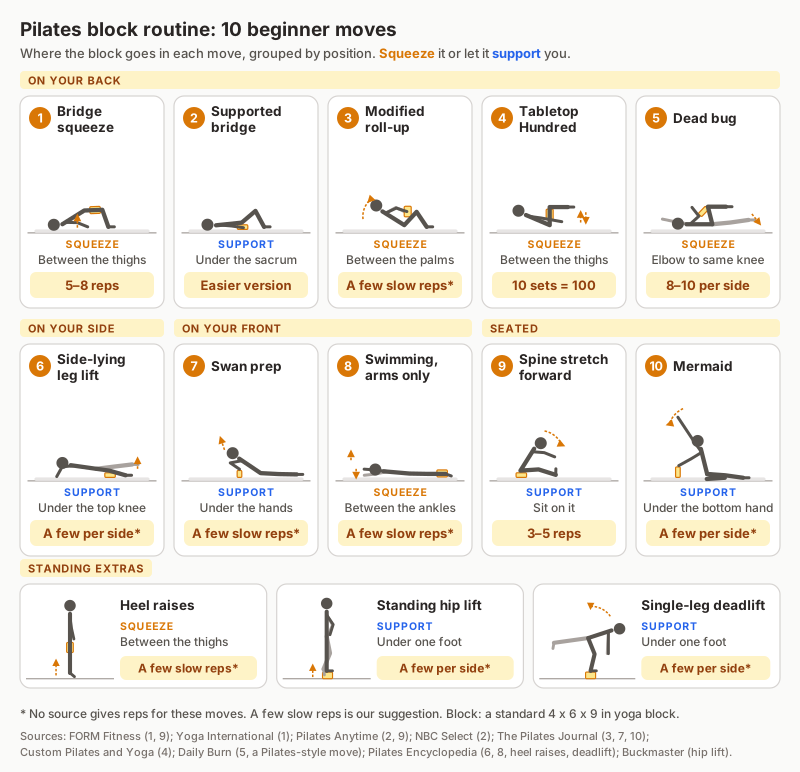
The routine starts on your back, then moves to your side, your front and seated, and ends with three optional standing moves. The 10 mat moves take roughly 15–20 minutes (our estimate). Rest whenever you need to, and stop any move that causes pain.
Brand new? Start with the support moves (2, 9 and 10) and the bridge squeeze (1), then add the rest as they feel steady. If you have osteoporosis or are pregnant, read the safety section before you start.
Tap the diagram to enlarge
Several sources below don't give rep counts. For those moves, we suggest a few slow reps, roughly 5–8. That range is borrowed from FORM Fitness's bridge guide, not a figure any source gives for that move.
On your back
1. Bridge with a block squeeze
Lie on your back with your knees bent and feet flat. Yoga International teacher Rachel Land says to place the block "between your thighs just above your knees, using its narrowest width," and "squeeze the block as if trying to drag your feet toward each other."
FORM Fitness's Hewitt cues you to roll up and down one vertebra at a time, with your weight on your upper back and shoulders, "NEVER on neck."
- Reps: "Perform 5-8 repetitions" (FORM Fitness). Land's version holds the top for "five or six slow and steady breaths."
- Common mistakes (FORM): flaring your ribs, lifting your spine in one stiff piece, letting your knees splay or press together, and pushing through your toes.
2. Supported bridge (block under the sacrum)
This version uses the block for support. Lift your hips and slide the block under your sacrum, the flat bone at the base of your spine, then rest your weight on it. Pilates Anytime says the block can "prop up the sacrum in a Shoulder Bridge." NBC Select quotes Obé instructor Eve Chrust on placing it "under your tailbone for added support in bridge pose."
- Hold: no source gives a time. A few slow breaths is a reasonable start (our suggestion).
- Easier: use the block on its lowest side.
- Variation: feet on the block. The Pilates Journal's Inness puts the blocks under the feet in pelvic curls so clients "find stronger activation through their hamstrings and glutes."
3. Modified roll-up (block between the palms)
Lie on your back with your knees bent and the block in your hands. The Pilates Journal's Brad Inness says to "press the block between your palms as you curl your upper body off the mat." He says it makes the exercise "more accessible for clients with limited flexibility, abdominal strength and scoliosis."
- Reps: no source gives a count. Try a few slow reps.
- Skip if: you have osteoporosis. See the safety section.
4. Tabletop Hundred with the block between the thighs
Lift your legs into tabletop, knees bent at 90 degrees, and squeeze the block between your inner thighs. Pump your arms by your sides while you breathe in for 5 counts and out for 5. Ten breath cycles make 100 pumps.
This set-up comes from Custom Pilates and Yoga, which suggests a small ball or yoga block between the inner thighs. We could read only a search snippet of that page. It matches the ring Hundred in our ring routine, and Pilates Anytime says a block can stand in for a ring.
- Reps: 100 arm pumps (Custom Pilates and Yoga, snippet).
- Easier: keep your head down, or do fewer pumps.
- Skip the head lift if: you have osteoporosis.
5. Dead bug (Pilates-style)
Daily Burn's version says: "Place a yoga block the long way between your left elbow and left knee, both joints bent 90 degrees." Keep the block pinned while you extend your free (right) arm and leg, then lower them slowly (our reading of Daily Burn's cue, which names the right arm and left leg in one step and the right arm and right leg in the next). Switch sides.
This is a general strength move rather than a classical Pilates exercise, but it fits well with the moves above.
- Reps: 8–10 per side (Daily Burn).
- Easier: move your free arm and leg through a smaller range.
On your side
6. Side-lying leg lift (top knee on the block)
Lie on your side. Bend your top leg and rest that knee on the block in front of your hips, then lift and lower your straight bottom leg. Pilates Encyclopedia lists this move (rest the top knee on a block in front of your hip, lift the bottom leg). We'd describe it as an inner-thigh move; the source doesn't name a target muscle.
- Reps: no source gives a count. Try 5–8 per side.
- Alternative: Pilates Encyclopedia also describes a side balance with the block squeezed between your thighs.
On your front
7. Swan prep (hands on the block)
Lie face down with your hands on a block beside your chest. Use your arms to help lift your upper body. The Pilates Journal's Inness says it lets you work on upper-back extension without "gripping into the lumbar spine."
- Reps: no source gives a count. Try a few slow lifts.
- Easier: make the lift smaller.
8. Swimming, arms only (block between the ankles)
Lie face down with the block held between your ankles and your arms reaching forward. Keep your legs still and alternate lifting your arms. Pilates Encyclopedia lists this arms-only version of swimming.
- Reps: no source gives a count. Try a few rounds of slow arm lifts.
- Easier: keep your chest on the mat and lift only your arms.
Seated
9. Spine stretch forward, sitting on the block
Sit on the block with your legs extended in front of you, then reach forward and roll back up. FORM Fitness says to "elevate your hips by sitting on a yoga block, cushion, or folded blanket" if your hamstrings or hip flexors are tight. Pilates Anytime calls the block "a useful perch in any of the seated exercises."
- Reps: "Perform 3-5 repetitions" (FORM Fitness).
- Skip or modify if: FORM lists osteoporosis, disc problems, severe low back pain and sciatica as reasons for caution. It says the move is generally fine in pregnancy with a wider leg position.
10. Mermaid (block under the bottom hand)
Sit with your legs folded to one side. Place the block under your bottom hand, then reach your other arm overhead into a side bend. The Pilates Journal's Inness includes this set-up.
- Reps: no source gives a count. Try 5–8 per side.
- Easier: a smaller side bend.
Standing Pilates block exercises
These three standing moves are optional extras after the mat routine. Hold a wall or chair for balance if you need to. For more standing work without a block, see our standing Pilates exercises.
Heel raises with a thigh squeeze
Stand tall with the block squeezed between your upper thighs, then rise onto the balls of your feet and lower slowly. Pilates Encyclopedia lists heel raises "squeezing block between your thighs."
Describing a block squeeze between the thighs in table pose, Nike quotes Kripalu-registered yoga teacher Robyn Gaillard: it "[pushes] the center of gravity to the core and helps the leg muscles anchor and stabilize the body." Treat that as an instructor's cue, not a proven mechanism.
- Reps: no source gives a count. Try 5–8.
- Easier: hold a wall or chair.
Standing hip lift (one foot on the block)
In her Pilates Anytime class "Activate Mat with a Block," Delia Buckmaster stands with one foot on the block, hands on her hips, and the other toe touching the mat. She then lifts the free foot off and tries to "level the hips as level as you can," before lowering the toe back down. The Pilates Journal's Inness also uses a standing balance with one foot on a block.
- Reps: no source gives a count. Try 5–8 per side.
- Easier: Buckmaster says you can keep the free foot on the floor the whole time and "just soften the knee that's on the block."
Single-leg deadlift (one foot on the block)
Pilates Encyclopedia lists a "Turned Out Single Leg Dead Lift: Stand with one foot on a block." It gives only the set-up. From there, the move is a standard single-leg hinge: tip your upper body forward from the hips as your free leg reaches back, then stand back up (our description).
- Reps: no source gives a count. Try a few slow reps per side.
- Easier: hold a wall or chair, or keep the free toe lightly on the floor.
- Check first if: you have osteoporosis. The Bone Health & Osteoporosis Foundation advises against bending forward from the waist, so ask your clinician whether a hip hinge suits you.
Pilates Encyclopedia also lists Charlie Chaplins as a standing block move but doesn't say where the block goes, so we've left them out.
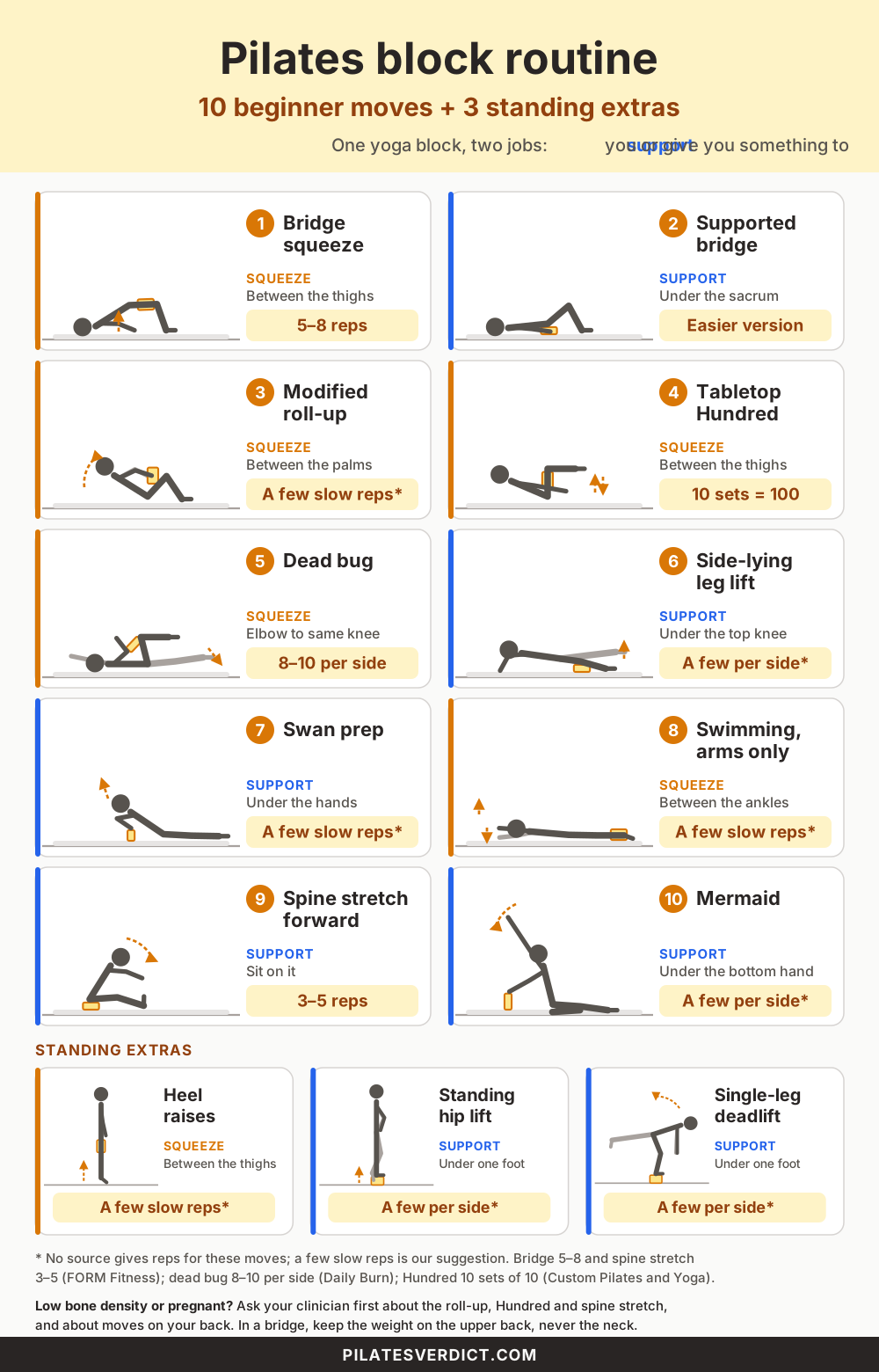
Pilates block workout at a glance
| Move | Block placement | Reps or hold | Easier option |
|---|---|---|---|
| 1. Bridge squeeze | Between thighs | 5–8 | Lower lift |
| 2. Supported bridge | Under sacrum | A few breaths | Lowest side |
| 3. Roll-up | Between palms | A few* | Smaller curl |
| 4. Hundred | Between thighs | 100 pumps | Head down |
| 5. Dead bug | Elbow to knee | 8–10/side | Smaller reach |
| 6. Side leg lift | Under top knee | 5–8/side* | Smaller lift |
| 7. Swan prep | Under hands | A few* | Smaller lift |
| 8. Swimming | Between ankles | A few rounds* | Arms only |
| 9. Spine stretch | Under hips | 3–5 | Less fold |
| 10. Mermaid | Under hand | 5–8/side* | Smaller bend |
| Extra: heel raises | Between thighs | 5–8* | Hold a wall |
| Extra: hip lift | Under one foot | 5–8/side* | Foot stays down |
| Extra: deadlift | Under one foot | A few/side* | Hold a wall |
*Our suggestion; no source gives a count for this move.
Tap the diagram to enlarge
Want a timed block workout instead?
Tom's Guide writer Sam Hopes uses a strength-circuit format with a yoga block: "Work for 50 seconds, then take 10 seconds to rest. Complete 5 rounds." Count your reps in round one and try to match that number in later rounds. One of her moves is a glute bridge where you hold the top and pulse by squeezing and releasing the block.
This is a circuit format, not classical Pilates. It suits people who want a sweatier session with the same prop.
Follow-along Pilates block workout videos
APPI Pilates TV has a beginner "Yoga Block Flow" with Sonya Fazeli (43 minutes), "designed to introduce the use of the yoga block to enhance alignment, balance and body awareness." Pilates Anytime lists dozens of classes under its yoga block prop filter (as of October 2026). The featured ones were intermediate, such as Delia Buckmaster's 30-minute "Activate Mat with a Block," a STOTT PILATES–style class that includes standing work with one foot on the block and a modified teaser holding the block overhead.
Make it easier, make it harder
Easier
- Sit on the block in seated moves (FORM Fitness; Pilates Anytime).
- Rest your sacrum on the block in a bridge (Pilates Anytime).
- Put your hands on the block in swan prep and mermaid (The Pilates Journal).
Harder (save these for later)
- Plank or leg pull back with your hands on blocks. The Pilates Journal says to lower your knees if your core strength is limited and notes the set-up can help clients with wrist issues. Pilates Anytime says "a pair of blocks placed beneath the hands can help make Leg Pull Back more accessible."
- Single Leg Kick: Pilates Anytime says "lightly hugging a block between the hands in Single Leg Kick engages the back muscles and upper arms."
- "The Z" with the block between the ankles (Pilates Encyclopedia).
- V exchanges, passing the block from your feet to your hands (Tom's Guide).
More block moves to explore
Pilates Encyclopedia lists several other block moves that aren't in this routine:
- Arm arcs holding the block in your hands
- Spine twist holding a flat block between your ankles
Which block works for these moves
Most of the sources here use an ordinary yoga block. Hugger Mugger, a yoga prop brand, says 4" x 6" x 9" blocks "have been found to be the most universally useful for average practitioners." It says 4-inch foam blocks can be "too wide for some people's frames," especially "as a spacer between the thighs," and that 3-inch blocks suit smaller frames (brand claims).
OutdoorGearLab found the Gaiam Yoga Essentials Block "Super comfortable" and "Lightweight," but "Less durable" and "Less stable for some balances." It found the Manduka Cork block "Harder and less comfortable than foam" and "Heavier than foam."
Our inference from those findings: foam is probably more comfortable to squeeze between your thighs, while cork is likely steadier to sit or lean on. One block covers every move in this routine. A second helps with planks or leg pull backs with your hands on blocks.
A light foam block such as the Gaiam Yoga Essentials Block suits the squeeze moves:
Check price on AmazonIf you'd rather sit or lean on a firmer block, the Manduka Cork Yoga Block is OutdoorGearLab's top pick:
Check price on AmazonFor thinner Pilates-specific blocks, head-support cushions and more options, see our best Pilates blocks guide. For more routines, browse our Pilates workouts.
What the research says
We found no study that tested a yoga block in Pilates. The research below is indirect.
Squeezing your legs together in a bridge
Lee and colleagues (Journal of Physical Therapy Science, 2015) used surface EMG on 15 healthy men in their twenties doing bridges on a sling. Transverse abdominis and erector spinae activity was "significantly higher during hip joint adduction than abduction," meaning when the legs pressed together rather than apart.
The study used a sling, not a block, and the authors note the small, similar group of participants. It measured muscle activity during one exercise, not strength gains, so it doesn't show that a block builds a stronger core.
Inner-thigh squeezes and the pelvic floor
Ojukwu and colleagues (Journal of Bodywork and Movement Therapies, 2022) studied 21 postpartum mothers. A ball squeeze between the thighs recruited the pelvic floor muscles, and a combined maneuver produced the highest activation. The authors call abdominal and hip adductor exercises "recommended adjuncts" to Kegels.
That study used a ball, not a block, and it doesn't show that a block squeeze strengthens the pelvic floor. If you have pelvic floor symptoms, see a pelvic floor physical therapist.
Pilates in general
A 2016 meta-analysis by Campos and colleagues pooled 9 randomized trials in healthy adults. Pilates 2–3 times a week for 5–12 weeks improved abdominal endurance by about 10 more sit-ups compared with no exercise. General flexibility didn't differ significantly.
Where this fits in your week
US guidelines from ODPHP call for "150 to 300 minutes of moderate-intensity aerobic activity" a week, plus "muscle-strengthening activity … at least 2 days each week." A block routine can count toward the strength part, but it isn't a whole program.
Safety: who should modify
Stop if you feel sharp pain. If you have an injury or a health condition, check with your doctor or a physical therapist before starting.
- Osteoporosis or spinal bone loss: the Bone Health & Osteoporosis Foundation advises against moves that "bend forward from the waist," that "twist and bend at the torso (trunk) to an extreme," and "toe-touches, sit-ups or abdominal crunches." That rules out or changes the roll-up, the Hundred's head lift and spine stretch forward. The same applies to the saw, which some block routines include.
- Pregnancy: ACOG's exercise-in-pregnancy FAQ lists modified Pilates as generally safe and advises avoiding lying flat on your back. We could read only a search snippet of that page. Several moves here are done on your back, so ask your ob-gyn or midwife which ones suit you.
- Back problems: FORM Fitness lists disc problems, severe low back pain and sciatica as reasons to avoid or modify spine stretch forward.
- Neck: in bridges, keep your weight on your upper back and shoulders, "NEVER on neck" (FORM Fitness).
- Wrists and core strength: keep planks and leg pull backs with your hands on blocks as progressions, and lower your knees if your core strength is limited (The Pilates Journal).
Frequently Asked Questions
What can you do with a yoga block in Pilates?
Use it to support a move or to give you something to squeeze. Pilates Anytime says blocks can replace a Magic Circle or Overball, prop up the sacrum in a shoulder bridge, and give you a perch in seated exercises. Pilates Encyclopedia and FORM Fitness add a squeeze between the thighs in bridges and side work, and The Pilates Journal puts your hands on the block in swan prep and mermaid.
Are Pilates block exercises good for beginners?
Many are. FORM Fitness recommends a block between the knees in the bridge when you're learning inner thigh engagement, and APPI Pilates TV has a dedicated beginner yoga block flow. Save planks and leg pull backs with your hands on blocks for later.
Is a Pilates block the same as a yoga block?
For mat work, the sources here use ordinary yoga blocks, usually 4 x 6 x 9 inches. Hugger Mugger, a prop brand, says a 3-inch block can fit smaller frames better when used between the thighs. Our best Pilates blocks guide covers the differences in detail.
Should I use a foam or cork block for Pilates?
OutdoorGearLab found cork harder and less comfortable than foam, and foam comfortable but less stable for some balances. Our inference: foam is the easier choice for squeezes, while cork is steadier if you sit or lean on it.
What can I use instead of a yoga block?
FORM Fitness says you can sit on a cushion or folded blanket instead of a block in spine stretch forward. For squeeze moves, a small Pilates ball or ring works: Pilates Anytime says a block can take the place of a Magic Circle or Overball, so swapping the other way is reasonable (our inference).
How often should I do a Pilates block workout?
US activity guidelines from ODPHP call for muscle-strengthening activity at least 2 days a week, plus 150 to 300 minutes of moderate aerobic activity. In the Campos meta-analysis, people who did Pilates 2–3 times a week for 5–12 weeks improved their abdominal endurance. A block routine can be one of those strength days, but it isn't a whole program.
Does squeezing a block work your core?
The evidence is indirect. One small study of 15 young men found more deep abdominal and back muscle activity when the legs pressed together during a sling bridge. An inner-thigh ball squeeze recruited the pelvic floor in postpartum women in another study. Neither study used a block.
Sources
- Pilates Anytime (Alison Manheim; industry content): Top 10 Pilates props for mat classes
- Pilates Encyclopedia (author not named): Pilates mat exercises with yoga blocks
- The Pilates Journal (Brad Inness, Ateom): Yoga blocks: a versatile prop for a wide range of Pilates clients
- Pilates Anytime: Yoga block class list and Activate Mat with a Block (Delia Buckmaster)
- APPI Pilates TV (Sonya Fazeli): Yoga Block Flow, beginner
- FORM Fitness (India Hewitt): Pilates bridge guide and Spine stretch forward guide
- Yoga International (Rachel Land): 5 bridge variations for hip strength and stability
- Tom's Guide via Yahoo (Sam Hopes): 5 full-body moves that build strength using just a yoga block
- NBC Select (Zoe Malin): Best yoga props
- Custom Pilates and Yoga (search snippet only): Pilates Hundred versions
- Daily Burn (Mallory Creveling): 7 strength exercises to try with yoga blocks
- Nike (Julia Sullivan; quotes Robyn Gaillard): How to use yoga blocks
- Hugger Mugger (brand content): How to choose the best yoga blocks
- OutdoorGearLab (Kate Pitts): The best yoga blocks
- Gaiam (brand): Yoga Essentials Block
- Manduka (brand): Cork Yoga Block
- Lee et al., J Phys Ther Sci (2015): Bridge exercise, trunk muscle activity and hip adduction
- Ojukwu et al., J Bodyw Mov Ther (2022): Abdominal and lower limb exercises and pelvic floor recruitment
- Campos et al., J Sports Med Phys Fitness (2016): Pilates and physical conditioning in healthy adults, meta-analysis
- ODPHP: Physical Activity Guidelines, top 10 things to know
- Bone Health & Osteoporosis Foundation: Protecting your spine
- ACOG (search snippet only): Exercise during pregnancy
Update history
- : Published.
Found an error? See how we research and correct guides in our editorial policy.
Was this guide helpful?
Related Articles
How-To
Bed Pilates: 10 gentle exercises for beginners (with chart)
Bed Pilates for beginners: 10 gentle exercises on your mattress, a bedtime version, a printable chart and what research says about the benefits.
October 16, 2026 · 16 min read
How-To
Classical Pilates mat exercises: all 34 in order (+ printable chart)
All 34 classical Pilates mat exercises in Joseph Pilates' original order, with modern names, reps, a printable chart and a beginner sequence.
October 15, 2026 · 20 min read
How-To
Standing Pilates exercises: a 10-move routine without the floor
10 standing Pilates exercises for beginners, with chair support options, reps, a printable chart, a light-weights version and what research says about balance.
October 15, 2026 · 20 min read
How-To
Pilates jump board exercises for beginners: an 8-step progression
Eight Pilates jump board exercises for beginners in a safe order, plus what a reformer jump board is, spring tips and what the evidence says on benefits.
October 14, 2026 · 20 min read