Pilates board exercises for beginners: an 8-move home routine
By The Pilates Verdict Team · October 12, 2026 · 15 min read
This article contains affiliate links. If you buy through them, we may earn a commission at no extra cost to you. As an Amazon Associate I earn from qualifying purchases. Learn more.
Good Pilates board exercises for beginners are slow planks, lunges and band moves you can do at home in about 15–20 minutes. A foldable Pilates board gives you a short sliding platform, a pair of handles and some resistance bands. It isn't a full reformer. Yahoo Health's reviewer puts the difference simply: a reformer uses "a full system of springs, straps and a moving carriage, whereas the Flo board relies on a simple sliding mechanism."
That simplicity is the point for beginners. According to Yahoo Health, "the challenge comes from the board's natural instability and light resistance," so a handful of slow, controlled moves is enough to start. Below are eight, about 15–20 minutes for two rounds by our estimate, plus setup, how often to train and who should check with a doctor first.
Still choosing a board? See our best Pilates boards.
How we researched this: The move list comes from reviewers and instructors writing in Yahoo Health, Her Campus, Woman & Home and Marie Claire UK. A board's sliding platform glides the same way a sliding disc does, so the form cues and rep ranges come from trainer-quoted sliding-disc guidance in Yahoo Health and from the American Council on Exercise (ACE). That's the same mechanics, not board-specific research. Specs come from Flo, Mila and Umay (brand pages). We didn't test any boards, and we found no studies on Pilates boards. Where we could only read an excerpt of a source, we say so. All sources are listed at the end.
Quick version:
- The routine: kneeling plank reach, plank hold, mountain climbers, reverse lunge, lateral slide, standing arm raises, biceps curls, then knee tuck to pike once you're ready.
- Reps: 8–12 per side for most moves, from trainer-quoted sliding-disc guidance (Yahoo Health).
- How often: Woman & Home suggests about 10–15 minutes, three to four times a week (excerpt).
- Before every session: check the bands for nicks and put a mat under the board if it slips.
- Check first if: you're pregnant, have osteoporosis or low bone density, or have a joint injury.
What you can (and can't) do on a Pilates board
Yahoo Health's Kelli McGrane, MS, RD, used the Flo board two to three times a week for a month. She says you can do "lunges, planks, and plenty of core-focused movements," and found the push-up handles and bands "useful and surprisingly effective" for upper-body work.
The trade-off is lower-body variety. "Without straps, you miss out on the huge variety of lower-body exercises that make reformer classes feel so dynamic," McGrane writes. Instructor Sam Deville told Marie Claire UK that a board is "not a complete Reformer replacement" and that certain exercises "just aren't possible" on it (we could only read an excerpt). If you're weighing the two, see our reformer vs Pilates board comparison.
Before you start: set up your board
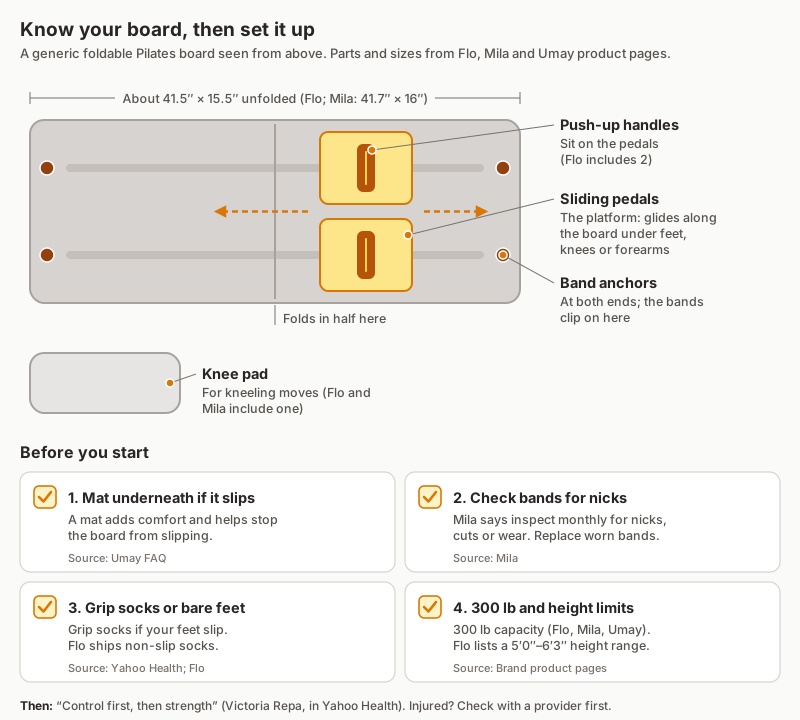
Boards differ in the details, but the setup checks are the same:
- Use a flat floor, and a mat if it slips. Umay's FAQ says you don't always need a mat, but one "can provide extra comfort and prevent slipping" (brand).
- Pad your knees. Flo and Mila both include a knee pad or cushion for kneeling moves, according to the brands.
- Sort out your feet. Yahoo Health's sliding-disc article recommends grip socks if your feet slip. Flo ships non-slip socks with its board (brand). Our best Pilates grip socks guide covers options.
- Inspect the bands. Mila says to check its cables "monthly for any nicks, cuts, or signs of wear" and gives an expected lifespan of "12-18 months" with normal use (brand). We'd check them before each session and replace any worn band.
- Check the limits. Flo, Mila and Umay each list a 300 lb capacity, and Flo gives a recommended user height of 5'0" to 6'3" (brands).
Tap the diagram to enlarge
Then go slowly. Pilates instructor Victoria Repa's rule, quoted by Yahoo Health, is "Control first, then strength." (Repa is CEO and founder of BetterMe, a fitness app, according to Yahoo Health.)
8 Pilates board exercises for beginners
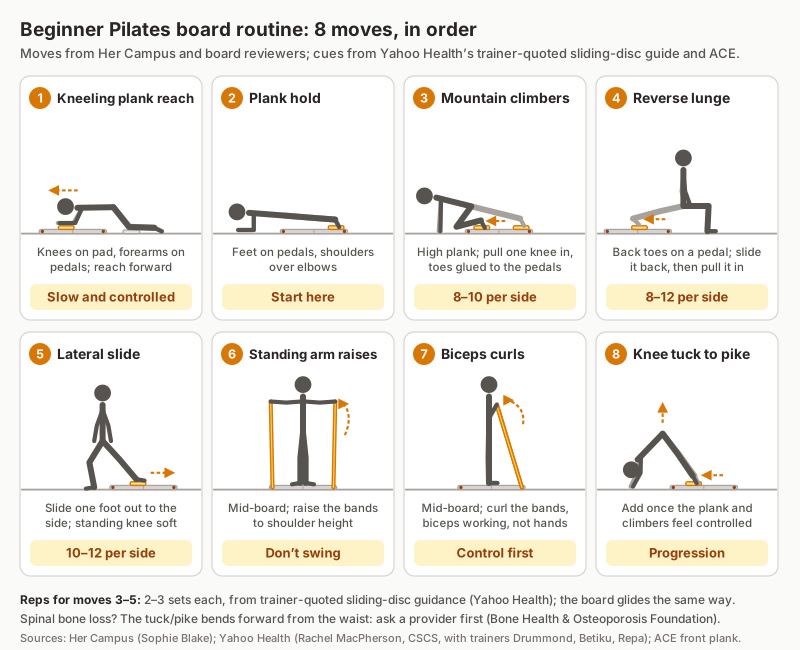
Moves 1–3 work the core and shoulders in a plank position, 4–5 are standing leg moves, 6–7 use the bands for your arms, and 8 is a progression for later. Rest as needed between moves.
Tap the diagram to enlarge
1. Kneeling plank reach (plank arm extension)
Her Campus (Sophie Blake) describes this as the first board move: "Put your knees about a foot and a half behind your board… putting your hands on either handle with your elbows resting on the pedals, reaching forward until you're fully extended." Then slide back in.
- Cue: "keep it slow and controlled," and let "your core do the work, not your legs" (Her Campus).
- Watch for: sagging in your low back, which ACE says to avoid in a plank.
- Reps: we'd start with 8–10 slow reaches. That's our suggestion, not a sourced number.
2. Plank hold on the board
ACE's front plank cues: "Avoid any arching (sagging) in your low back, hiking (upwards) in your hips or bending in the knees," and "Keep your shoulders positioned directly over your elbows." Stop if you feel low back pain, ACE says.
- Why it's here: Pilates instructor Jill Drummond suggests that people new to sliding discs start with a basic plank hold, then layer in mountain climbers and a Pilates-style pike, according to Yahoo Health.
- Time: 20–30 seconds is our suggested starting point, not a sourced figure.
3. Mountain climbers
Her Campus puts your feet on the pedals in a high plank and says to "quickly pull your legs in towards your chest, one at time, toes glued to the pedals."
- Cues: "locked upper body — you don't want to be moving side to side" (Her Campus). Yahoo Health's sliding-disc guide adds: "Brace your core and keep your hips level," and "Avoid letting your hips pike up or sag toward the floor."
- Pace: Her Campus does these quickly; we'd start slow until your hips stay level.
- Reps: 8–10 per side, or 30–40 seconds (Yahoo Health's sliding-disc guidance).
4. Reverse lunge
Her Campus sets this up with one foot on the ground and the other foot's toes on the pedal, behind you. From the sliding-disc version in Yahoo Health: "Slide the disc foot back to lower into a reverse lunge, keeping your front knee tracking over your mid-foot and your torso tall." Lower "until your front thigh is close to parallel with the floor," then "Drive through your front foot to return to standing," pulling the sliding foot back in.
- Why it suits beginners: instructor Jodie Myers tells Woman & Home that beginners can try "controlled standing lunges or squat variations if the board allows, always keeping movements slow and deliberate" (excerpt).
- Balance: hold a wall or the back of a chair if you need to.
- Variation: Myers also suggests squat variations "if the board allows" (Woman & Home, excerpt). Check your board's manual for a squat setup.
- Reps: 8–12 per side (Yahoo Health).
5. Lateral slide (side lunge)
This is the board version of the "lateral scooter" in Yahoo Health's sliding-disc guide. Stand beside the board with one foot on the platform. "Slide the working leg out to the side as you bend your standing knee slightly," then "Pull the disc back in with control, squeezing through your inner thigh and glute."
- Cue: "Keep your hips level… avoid leaning away from the sliding leg" (Yahoo Health).
- Reps: 10–12 per side (Yahoo Health).
6. Standing arm raises with bands
Her Campus lists standing arm extensions with the board's cables as one of its six moves. Stand on or beside the board with the bands anchored as your board's manual shows, and raise your arms slowly against the band. Yahoo Health's reviewer found the bands "surprisingly effective" for upper-body work.
- Reps: we'd start with 10–12. That's our suggestion, not a sourced number.
7. Biceps curls with bands
Her Campus also lists biceps curls with the board's cables. Keep your elbows by your sides and curl slowly, then lower with control.
- Reps: we'd start with 10–12. That's our suggestion, not a sourced number.
8. Progression: knee tuck to pike
Add this only once the plank and mountain climbers feel controlled. Drummond's progression in Yahoo Health runs from a plank hold to mountain climbers to a Pilates-style pike. The Everygirl's Umay reviewer mentions "planks to pike" among the moves she did on her board (we could only read an excerpt).
Our description of the move: from a high plank with your feet on the platform, draw both knees in toward your chest, then return. When that's steady, keep your legs straighter and lift your hips into a pike.
- Skip it if: you have osteoporosis or low bone density. This move curls the spine forward; see who should check first.
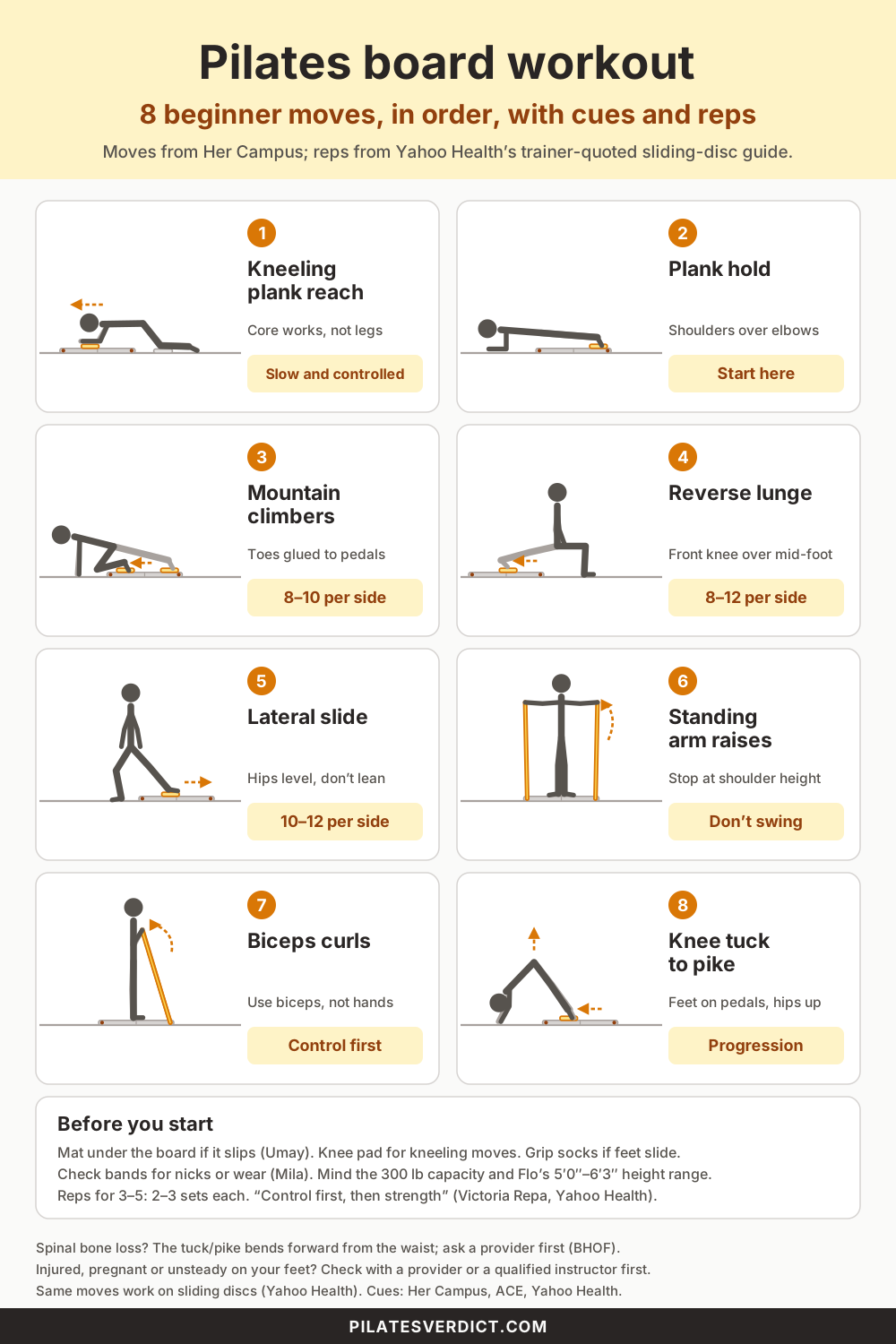
Pilates board workout for beginners at a glance
Do two rounds. That's about 15–20 minutes by our estimate.
| Move | Reps | Source |
|---|---|---|
| Kneeling plank reach | 8–10 (our suggestion) | Her Campus |
| Plank hold | 20–30 sec (our suggestion) | ACE |
| Mountain climbers | 8–10 per side | Yahoo Health |
| Reverse lunge | 8–12 per side | Yahoo Health |
| Lateral slide | 10–12 per side | Yahoo Health |
| Arm raises | 10–12 (our suggestion) | Her Campus |
| Biceps curls | 10–12 (our suggestion) | Her Campus |
| Knee tuck to pike | Later, when ready | Yahoo Health (pike); our description |
How often to do it, and how to progress
Tap the diagram to enlarge
- Session length and frequency: Woman & Home suggests boards suit short routines, with a realistic target of "around ten to 15 minutes, three to four times per week" (excerpt).
- What reviewers did: Yahoo Health's reviewer used her board two to three times a week for a month.
- What research covers: a 2016 meta-analysis by Campos and colleagues pooled 9 randomized trials in healthy adults doing mat or apparatus Pilates two to three times a week for 5–12 weeks. Pilates improved abdominal muscular endurance compared with no exercise. None of the trials used a board.
- Next moves: Her Campus lists arm shuffle rows, pulling one arm toward your chest at a time from a fully extended plank. It says "This is a faster movement," so we'd save it until the kneeling plank reach feels easy. The pike above is the other step up.
- Why no bridges or hamstring slides here: Woman & Home lists hamstring slides among board moves (excerpt), but we couldn't find step-by-step board cues for hamstring slides or bridges from a named instructor or exercise body, so we've left them out rather than guess.
- Follow-along options: Woman & Home names Callie Gualy as a go-to board instructor on YouTube (excerpt); her channel includes a "15 Min Beginner Pilates Board Workout" (per its YouTube listing). Board brands also have apps: Flo says its app has "100+ expert-led workouts" (paid after a 14-day trial), and Mila offers "20-minute Pilates workouts led by certified instructors" (brand claims).
What about the core? A trainer quoted by Woman & Home says the sliding surface "increases instability, requiring constant abdominal engagement to support the spine" (excerpt). That's expert opinion, not a study finding.
When to look at a reformer instead
If you want straps, footwork, heavier resistance or the lower-body variety of a studio class, a board won't get you there. Yahoo Health's reviewer called the Flo "not a true reformer stand-in." Our Pilates reformer exercises for beginners guide shows what a full reformer adds, and our best foldable Pilates reformers cover the next step up.
Don't have a board yet?
You can try the lunge, lateral slide and mountain climber patterns on sliding discs first (see our best Pilates sliders). The cues above come from Yahoo Health's sliding-disc guide, after all. For bodyweight basics with no equipment at all, see our Pilates exercises at home for beginners.
If you want a board, the Flo comes with two resistance bands, two push-up attachments, a knee cushion mat, non-slip socks and a timer, according to the brand. It unfolds to 41.5" x 15.5" and weighs about 10.9 lb.
Check price at Flo PilatesFor the Mila, Umay and other options side by side, see our best Pilates boards. More routines live in our Pilates workouts section.
Who should check with a doctor first
- Beginners in general: Adefemi Betiku, DPT, a certified Pilates instructor at Club Pilates, tells Yahoo Health that beginners "need to focus more on the basics of movement, getting stronger and building body awareness. If someone adds sliding discs with poor form, they could get hurt." Start with small, slow ranges.
- Joint injuries or major instability: Pilates instructor Jill Drummond tells Yahoo Health that "People with major instability should avoid discs unless they're working with a qualified professional."
- Osteoporosis or low bone density: the Bone Health & Osteoporosis Foundation says people with spinal bone loss should not "bend forward from the waist," twist the trunk to an extreme, or do sit-ups or crunches. Skip the knee tuck to pike, and ask a physical therapist which moves suit you.
- Pregnancy: ACOG lists modified Pilates as generally safe in a normal pregnancy and advises avoiding lying flat on your back for long periods (we could read only a snippet of its FAQ). We'd treat planks and kneeling moves with care; we found no verified board-specific pregnancy guidance. Check with your provider.
- Any existing condition: Mila recommends "consulting with your healthcare provider before starting any new exercise program, especially if you have existing injuries or conditions" (brand).
Frequently Asked Questions
What can you do on a Pilates board?
Mostly planks, lunges and core work, plus upper-body work with the handles and bands, according to Yahoo Health's Flo review. Her Campus lists plank arm extensions, arm shuffle rows, mountain climbers, lunges, standing arm extensions and biceps curls. Without reformer straps, many lower-body strap exercises aren't possible.
Are Pilates boards good for beginners?
Reviewers find them easy to start with. Yahoo Health calls the board "super intuitive" and says the challenge comes from instability and light resistance. Club Pilates instructor Adefemi Betiku, DPT, cautions that beginners should master basic movement first, because sliding with poor form can lead to injury. Start with slow, small ranges.
How long should a Pilates board workout be?
Woman & Home suggests about 10–15 minutes, three to four times a week (from an excerpt). Yahoo Health's reviewer used one two to three times a week for a month. Mila's app offers 20-minute workouts (brand claim). Two rounds of the eight moves above take about 15–20 minutes by our estimate.
Do you need a mat under a Pilates board?
Not always. Umay says a mat "can provide extra comfort and prevent slipping" (brand). Use the included knee pad for kneeling moves, and grip socks if your feet slide.
Do Pilates boards actually work?
There's no research on boards specifically. A 2016 meta-analysis of mat and apparatus Pilates (Campos et al.) found better abdominal muscular endurance than no exercise after 5–12 weeks at two to three sessions a week. Yahoo Health's reviewer, who used the Flo for a month, found the bands "surprisingly effective" for upper-body work.
What muscles does a Pilates board work?
It depends on the move. Yahoo Health's sliding-disc guide says mountain climbers work the abs, shoulders and hip flexors, reverse lunges work the quads, glutes and core, and the lateral slide works the glutes, outer thighs and core. Band moves such as arm raises and biceps curls are upper-body work, which Yahoo Health's Flo reviewer found "surprisingly effective." Reviewers say a board offers less lower-body variety than a reformer.
Can a Pilates board replace reformer classes?
Not fully. Yahoo Health's reviewer called the Flo "not a true reformer stand-in," and instructor Sam Deville told Marie Claire UK that some reformer exercises "just aren't possible" on a board (from an excerpt).
Sources
- Yahoo Health (Kelli McGrane, MS, RD; updated May 27, 2026): Flo Pilates Reformer review
- Yahoo Health (Rachel MacPherson, BA, CPT, CSCS; May 1, 2026): 5 sliding disc moves trainers swear by for full-body strength
- Her Campus (Sophie Blake): 6 Pilates board workouts to try at home
- Woman & Home (Kerry Law, Feb 8, 2026; excerpt only): I swapped expensive reformer classes for an at-home Pilates board for 2 weeks
- Marie Claire UK (Sam Deville quotes; excerpt only): Best Pilates boards
- Marie Claire UK (excerpt only): Best Pilates board workouts
- The Everygirl (excerpt only): Umay at-home Pilates reformer review
- American Council on Exercise: Front plank
- Flo Pilates (brand): Flo Portable Pilates Reformer
- Mila Pilates (brand): Portable Pilates Board 2.0
- Umay Fitness (brand): TB10 5-in-1 Portable Pilates Board
- Callie Gualy (YouTube): 15 Min Beginner Pilates Board Workout
- Campos et al., J Sports Med Phys Fitness (2016): Pilates and physical conditioning in healthy adults, meta-analysis
- Bone Health & Osteoporosis Foundation: Protecting your spine
- ACOG (search snippet only): Exercise during pregnancy
Update history
- : Published.
Found an error? See how we research and correct guides in our editorial policy.
Was this guide helpful?
Related Articles
How-To
Pilates arm workout with weights: a 10-move standing arm series
A Pilates arm workout with weights you can do at home: the 10-move standing series with 1–3 lb dumbbells, a no-weights version and wrist-weight tips.
October 12, 2026 · 18 min read
How-To
Pilates reformer exercises for beginners: 8 moves, springs and reps
Eight Pilates reformer exercises for beginners, in the order studios teach them, with spring settings, reps and form cues, plus how to do them at home.
October 11, 2026 · 20 min read
How-To
Pilates band exercises for beginners: a 10-move routine
10 beginner Pilates band exercises with where the band goes, reps from Merrithew and Pilates instructors, band safety tips and what the research says.
October 10, 2026 · 21 min read
How-To
Pilates bar exercises for beginners: an 8-move routine
8 Pilates bar exercises for beginners: setup, 4 standing and 4 mat moves, reps, band safety and how a bar compares with a reformer, all from named sources.
October 10, 2026 · 17 min read