What to wear to Pilates in winter: how to layer for mat and reformer
By The Pilates Verdict Team · October 15, 2026 · 16 min read
This article contains affiliate links. If you buy through them, we may earn a commission at no extra cost to you. As an Amazon Associate I earn from qualifying purchases. Learn more.
The walk to class is cold, the studio can feel chilly for the first few minutes, and by the end of the hundred you're warm. So what to wear to Pilates in winter comes down to layers that come off, over the same fitted, no-hardware outfit you'd wear in July.
Below is a simple three-layer formula, the extra rules for reformer classes, how to keep your legs and feet warm, and a few winter outfit ideas, including the cozy balletcore and plaid looks.
Our Top Picks
- Check price on Amazon
Fitted long sleeve
CRZ YOGA Butterluxe Scoop Neck Cropped Long Sleeve
Cropped, brushed fabric with thumb holes 'to keep sleeves in place and warm' (CRZ YOGA).
- Check price on Amazon
Warm-up shrug
YEOREO Women Crop Top Long Sleeve Bolero Open Front Workout Shrug
Open-front cropped shrug with thumb holes, per its Amazon listing.
- Check price at Tavi
Warmer grip socks
Tavi Jane Grip Socks (knee high)
Knee-high organic-cotton grip socks (Tavi).
- Check price on Amazon
Cold-room leggings
CRZ YOGA Thermal Fleece Lined Legging 25"
Fleece-lined, high waist, no zippers listed (CRZ YOGA).
How we researched this: We read Balanced Body's reformer clothing guidance and warranty terms, the Club Pilates FAQ and instructor advice, and instructor interviews published by NBC Select. For cold-weather layering, we drew on Mayo Clinic and Mayo Clinic Health System guidance (the latter page blocked us, so we read an archived copy from May 2026), REI's layering guide (also read via an archived copy), a peer-reviewed review on muscle temperature and a 2022 meta-analysis on staying warm before exercise. We also read studio, retailer and brand advice (labeled as such below), a fleece-legging roundup from Yahoo Shopping, and product pages from CRZ YOGA, Tavi, Pilabarre, 437, Girlfriend Collective and Sticky Be, plus one Amazon listing. No major outlet has published a winter Pilates outfit guide, so the general rules here come from cold-weather exercise advice plus Pilates equipment rules. We didn't try on or test any clothing.
The 3-layer winter Pilates outfit
| Layer | What to wear | When it comes off |
|---|---|---|
| Class | Fitted long sleeve, full-length or 7/8 leggings, grip socks | Stays on |
| Warm-up | Wrap, shrug or light sweatshirt | Once you're warm, before carriage work |
| Travel | Coat, puffer, fleece-lined leggings | Before class |
Mayo Clinic's advice for exercising in the cold is to "dress in layers that you can remove as soon as you start to sweat and then put back on as needed." That advice was written for outdoor exercise, but it maps neatly onto a Pilates class: one layer for the trip, one for the warm-up, and one you actually work out in.
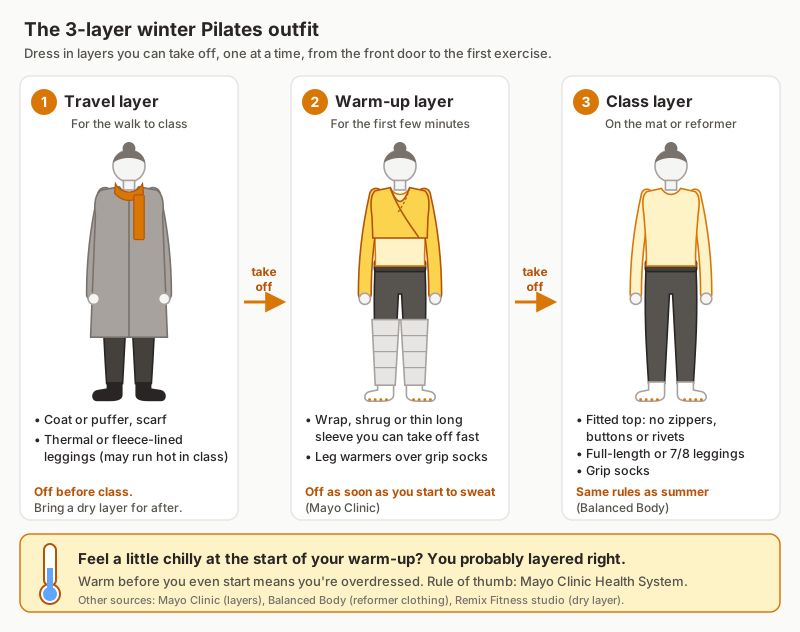
Tap the diagram to enlarge
1. Base: the same fitted outfit you'd wear in summer
Winter doesn't change the basic Pilates rules. Balanced Body, which makes reformers, advises "comfortable, form-fitting clothing that allows for a full range of motion without being loose enough to get caught in the Reformer's parts." Instructors NBC Select spoke with say to avoid "oversized, baggy clothing, which can get in the way," and note that form-fitting clothes help instructors correct your form.
What changes is coverage and thickness:
- Full-length or 7/8 leggings. The Sports Edit, an activewear retailer, calls full-length leggings "ideal for cooler studios or winter months" and 7/8 "the most versatile option for year-round wear."
- Thicker fabric. Complete Pilates, a UK studio, notes that "a thicker material will provide more warmth in Winter, whilst a thinner material will be cooler for Summer." It also suggests a squat test to make sure leggings aren't see-through. NBC Select noted the Athleta Salutation Stash 7/8 is on the thicker side and may not suit people who run hot in summer, which can be a plus in a cold studio.
- A fitted long sleeve. Thumb holes help sleeves stay put when your arms are overhead. CRZ YOGA says the thumb holes on its Butterluxe Scoop Neck Cropped Long Sleeve are there "to keep sleeves in place and warm."
For more leggings and tops, see our best Pilates leggings and best Pilates tops.
2. Warm-up layer: something thin you can take off fast
Remix Fitness, a Pennsylvania studio, puts it simply: "In winter, keep warm layers you can take off quickly." Its suggestions include "a thin long sleeve you can tie at your waist" and "a light sweatshirt that does not fall forward during planks." It also suggests a fitted zip jacket you can remove fast; that's fine for arriving, but take it off before reformer work (more on that below).
Good warm-up layers are light and close to the body:
- A wrap top or shrug. SABEL, a Pilates apparel brand, suggests shrugs and wraps before class and says "lightweight layers keep muscles primed without bulk" (a brand claim). Reviewers on 437's site say they wear The Wrap Top as a Pilates cover-up. For a lower-cost option, the YEOREO bolero shrug is a cropped, open-front style with thumb holes, according to its Amazon listing.
- A hoodie or sweatshirt, for the warm-up only. The Sports Edit says "you may want to keep a hoodie or sweatshirt on while you warm up." Take it off before you lie down on a reformer if it's loose, has a zipper or has drawstrings.
How warm should you feel? Mayo Clinic Health System's rule of thumb: "if you feel a little chilly at the start of your warmup, you've probably layered correctly. If you're warm before your warmup, you're probably overdressed." Mayo Clinic adds that "dressing too warmly is a big mistake when exercising in cold weather," because exercise generates "a considerable amount of heat."
3. Travel layer: the coat, puffer and thermal leggings
Your heaviest layers are for the walk, drive or train ride, and they come off before class. Mayo Clinic's outdoor formula (a thin wicking layer, then "a layer of fleece or wool for insulation," topped with "a waterproof, breathable outer layer") is a good guide for the commute.
Fleece-lined leggings fit here too. They're warm for the trip or a cold home studio, but in a heated class they may run hot, in line with Mayo's overdressing warning. Some studios feel cold at the start of class and some don't, so check what your studio offers for coats and bags and dress for your own room.
Remix Fitness also suggests you "bring a dry layer for after class if you sweat," which matters most when you're heading back out into the cold. A simple pack for after class:
- A dry top
- Warm socks to swap out of your grip socks
- Your coat and any travel layers
What to wear to reformer Pilates in winter
The reformer adds a few rules, and they matter more in winter, when zips, buttons and drawstrings show up in almost every warm layer.
- Hardware off before the carriage. Balanced Body says to choose clothing "without exposed zippers, metal rivets, or plastic buttons, as these can easily tear or puncture the delicate vinyl upholstery." Its warranty excludes "damage to fabric caused by zippers, snaps or other apparel adornments." A zip jacket is fine to arrive in; take it off before carriage work.
- Comfort when lying down. Club Pilates instructor Kate Snyder warns: "There's nothing more uncomfortable than a zipper digging into your lower back for 50 minutes!"
- No loose or bulky layers near straps and springs. Chunky knits, baggy hoodies and loose ties can get in the way, and Balanced Body warns against anything loose enough to get caught in the reformer's parts. That includes wrap ties and loose shrug hems, so tie them snugly or take the layer off. (This is our reading of Balanced Body's rule; we didn't find a source that tested it.)
- Watch the hems in the foot straps. The Pollen Co, a studio and brand blog, says full-length leggings can bunch at the ankle in foot straps and prefers 7/8. If your full-length pair bunches, try 7/8 and add leg warmers for the walk in.
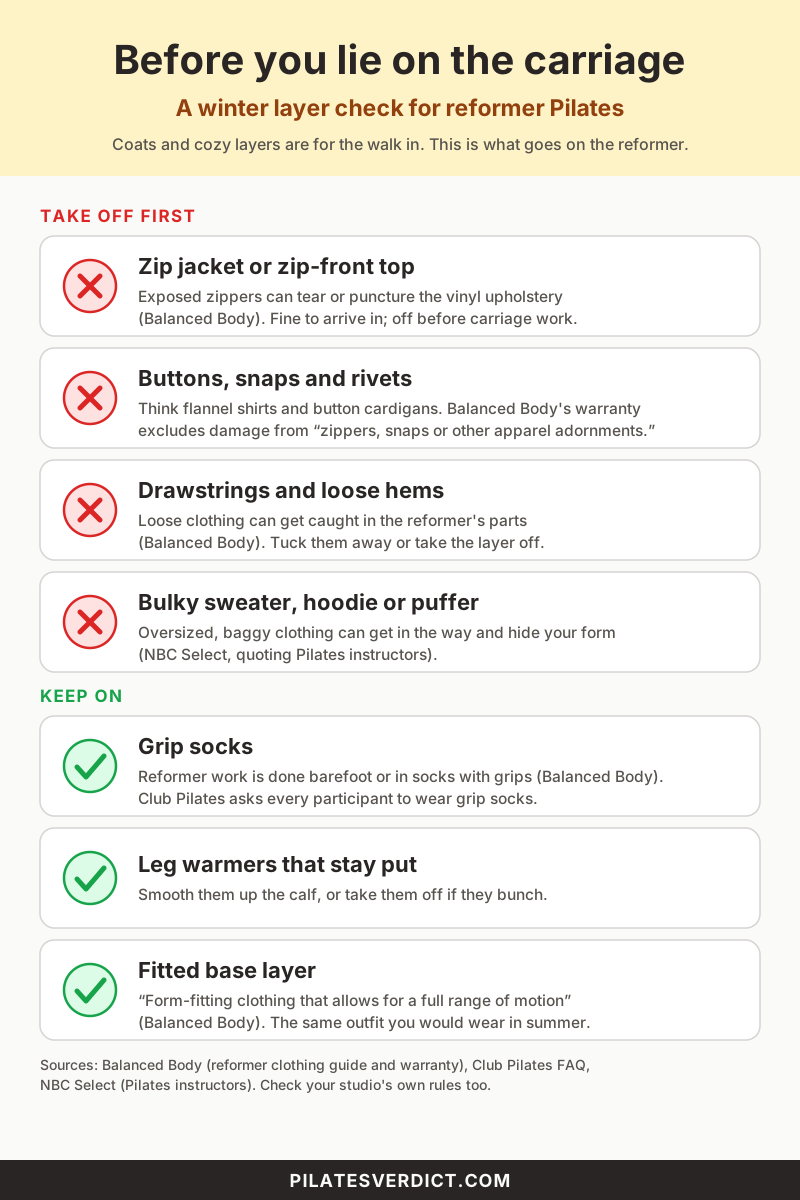
Tap the diagram to enlarge
For the year-round basics, see what to wear to Pilates.
Keeping legs and feet warm
Grip socks are still required at many studios in winter. The Club Pilates FAQ says every class participant needs them, and Balanced Body notes reformer Pilates is done barefoot or in "socks with grips on the bottom." The Sports Edit adds that on the mat, grip socks give "extra stability and warmth," and Remix Fitness says they "also help keep feet warmer in cooler rooms."
For more warmth, try one of these:
- Knee-high grip socks. Tavi's Jane Grip Socks come up to the knee and are 81% GOTS organic cotton, 16% nylon, 2% elastane and 1% elastodiene, in sizes S (6–8) and M (8.5–10.5). One reviewer says they "will stay firmly below the knee."
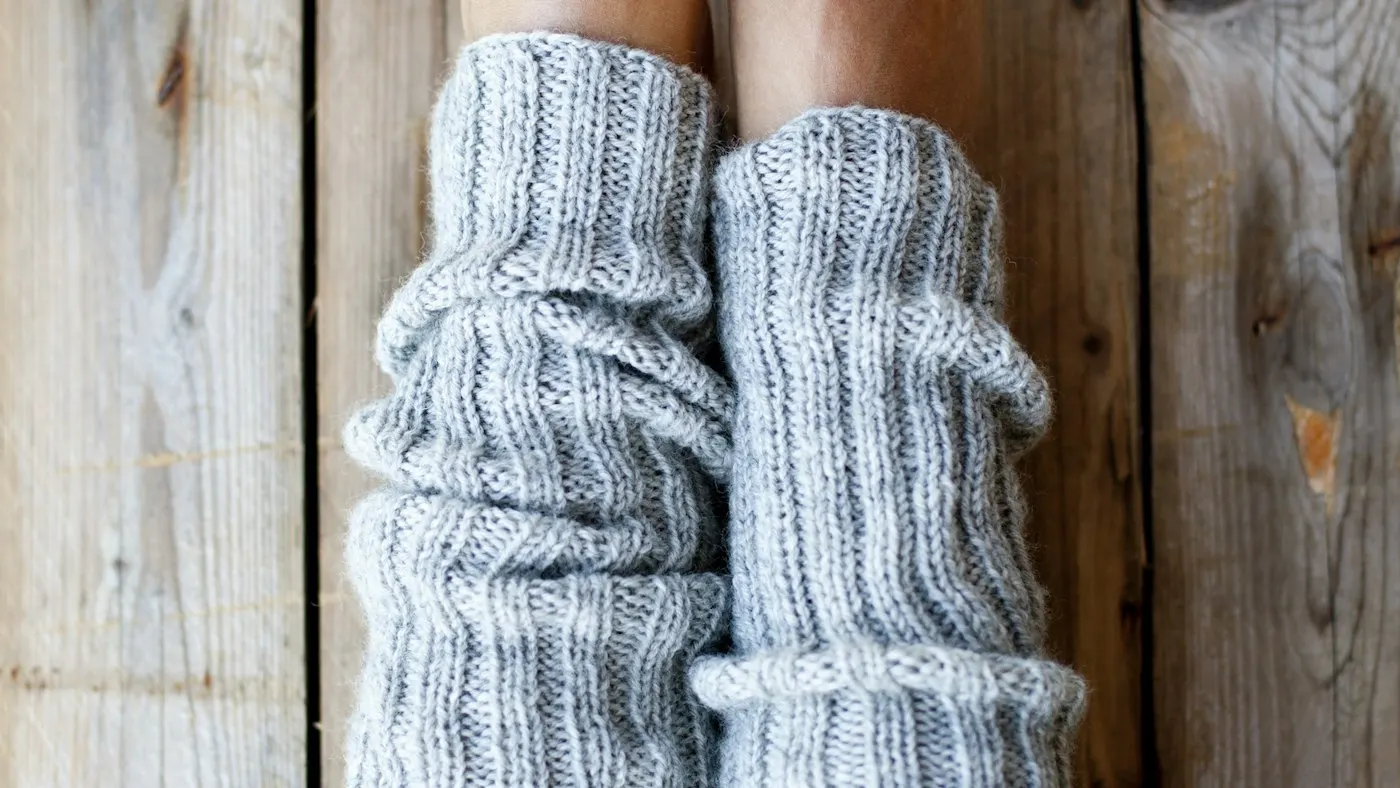
- Leg warmers over grip socks. Footless leg warmers go over your usual grip socks, and stirrup styles such as Sticky Be's Be Love Stirrup Grip Leg Warmers have "sticky dots" on the bottom, according to the brand. See our best Pilates leg warmers for both kinds.
A note on the evidence: layers help you feel comfortable in a cold room at the start of class. A 2010 review in the Scandinavian Journal of Medicine & Science in Sports found that warmer muscles improve performance in short-duration exercise, but that once core temperature rises too far, performance becomes impaired.
A 2022 meta-analysis of seven small trials (85 mostly male, well-trained athletes) found that heated or insulated garments worn between a warm-up and effort raised peak power, but not time-trial performance. Neither looked at Pilates or knit leg warmers. No study we found tests winter clothing in Pilates or shows that leg warmers prevent injury.
Treat warm layers as a comfort choice, and take them off once you're warm.
Fabrics for cold-weather Pilates
Mayo Clinic's fabric advice is for outdoor base layers, so apply it to your top and leggings. Grip socks are a separate case (see below).
| Fabric | Good for | Watch out |
|---|---|---|
| Synthetic blends | Wicking base layers | Mayo suggests a thin layer |
| Cotton | Grip socks, after class | Stays wet as a base |
| Fleece-lined | Commute, cold rooms | Can run hot in class |
- Synthetics wick sweat. Mayo Clinic suggests "a thin layer of synthetic material, such as polypropylene, which draws sweat away from your body." REI's layering guide lists "synthetics like polyester and nylon, or natural fibers like merino wool and silk" as base-layer options and says that "a lot people simply go with their personal fabric preference."
- Cotton base layers stay wet. Mayo Clinic says to "avoid cotton, which stays wet next to your skin." REI calls cotton "a no-no in winter because it sponges up water and can chill you." That advice is about outdoor base layers. Many grip socks are mostly cotton, including Tavi's Jane, and they're standard in Pilates studios.
- Fleece-lined leggings vary a lot. In Yahoo Shopping's tested roundup (6 testers, 11 pairs, 6 weeks of walks, errands and outdoor workouts, not Pilates), the warmest pick, the Athleta Altitude, was "a bit bulky and roomy" and shifted during running and lifting, and an Old Navy pair was "extremely thick and not very stretchy." The Lululemon Thermal High-Rise Running Tight was thinner, and a tester said it's best for "indoor workouts, walks, or layering under jeans or sweatpants."
- Check for zippers. Zip pockets and ankle zippers are common on running-style fleece leggings and conflict with Balanced Body's no-zipper rule.
If you want a thermal pair for a cold room or the walk to class, CRZ YOGA's Thermal Fleece Lined Legging is 87% polyamide and 13% spandex with a thermal fleece lining, a high waist and a hidden waistband pocket, and the brand page lists no zippers. It comes in 25 or 28 inches, sizes XXS–XL. We didn't find an editorial review or any Pilates-specific feedback on it.
Check price on AmazonWinter Pilates outfit ideas
Cozy balletcore
A fitted unitard or leggings and a long sleeve, a wrap top or shrug, and leg warmers over grip socks. SABEL suggests "ballet-style grip socks for traction and warmth" (brand claim), and Who What Wear called wrap cardigans a trend in January 2026, noting the wrap silhouette is "long associated with ballet uniforms." A full-length unitard such as the Girlfriend Collective Luxe Paneled Unitard covers you in one piece. Take off the wrap once you're warm, or tie it snugly.
Plaid Pilates outfit
Plaid keeps coming back for fall and winter. Nylon called it a fall 2025 trend that "will be all over stars' bodies and on the racks of your favorite stores." The easiest way to wear it to class is on your feet. Pilabarre's Pink Plaid Grip Socks are a crew-length cotton blend with heart-shaped non-slip grips, one size for women's 5–10, and the brand's grip-sock collection also lists a Blue Plaid version. Tavi also lists its low-rise Savvy and knee-high Jane Grip Socks in Ebony Plaid; the Jane is the warmer, longer option.
Check price at PilabarrePlaid flannel shirts and skirts are better as travel or after-class pieces. A button-front flannel goes against Balanced Body's no-buttons rule, so take it off before the reformer.
Home practice in a cold room
At home, you control the dress code. Pilates Reformers Plus, an equipment and apparel retailer, suggests thermal leggings, seamless long-sleeve shirts and "breathable fleece jackets" for winter (a retailer claim). Thermal leggings plus a fitted long sleeve works for a cold spare room, and you can still add leg warmers. If you practice on your own reformer, the no-zipper rule protects your upholstery and, per Balanced Body's warranty, your coverage.
What to skip in winter
- Hoodies with drawstrings on the reformer. Fine for the warm-up, then off.
- Zip jackets during carriage work. Balanced Body says exposed zippers can tear the upholstery.
- Puffers and coats in class. They're for the trip.
- Loose, chunky knits. They can get in the way and catch on the reformer, per NBC Select's instructors and Balanced Body.
- Damp layers. Mayo Clinic notes cotton stays wet next to your skin; change into a dry layer before heading out.
The bottom line: what to wear to Pilates in winter
Wear your usual fitted, no-hardware Pilates outfit, add one thin layer you can pull off in a few seconds, and save the coat and fleece for the trip. Knee-high grip socks or leg warmers are the simplest upgrade for cold feet.
Check price on AmazonFor a full sock comparison, see our best Pilates grip socks. Browse more in Pilates apparel.
Frequently Asked Questions
What should I wear to Pilates when it's cold?
Your usual fitted, stretchy outfit as the base, a thin layer you can take off once you warm up, and a coat for the trip. Mayo Clinic advises layers you can remove "as soon as you start to sweat." Remix Fitness, a studio, suggests warm layers "you can take off quickly."
Can I wear a hoodie or sweatshirt to Pilates?
For the warm-up, yes. The Sports Edit, an activewear retailer, says you may want to keep a hoodie or sweatshirt on while you warm up. Take it off before reformer work if it's loose, has a zipper or has drawstrings. Balanced Body warns against loose clothing that can catch on the reformer and against exposed zippers.
Should I wear full-length leggings to reformer Pilates in winter?
Full length is warmer, and The Sports Edit calls it "ideal for cooler studios or winter months." If the hems bunch in the foot straps, 7/8 leggings are the usual fix, according to The Pollen Co.
Are leg warmers good for Pilates in winter?
They add warmth over leggings, and you can wear footless styles over grip socks or choose stirrup styles with grips. No study we found shows leg warmers prevent injury. Take them off if they bunch.
Can I wear sweatpants or joggers to Pilates in winter?
For the trip, yes. In class, especially on the reformer, Balanced Body advises clothing that isn't "loose enough to get caught in the Reformer's parts," and instructors NBC Select spoke with say to avoid "oversized, baggy clothing." Fitted leggings are the safer choice.
Are fleece-lined leggings good for Pilates?
They're fine for a cold room or the walk to class. Yahoo Shopping's tested roundup found some thick fleece pairs bulky or not very stretchy, and Mayo Clinic warns that overdressing is a common winter workout mistake. In a warm class, a regular legging may be more comfortable.
Sources
- Balanced Body: Everything you need to know about Reformer Pilates
- Balanced Body: Warranty
- Club Pilates: FAQ
- Club Pilates: Exactly what to wear to your first Club Pilates class, straight from the studio's instructors
- NBC Select: Everything you need for mat and reformer Pilates, according to expert instructors
- NBC Select: The best leggings, tested and reviewed
- Mayo Clinic: Exercising outdoors in winter
- Mayo Clinic Health System: Tips for cold-weather training (read via archived copy, May 2026)
- REI: How to dress in layers (read via archived copy, Oct 2026)
- Racinais S, Oksa J. Temperature and neuromuscular function. Scand J Med Sci Sports, 2010
- Cowper G, et al. Passive heating between warm-up and exercise: systematic review and meta-analysis. BMC Sports Sci Med Rehabil, 2022
- The Sports Edit (retailer): What to wear to Pilates
- Remix Fitness (studio): What to wear to Pilates class
- Complete Pilates (studio): What to wear to a Pilates class
- The Pollen Co (studio): What to wear to Reformer Pilates: a beginner's kit
- SABEL (brand): How to wear Pilates outfits in winter
- Pilates Reformers Plus (retailer): Pilates outfits for every season
- Yahoo Shopping: 9 best fleece-lined leggings, tried and tested
- Who What Wear: It girls in Paris and New York agree, this elegant knitwear trend matters most right now (Natalie Munro, Jan 20, 2026)
- Nylon: Plaid fall trend
- CRZ YOGA: Thermal Fleece Lined Legging 25" and Butterluxe Scoop Neck Cropped Long Sleeve
- 437: The Wrap Top
- Girlfriend Collective: Luxe Paneled Unitard
- YEOREO: Amazon search for the Long Sleeve Bolero Open Front Workout Cropped Shrug
- Tavi: Knee-high grip socks, Jane Grip Socks, Ebony Plaid and Savvy Grip Socks, Ebony Plaid
- Pilabarre: Pink Plaid Grip Socks and Grip socks collection
- Sticky Be: Leg warmers and Be Love Stirrup Grip Leg Warmers
Update history
- : Published.
Found an error? See how we research and correct guides in our editorial policy.
Was this guide helpful?
Related Articles
Buying Guide
Best Pilates Leg Warmers (2026): Footless, Grip and Pink Picks
The best Pilates leg warmers: six footless, stirrup and pink pairs compared by length, fabric and grip, plus how to wear them over studio grip socks.
October 13, 2026 · 17 min read
Buying Guide
Best Pilates Tops (2026): Tanks, Tees, Long Sleeves, Wraps and Shrugs
The best Pilates tops for women: 7 fitted tanks, tees, long sleeves, wraps and shrugs to wear over a sports bra, picked using instructor advice and brand specs.
October 11, 2026 · 19 min read
Buying Guide
Best Pilates Bodysuits and Unitards (2026): 5 Zip-Free Picks
The best Pilates bodysuits and unitards: 5 fitted one-pieces with no hardware, from bike-length to full-length, checked against instructor guidance.
October 8, 2026 · 16 min read
Buying Guide
Best Pilates Leggings for Women: Mat and Reformer Picks (2026)
The best Pilates leggings for mat and reformer: 7 high-rise, stretchy, hardware-free picks from budget to premium, based on NBC Select tests and brand specs.
October 6, 2026 · 15 min read