Pilates foam roller exercises: 10 beginner moves + printable chart
By The Pilates Verdict Team · October 10, 2026 · 17 min read
This article contains affiliate links. If you buy through them, we may earn a commission at no extra cost to you. As an Amazon Associate I earn from qualifying purchases. Learn more.
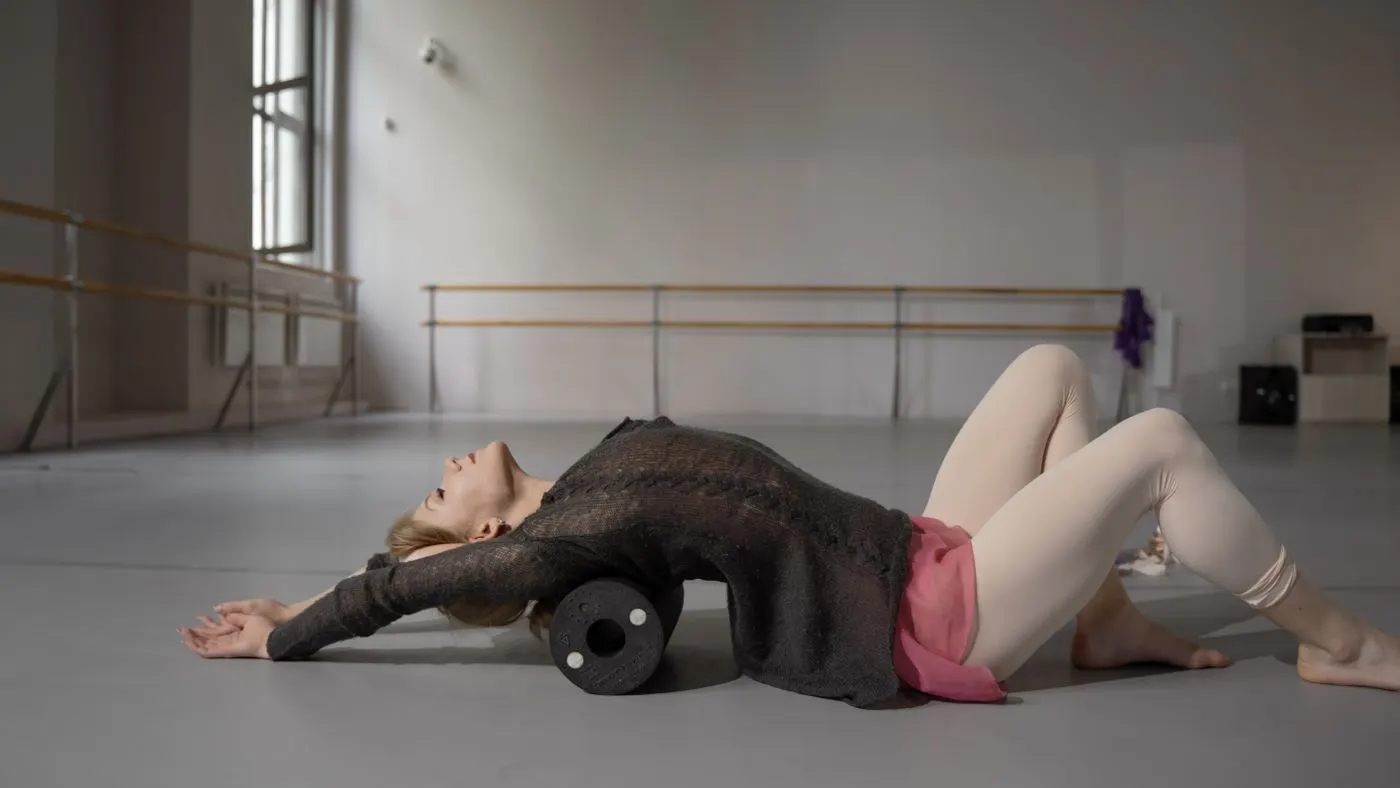
A long foam roller isn't only a massage tool. In Pilates foam roller exercises you lie along it, put your feet on it for a bridge and roll it under your shins like a reformer carriage. Each position changes how stable you are, and that's where most of the challenge comes from.
Below are 10 beginner Pilates foam roller exercises, plus a warm-up and cool-down. Each one comes from a named source, mostly Merrithew's free Foam Roller exercise guide and Pilates Anytime, with that source's reps, where the roller goes and an easier option where one is given.
How we researched this: We built this routine from Merrithew's free Foam Roller exercise guide (15 exercises), two Pilates Anytime articles (one by instructor Alison Manheim), Complete Pilates (clinical Pilates instructor Susan Chesters) and two medically reviewed Healthline articles. The research section draws on peer-reviewed studies, and the safety notes come from the Bone Health & Osteoporosis Foundation, Canada's osteoporosis guideline and ACOG. Merrithew, OPTP and Balanced Body sell rollers, so we label their claims as brand content. We don't coach or test workouts. Where we could read only a search snippet of a source, we say so. If you have a health condition, check with a clinician first. Every source is listed at the end.
Quick version:
- What you need: a firm, full-length (36") roller and a mat. Compare options in our best foam rollers for Pilates guide.
- Reps: mostly 3–10 per move or side, done slowly (Merrithew, Pilates Anytime).
- Too wobbly? Healthline suggests a half foam roller.
- Check first if: you're pregnant, have osteoporosis or low bone density, or have back pain or a recent injury.
What a foam roller adds to Pilates
Less to balance on. Merrithew says the full roller's "unstable nature and smaller base of support... helps you focus on balance and coordination" and that it "targets core stabilizers." That's brand wording, not a measured result.
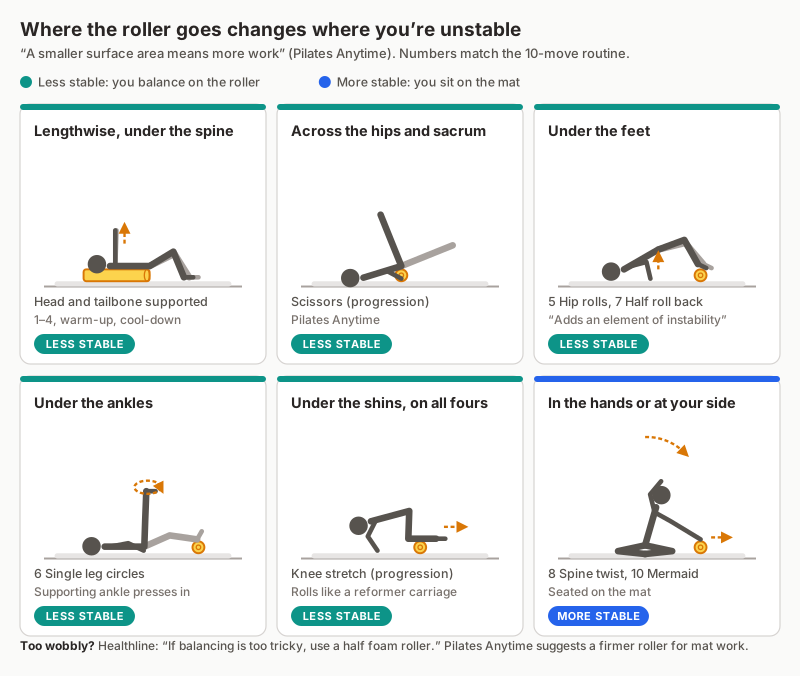
Pilates Anytime makes the same point more simply: "A smaller surface area means more work." Lying lengthwise on the roller for moves like the Chest Lift or Toe Taps is hard for that reason. Putting it under your feet in a bridge, or under the ankle of the resting leg in leg circles, "adds an element of instability."
A stand-in for studio equipment. Pilates Anytime uses the roller for Reformer-style moves such as the Knee Stretch series (on all fours, roller under the shins) and the Stomach Massage series (seated, roller under the balls of the feet). Complete Pilates' Susan Chesters says that with the roller under the shins it "acts like the moving carriage of the reformer," and that placed behind the mid-back it works a bit like a Pilates barrel for extension. If you like that idea, our best Pilates spine correctors guide covers the dedicated tool.
Firm, not soft. Pilates Anytime advises a firmer roller for mat exercise work and says softer rollers suit "rehabilitation or relaxation."
Need a roller? A full-length 36" model covers every move here.
Check price on AmazonBefore you start: setup and roller placement
For the moves where you lie along the roller, it should support your head and tailbone. Healthline says "tailbone and head," Pilates Anytime says "head and hips supported," and Merrithew's starting position is "lying on back on Foam Roller, neutral pelvis and spine." In practice that means a full-length 36" roller.
Where the roller goes in this routine:
- Lengthwise under the spine: warm-up, shoulder blade hugs, marching, dead bug, ab prep, cool-down
- Under the feet: hip rolls, half roll back
- Under the ankles: single leg circles
- In your hands or at your side: spine twist, push-up prep, mermaid
Merrithew says to "maintain control of the Foam Roller at all times."
Tap the diagram to enlarge
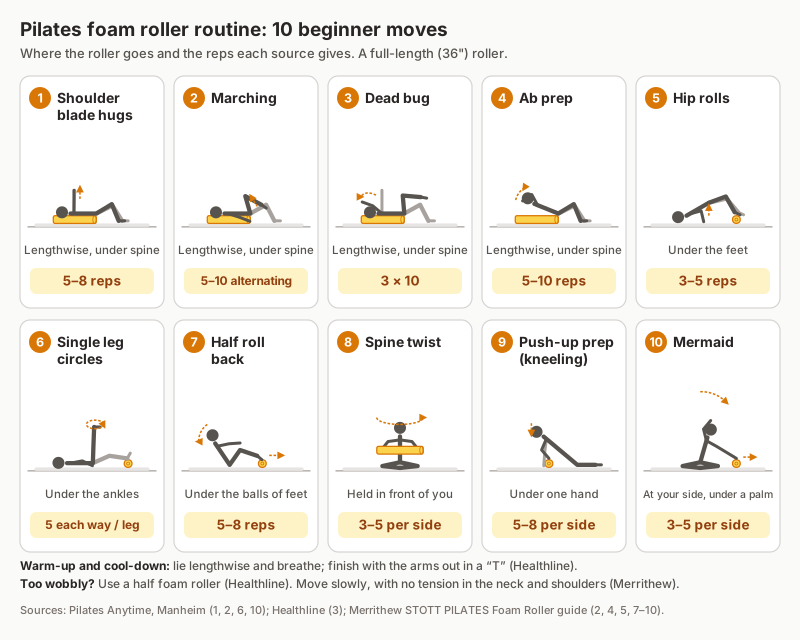
10 Pilates foam roller exercises for beginners
Merrithew's guide says to "perform exercises in a slow and controlled manner, avoid excessive tension in neck and shoulders." Stop any move that causes pain.
Tap the diagram to enlarge
Warm-up: spine rest (lie and breathe)
Lie lengthwise on the roller with your head and tailbone supported, knees bent and feet on the floor (Healthline, Pilates Anytime). Take a few slow breaths and find your balance.
1. Shoulder blade hugs
Roller: lengthwise. Reps: 5–8 (Pilates Anytime).
Reach your arms up in line with your shoulders, palms facing each other. Inhale and reach your fingertips toward the ceiling so your shoulder blades widen and lift. Exhale and "hug the shoulder blades around the sides of the Roller," as Pilates Anytime's Alison Manheim puts it.
2. Marching
Roller: lengthwise. Reps: 5–10, alternating legs (Pilates Anytime).
With your arms long at your sides, exhale and lift one knee toward your chest while pressing the other foot into the floor. Lower it and switch. Merrithew's "Leg Lift" is the same idea with the arms reaching toward the ceiling, 5–8 per leg, alternating.
3. Dead bug
Roller: lengthwise. Reps: 3 sets of 10 (Healthline).
Start with both arms reaching up and knees bent. Reach one arm overhead as the opposite knee comes toward your chest, then switch. Healthline says to keep your abs "tight and stable." Easier: keep your hands on the floor for balance (Fitness.com; we read only a snippet).
4. Ab prep (chest lift)
Roller: lengthwise. Reps: 5–10 (Merrithew, "Ab Prep 1").
Place your hands behind your head. Inhale and nod your chin. Exhale and curl your upper body off the roller, inhale and hold, then exhale and lower. Easier: Healthline suggests a half roller for the dead bug if balancing is hard; the same swap can help here. This is spinal flexion, so see the osteoporosis note below.
5. Hip rolls with your feet on the roller
Roller: under the feet, you on the mat. Reps: 3–5 (Merrithew).
Lie on the mat with your feet on the roller and arms long. Exhale and "roll spine off mat from tail to upper back," inhale and hold, then exhale and roll back down from your upper back to your tail. Pilates Anytime says feet on the roller in a bridge adds instability, so expect it to wobble.
6. Single leg circles
Roller: crosswise under the ankles. Reps: 5 each direction, per leg (Pilates Anytime).
Lift one leg toward the ceiling in line with your hip and draw a circle "as if you are drawing a circle on the ceiling with your big toe." Pilates Anytime says to keep it "small enough that you can maintain your form." Press the resting ankle into the roller without locking the knee. Alternative: Merrithew's version has you lying lengthwise on the roller with your feet on the mat, circling one leg from tabletop, 5 each direction per side.
7. Half roll back
Roller: under the balls of the feet, you seated. Reps: 5–8 (Merrithew).
Sit with your knees bent and the balls of your feet on the roller. Exhale and curve your lower back toward the mat, pressing the roller away. Inhale and roll forward, drawing the roller back in. This is spinal flexion, so see the osteoporosis note below.
8. Spine twist
Roller: held in your hands. Reps: 3–5 per side, alternating (Merrithew).
Sit cross-legged with your arms reaching forward, holding the roller. Exhale and rotate to one side for three counts, then come back to center. Switch sides. This is a rotation, so see the osteoporosis note below.
9. Push-up prep
Roller: under one hand. Reps: 5–8 per side (Merrithew).
Come into a plank with your knees down, one hand on the roller and the other on the mat. Bend your elbows for three counts, then press back up. Switch hands after your reps.
10. Mermaid side bend
Roller: upright at your side, under one palm. Reps: 3–5 per side (Pilates Anytime, Merrithew).
Sit in a Z-shape or cross-legged with the roller standing at your side and a palm on it. Reach the other arm overhead and bend sideways toward the roller, "letting it roll away from you." Easier: Pilates Anytime suggests sitting on a yoga block or rolled towel if sitting upright is hard.
Cool-down: chest opener
Lie lengthwise on the roller again and open your arms out to the sides in a "T." If you feel tingling, Healthline says to move your arms toward your sides until it stops. Healthline suggests staying "5-10 minutes."
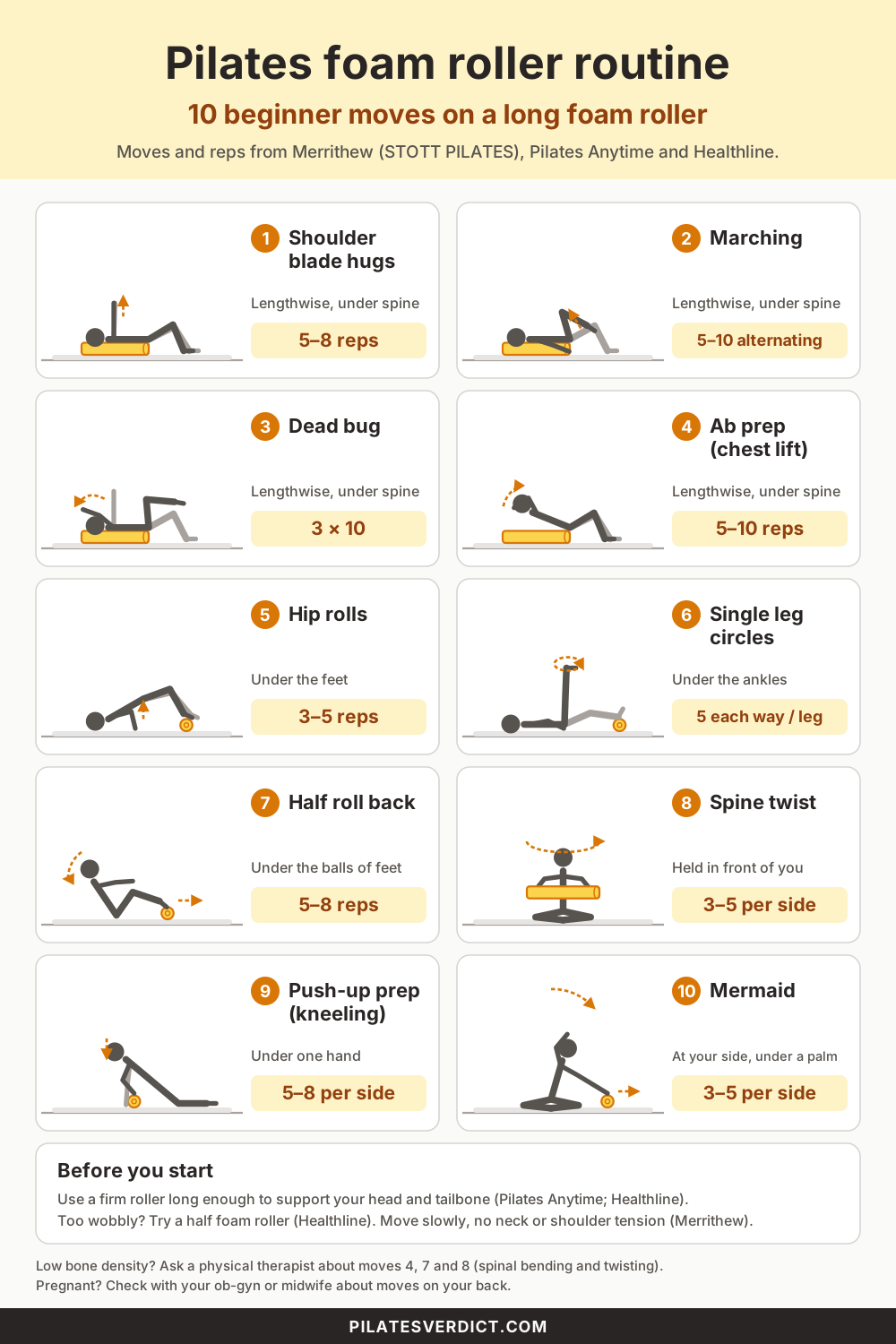
Foam roller Pilates workout at a glance
| Move | Roller | Reps | Easier |
|---|---|---|---|
| 1. Shoulder blade hugs | Lengthwise | 5–8 | Fewer reps |
| 2. Marching | Lengthwise | 5–10 alt. | Small lift |
| 3. Dead bug | Lengthwise | 3×10 | Hands on floor |
| 4. Ab prep | Lengthwise | 5–10 | Half roller |
| 5. Hip rolls | Under feet | 3–5 | Smaller roll |
| 6. Leg circles | Under ankles | 5 each way | Smaller circles |
| 7. Half roll back | Under feet | 5–8 | Smaller range |
| 8. Spine twist | In hands | 3–5/side | Smaller twist |
| 9. Push-up prep | Under 1 hand | 5–8/side | Fewer reps |
| 10. Mermaid | At your side | 3–5/side | Sit on a block |
Reps come from Pilates Anytime (1, 2, 6, 10), Healthline (3) and Merrithew (4, 5, 7, 8, 9). The "Easier" options come from Fitness.com (3), Healthline's half-roller tip (given for the dead bug), applied here to the ab prep (4) and Pilates Anytime (6, 10); the rest are simply smaller or fewer reps.
Tap the diagram to enlarge
How often to do this routine
None of our sources gives a weekly frequency for Pilates on a roller.
Healthline suggests 3–4 sessions a week, with 1 minute of rest between exercises, but that's for its own foam roller back routine, not this one.
US physical activity guidelines call for 150–300 minutes of moderate aerobic activity a week plus muscle-strengthening on at least 2 days, so treat this routine as part of your weekly strength and mobility work.
New to Pilates in general? Start with our Pilates exercises at home for beginners.
How to progress
When the routine feels steady, the sources suggest these next steps:
- Scissors with the roller across your hips: lie with the roller under your hips and sacrum and alternate legs, 8–10 reps (Pilates Anytime). If reaching for your calf is too hard, Pilates Anytime says to press your hands into the sides of the roller.
- Merrithew's harder moves: Ab Prep 2, Single Leg Stretch, Obliques Roll Back, Knee Stretch, Pike, a full push-up with your shins on the roller, and Bend & Stretch.
- Reformer-style work: Pilates Anytime's Knee Stretch and Stomach Massage series.
- Back extension: Complete Pilates' Susan Chesters uses the roller behind the mid-back like a Pilates barrel, supporting your spine as you extend it backward. She gives no reps. If you have osteoporosis or a recent injury, Complete Pilates advises getting professional advice first (see the safety notes below).
- A guided workout: Merrithew's Foam Roller Challenge DVD is rated Level 3 of 5, with 21 exercises in a 27-minute workout (we read only a snippet of the listing). Balanced Body also sells a Mat and Roller Exercise Guide (snippet).
What the research says
The research on Pilates with a foam roller is thin and mixed.
- Roller vs. floor: Tahara and colleagues (Journal of Bodywork and Movement Therapies, 2024) had 30 women aged 25–35 with no Pilates experience do the single leg stretch and single straight leg stretch on the floor and on a foam roller. Surface EMG showed no significant difference in rectus abdominis and external oblique activity during short holds (immediate effects only): "These findings do not indicate the influence of the surface (ground versus FR)." The authors call for longer-term studies.
- An older ultrasound study: a Korean study of 20 healthy adults reported thicker deep abdominal muscles (transversus abdominis and internal oblique) during a single-leg hold on a roller than on a stable surface. We read only a snippet, not the full abstract.
- A roller-based training program: Ryu and colleagues (Journal of Exercise Rehabilitation, 2024) randomized 32 women aged 65 and older to a 6-week foam roller-based program (stretching, strength and aerobic work, 3 times a week) or a control group. The exercise group improved in strength, lower-limb flexibility, agility, walking speed and balance. It was one small trial in older women, and it wasn't a Pilates program.
- Foam rolling as massage: a 2019 meta-analysis of 21 studies by Wiewelhove and colleagues found small gains in sprint performance (+0.7%) and flexibility (+4.0%) from rolling before exercise, and less perceived muscle pain (+6.0%) after. The authors call the effects "rather minor and partly negligible, but can be relevant in some cases."
The bottom line: a roller adds variety and a balance challenge, but there's little direct evidence that it makes Pilates moves work your core harder. If you already own a mat and want a cheap way to add challenge, it's worth trying; if you want proven extra core work, the evidence isn't there yet.
Safety: who should modify
General stop signs. Merrithew's guide says to consult a physician before starting an exercise program and to stop if you have "chest pain, feel faint, have difficulty breathing, or experience muscular or skeletal discomfort." Don't use a roller that looks worn or damaged. Complete Pilates says rolling "should never be intensely painful," and that "recent injury, osteoporosis, certain medical conditions or persistent pain" call for professional advice.
Lower back. When rolling the spine for massage, Healthline (medically reviewed by Micky Lal, CSCS) says to "avoid going lower than your mid-back, which is where your rib cage ends," and to stop if you feel intense pain. That's about rolling, not lying still on the roller as in this routine.
Osteoporosis or low bone density. The Bone Health & Osteoporosis Foundation says people with spinal bone loss shouldn't "bend forward from the waist," "twist and bend at the torso (trunk) to an extreme," or "do toe-touches, sit-ups or abdominal crunches." Canada's 2023 osteoporosis guideline advises modifying rapid, repetitive, sustained, weighted or end-range spinal flexion and twisting (we read the wording in a summary presentation). In this routine, that affects the ab prep, half roll back and spine twist. Ask a physical therapist which versions suit you.
Pregnancy. ACOG lists modified Pilates as generally safe during pregnancy and advises avoiding lying flat on your back as much as possible (we read only a snippet). Most moves here are done on your back, so get clearance from your clinician and lean on the seated, side and kneeling options: mermaid, spine twist and push-up prep.
Balance trouble. If you can't stay steady on a full roller, Healthline suggests a half roller. For the dead bug, you can keep your hands on the floor.
Which roller works for these moves
For moves where you lie along it, you need a full-length 36" roller, and Pilates Anytime advises a firmer one for mat work. Healthline suggests a half roller if balancing is too hard. OPTP says its half-round is more stable flat side down and more challenging round side down (snippet of OPTP's own copy). If a firm roller feels uncomfortable to lie on, a softer one is an option, but Pilates Anytime says soft rollers mainly suit rehab or relaxation.
OPTP PRO-ROLLER Standard Density Foam Roller (36" x 6")
- Best for
- Standard-density 36" roller
- Price tier
- $30–60
Merrithew STOTT PILATES Foam Roller Deluxe (36")
- Best for
- Roller named in Merrithew's guide
- Price tier
- $50–80
OPTP PRO-ROLLER Standard Density Half-Round (36" x 3")
- Best for
- Half roller for more stability
- Price tier
- $30–60
Amazon Basics High-Density Foam Roller (36")
- Best for
- Budget 36" roller
- Price tier
- Under $30
Yes4All High-Density EPP Half Round Foam Roller
- Best for
- Budget half roller (pick 36")
- Price tier
- Under $30
| Product | Best for | Price tier | |
|---|---|---|---|
| OPTP PRO-ROLLER Standard Density Foam Roller (36" x 6") | Standard-density 36" roller | $30–60 | View |
| Merrithew STOTT PILATES Foam Roller Deluxe (36") | Roller named in Merrithew's guide | $50–80 | View |
| OPTP PRO-ROLLER Standard Density Half-Round (36" x 3") | Half roller for more stability | $30–60 | View |
| Amazon Basics High-Density Foam Roller (36") | Budget 36" roller | Under $30 | View |
| Yes4All High-Density EPP Half Round Foam Roller | Budget half roller (pick 36") | Under $30 | View |
For the full comparison, see our best foam rollers for Pilates guide. You'll also want a mat underneath: see our best Pilates mats. For more routines, browse our Pilates workouts.
Frequently Asked Questions
Can beginners do Pilates on a foam roller?
Yes, if you start with moves where your feet stay on the floor or the roller sits under your feet. Shoulder blade hugs, marching and hip rolls are examples from Pilates Anytime and Merrithew. If balancing lengthwise feels unsteady, Healthline suggests a half foam roller.
What size foam roller do you need for Pilates?
For moves where you lie along the roller, it has to support your head and tailbone (Healthline, Pilates Anytime), which in practice means a full-length 36-inch roller. Pilates Anytime recommends a firmer roller for mat work and a softer one for rehab or relaxation.
Does doing Pilates on a foam roller work your core harder?
The evidence is mixed. A 2024 study of 30 women found no significant difference in rectus abdominis and external oblique activity between the floor and a roller during short holds of two Pilates exercises (immediate effects only). An older ultrasound study reported thicker deep abdominal muscles on a roller (we read only a snippet). Instructors use the roller mainly to add a balance challenge.
Is it safe to foam roll your lower back?
Healthline advises not rolling lower than your mid-back, where the rib cage ends, and stopping if you feel intense pain. Lying still on the roller lengthwise is a different thing. People with osteoporosis should ask a physical therapist before doing spinal flexion or twisting moves.
Can a foam roller replace a reformer?
Not fully, but it can mimic some moves. Complete Pilates says a roller under the shins acts like the reformer's moving carriage, and Pilates Anytime uses it for Reformer-style Knee Stretch and Stomach Massage series. It has no springs, so it adds instability rather than resistance.
How many reps should I do?
Most moves in Merrithew's guide call for 3–10 reps, and Pilates Anytime uses 3–10 per move or side. Quality matters more than volume: Merrithew says to move slowly and with control and to avoid tension in your neck and shoulders.
Sources
- Pilates Anytime (Alison Manheim; June 21, 2023): 5 Pilates foam roller moves
- Pilates Anytime (Nov 3, 2023): Foam roller Pilates workouts: more than a massage
- Merrithew (brand): Foam Roller exercise guide (PDF)
- Merrithew (brand): Downloadable exercise guides
- Merrithew (brand; snippet only): Foam Roller Challenge DVD
- Healthline (Kristen Barta; reviewed by Peggy Pletcher, MS, RD; July 20, 2017): Easy foam roller stretches for muscle pain
- Healthline (Emily Cronkleton; reviewed by Micky Lal, MA, CSCS; Mar 5, 2026): 6 foam roller exercises for your back
- Complete Pilates (Susan Chesters; July 28, 2026): Pilates foam roller: benefits, exercises and guide
- Fitness.com (snippet only): Dead bug with the foam roller
- Balanced Body (brand; snippet only): Mat and Roller Exercise Guide
- OPTP (brand; snippet only): Half-roller resource
- Tahara et al., Journal of Bodywork and Movement Therapies (2024; vol. 40): Pilates exercises with and without a foam roller and abdominal muscle activity
- Korean ultrasound study (snippet only): Abdominal muscle thickness on a foam roller
- Ryu et al., Journal of Exercise Rehabilitation (2024): Foam roller-based combined exercise in older women
- Wiewelhove et al., Frontiers in Physiology (2019): A meta-analysis of the effects of foam rolling on performance and recovery
- ODPHP: Physical Activity Guidelines, top 10 things to know
- Bone Health & Osteoporosis Foundation: Protecting your spine
- Canadian osteoporosis guideline (CMAJ 2023), summary presentation (snippet only): Canadian osteoporosis guideline presentation (2024)
- ACOG (snippet only): Exercise during pregnancy
Update history
- : Published.
Found an error? See how we research and correct guides in our editorial policy.
Was this guide helpful?
Related Articles
How-To
Pilates band exercises for beginners: a 10-move routine
10 beginner Pilates band exercises with where the band goes, reps from Merrithew and Pilates instructors, band safety tips and what the research says.
October 10, 2026 · 21 min read
How-To
Pilates bar exercises for beginners: an 8-move routine
8 Pilates bar exercises for beginners: setup, 4 standing and 4 mat moves, reps, band safety and how a bar compares with a reformer, all from named sources.
October 10, 2026 · 17 min read
How-To
28-Day Wall Pilates Challenge: A Free Schedule and What to Expect
Free 28-day wall Pilates challenge options, a 4-week schedule with rest days, 8 sourced moves, and what 28 days can realistically change.
October 7, 2026 · 16 min read
How-To
Pilates ball exercises: a 10-move mini ball routine for beginners
10 Pilates ball exercises for beginners, with where the mini ball goes, reps and easier versions from named instructors, plus size, inflation and safety tips.
October 7, 2026 · 18 min read