Lagree vs. Pilates: Megaformer vs. Reformer, and Which to Choose
By The Pilates Verdict Team · November 19, 2026 · 14 min read
This article contains affiliate links. If you buy through them, we may earn a commission at no extra cost to you. As an Amazon Associate I earn from qualifying purchases. Read our affiliate disclosure.
Lagree vs. Pilates comes down to intensity and access: Pilates is a broad, generic method that suits beginners and rehab, while Lagree is a branded, slow, high-intensity workout on a different machine, the Megaformer. They look alike because both use a sliding carriage and springs, and the studios often sit on the same block. That's why many people assume Lagree is just a harder kind of Pilates. Its founder says it isn't, and the two classes feel quite different once you're on the machine.
How we researched this: We read Lagree Fitness's own method pages, the Pilates Method Alliance's history of Pilates, and comparison articles from Women's Health, theSkimm (via Well+Good) and Woman & Home. For evidence, we looked at a Cochrane review and a 2023 meta-analysis on Pilates, an ACE-sponsored heart-rate study, one Lagree studio's class policies and schedule, and class-length details from Club Pilates and Balanced Body. We didn't take classes or try machines ourselves. All sources are listed at the end.
The short answer
- Choose Pilates if you're new to exercise, coming back from an injury, or want mobility, posture and core control at a pace that varies from class to class.
- Choose Lagree if you already have a fitness base and want a slow, high-intensity strength and endurance class with very little rest.
- Or do both. Sebastien Lagree himself suggests "one to two pilates sessions per week coupled with three Lagree classes," according to Women's Health. If you go this route, our Pilates and strength training schedule shows how to fit Pilates into a weekly plan.
Lagree vs. Pilates at a glance
| Lagree | Pilates | |
|---|---|---|
| Created by | Sebastien Lagree, 1990s–2000s (dates vary by source) | Joseph Pilates (1883–1967) |
| Machine | Megaformer (and other Lagree machines) | Reformer, mat and other apparatus |
| Tempo | Very slow, moves of 1 minute or more | Varies; shorter holds |
| Rest | Minimal | More breaks |
| Class length | 40 min at Lagree West (50 advanced) | 50 min at Club Pilates |
| Intensity | High intensity, low impact | Lower intensity (classical) |
| Beginners | Needs a basic fitness level | Broadly accessible |
| Research | No independent studies found | Reviews on back pain and more |
| Who can teach it | Certified Lagree instructors | "Pilates" is a generic term |
What each method is
Pilates was developed by Joseph Pilates. According to the Pilates Method Alliance (PMA), he published Your Health in 1934 and Return to Life Through Contrology in 1945, and invented the Universal Reformer, the Trapeze Table, the Wunda Chair and the Magic Circle, among other apparatus.
Lagree (also called Lagree Fitness or the Lagree Method) was developed by Sebastien Lagree starting in the late 1990s, per the company. Sources don't agree on the exact date: Lagree Fitness's method page starts its timeline in 1998, Women's Health says the 1990s and places it in Los Angeles, and theSkimm (summarizing Well+Good) says 2006.
Lagree Fitness says the method rests on five components of fitness:
- Endurance
- Cardiovascular fitness
- Body composition
- Flexibility
- Strength
The company also says there are "more than 600 studios worldwide," a figure Women's Health repeats.
Women's Health reports that Lagree created his method because clients wanted "more aesthetic results" from Pilates. But he rejects the idea that Lagree is a type of Pilates, and Lagree Fitness's own Lagree vs. Pilates page says "Lagree is not Pilates, reformer Pilates, or a modern variation of Pilates." "If you look at the foundations of Pilates, there was nothing about training techniques or eccentric overload," he told Well+Good.
How they differ
The machine: Megaformer vs. reformer
Tap the diagram to enlarge
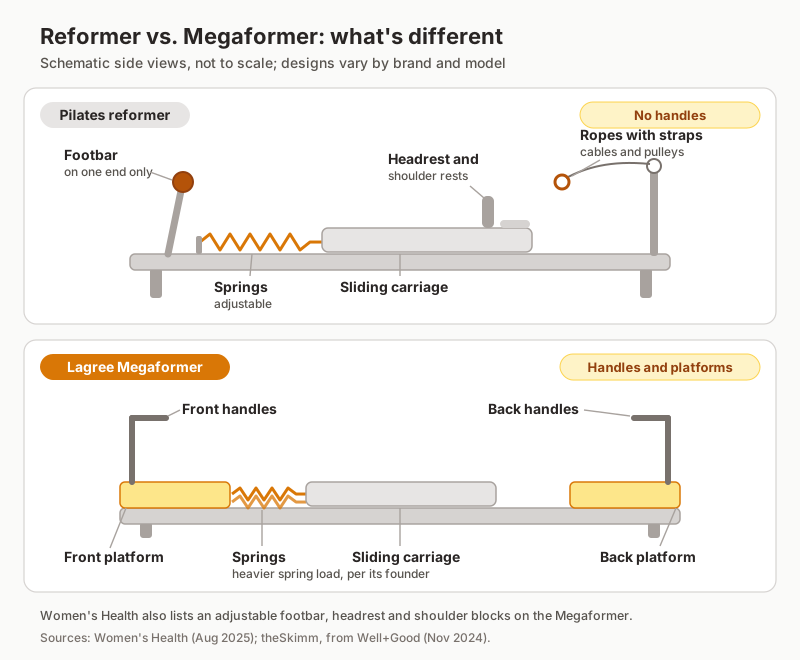
According to Women's Health, a classic Pilates reformer uses "a system of cables and springs" and has "only a foot bar on one end," with no handles. The Megaformer adds "handles in the front and the back," "an adjustable footbar and headrest, and shoulder blocks." Sebastien Lagree also says "the springload is heavier." theSkimm/Well+Good describes platforms at both the front and back of the Megaformer, plus handrails.
That doesn't make the reformer the simpler tool. Master Pilates educator Shannon Willits, who owns three Club Pilates studios in Florida, told Well+Good the reformer is "versatile," with adjustable springs "allowing for a wide variety of exercises." If you're still deciding between reformer and mat Pilates, see our reformer vs. mat Pilates comparison.
Lagree Fitness sells several machines, including the Micro, Micro Pro, Mini, Mini Pro, Mega Pro and EVO Pro.
Tempo and time under tension
Tap the diagram to enlarge
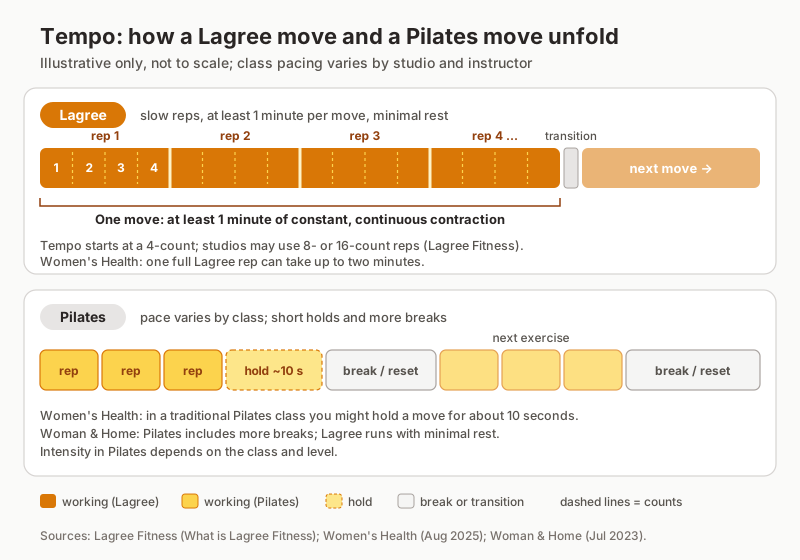
Slow tempo is the core of Lagree. Lagree Fitness says its standard tempo starts at a 4-count, and studios may use 8- or 16-count reps. The company wants "each move to be performed for at least 1 minute, with constant and continuous muscle contraction." Women's Health puts it more bluntly: in Lagree "you might take up to two minutes to do one full rep," while in a traditional Pilates class you might hold a move "for 10 seconds."
theSkimm/Well+Good explains the goal: the slow tempo creates "time under tension," which is how Lagree stays intense without jumping or pounding.
Rest and transitions
Lagree Fitness lists "Effective Transition" among its "Five Magic Keys," along with resistance, range of motion, tempo and duration. In practice, that means little downtime between moves. Mona Halawi, a Lagree instructor and founder of MAD Lagree Studios in London, told Woman & Home, "You take a lot of breaks in Pilates workouts, whereas in Lagree you move really quickly and target the same muscle groups." She added that her classes "spend up to 12 minutes working on one leg."
Class length and format
Lagree classes are often shorter. Lagree West's signature Megaformer class runs 40 minutes with a maximum of 20 people, and its advanced class runs 50 minutes, according to the studio's class page. Club Pilates says its reformer classes run 50 minutes and are capped at 12 reformers. Balanced Body, which makes reformers, describes reformer sessions of 30 to 60 minutes, so check the listing when you book.
Intensity and goals
Women's Health says Pilates focuses on "overall well-being, strength and stability, and flexibility and balance," while Lagree is designed to "change your body composition." theSkimm/Well+Good calls Lagree "high-intensity, low-impact" and describes classical Pilates as lower intensity. Keep in mind that Pilates classes range widely, and some reformer classes are much harder than others.
Who can teach it
This is the difference most people miss. The PMA says an October 2000 trademark lawsuit ruled that "Pilates" is a "generic designation" for a method of exercise, so anyone can teach a class called Pilates. Lagree is a brand. Lagree Fitness says its studios need "certified Lagree instructors," and it sells an annual commercial license for its Micro machine.
What the research says
Pilates
- Back pain: A Cochrane review (Yamato et al., republished in Spine in 2016) found "low- to moderate-quality evidence that Pilates is more effective than minimal intervention" for low back pain. It also found "no conclusive evidence that Pilates is superior to other forms of exercises."
- Chronic low back pain: A 2023 meta-analysis of randomized trials (Huang and Park, Physical Activity and Nutrition) concluded Pilates "may be an effective strategy to improve pain and disability."
- Cardio: In an ACE-sponsored study of 15 women with Pilates experience, the advanced 50-minute routine averaged 62% of maximum heart rate. The beginner routine averaged 54%. ACE concluded "the cardiovascular benefits of Pilates appear to be limited," though ACE chief exercise physiologist Cedric X. Bryant said Pilates still offers "improved body mechanics, balance, coordination, strength and flexibility." This was mat work, not reformer.
Lagree
We couldn't find any peer-reviewed study measuring Lagree or Megaformer workouts, either for energy use or for health outcomes. You'll see per-class calorie and heart-rate numbers online, but they come from the founder and studios, not independent research. That's why we don't repeat them here. It's fair to say Lagree is designed to be more intense than most Pilates. How much more hasn't been measured.
Who should start with which
Beginners
"You need a basic amount of fitness when you do this workout. It's not for everyone," Sebastien Lagree told Well+Good. By contrast, certified Pilates instructor Kevyn Zeller told Well+Good that classical Pilates is "accessible to all populations" and that the equipment can "support them as they heal injuries." She also warned that "if someone jumps into a class before they've developed the skills necessary to support the work with muscular integrity, there is potential for injury to occur," and recommends starting with a beginner class.
If you're brand new, Pilates is the gentler entry point. Our first reformer Pilates class guide covers what to expect.
Injuries, surgery and pregnancy
Well+Good's advice: "If you're someone with a lot of injuries, you may want to steer clear of Lagree until you're fully healed and back at your peak fitness level."
Studio policies vary. As one example, Lagree West advises against class if you're recovering from knee, back or shoulder surgery until your doctor clears you. For pregnancy, it says that if you took Lagree regularly before, you may continue "as long as you feel comfortable and have your doctor's approval." It also says people new to Lagree shouldn't start it while pregnant, because doctors don't recommend taking up a new workout during pregnancy, "especially something as core-intensive as Lagree West." That's one studio's policy, not medical guidance. If you're pregnant, injured or recovering from surgery, check with your doctor before starting either method.
Can you do either at home?
Yes, though the options are very different. A Pilates reformer isn't a Megaformer. Women's Health notes the reformer has "only a foot bar on one end" and no handles, so Lagree moves that use the front and rear platforms and handles don't carry over directly.
The Lagree Micro
The Micro is Lagree Fitness's compact home machine, sold through lagreefitness.com and the Lagree Shop. The brand presents it as Lagree, not a Pilates reformer.
- Size and weight: About 71 × 18.5 inches, about 9 square feet, and about 53 lb, according to lagreefitness.com. The Lagree Shop lists different figures (91.5 × 24 × 6 inches and 98 lb, or 60 lb for the base), so the specs conflict between the brand's own pages.
- What's included: The Lagree Shop lists the base Micro as the machine with a front platform and says it has transport wheels. Bundles add handlebars, a rear platform, straps and, in higher tiers, carriage cables and handles.
- Warranty: 5-year limited warranty, per lagreefitness.com.
- Not published: Maximum user height and weight.
Who What Wear's Kia Topps used the Micro for 30 days (review updated October 2022). She found it challenging, quick and modifiable, and liked that it stores under furniture. On the downside, she called it "extremely difficult" even at beginner level, noted hand and upper-body fatigue and a learning curve without a Pilates background, and found it too heavy to move alone. Her review predates the current bundles.
Pros
- ✓ Compact, stores under furniture (Who What Wear)
- ✓ Moves can be modified (Who What Wear)
- ✓ Transport wheels (Lagree Fitness)
- ✓ 5-year limited warranty (Lagree Fitness)
Cons
- ✗ Very hard even at beginner level (Who What Wear)
- ✗ Hand and upper-body fatigue (Who What Wear)
- ✗ Specs differ between brand pages
- ✗ Max user height and weight not published
For home Pilates, a reformer is the closer match to a studio class. Our guide to the best home Pilates reformers compares the options, and our checklist on whether a home Pilates reformer is worth it helps you decide before you spend. If you want a lower-cost reformer to try at home, the AeroPilates 287 is one of the budget picks in that guide:
Check price on AmazonWhat to wear to either class
Lagree West says "Grip Socks are required at all Lagree West studios and are available for purchase." Shoes come off at the entrance, and first-timers should arrive 10 to 15 minutes early. Reformer studios commonly require grip socks too. Our guide on whether you need grip socks for Pilates explains why, and our best Pilates grip socks roundup compares options.
Browse more Pilates workouts guides.
The verdict
Lagree and Pilates share a sliding carriage and springs, but not much else. Pilates is the more flexible, accessible method, with research behind it for back pain. Lagree is a branded, slow, high-intensity workout for people who already have a fitness base, and it hasn't been studied independently yet. If you're new or working around an injury, start with Pilates. If you want a tougher class and you're healthy, try Lagree, or mix the two the way its founder suggests.
Whichever class you book, most studios require grip socks.
Check price on AmazonFrequently Asked Questions
Is Lagree a type of Pilates?
Not according to its founder. Sebastien Lagree told Well+Good that Pilates had "nothing about training techniques or eccentric overload," and Lagree Fitness says "Lagree is not Pilates, reformer Pilates, or a modern variation of Pilates." It's sold as a licensed method taught by certified instructors. It does use a spring-loaded sliding carriage like a reformer, which is why people often lump the two together.
Is Lagree harder than Pilates?
Most sources describe Lagree as higher intensity. theSkimm/Well+Good calls it "high-intensity, low-impact" and classical Pilates lower intensity, and London studio founder Mona Halawi told Woman & Home, "You take a lot of breaks in Pilates workouts." Pilates intensity still varies by class and level.
Is Lagree good for beginners?
Sebastien Lagree says "You need a basic amount of fitness when you do this workout. It's not for everyone." Studios such as Lagree West ask first-timers to arrive 10 to 15 minutes early. Pilates is often described as the more accessible starting point.
Does Lagree burn more calories than Pilates?
We couldn't find an independent study measuring Lagree calorie burn. Per-class figures come from studios. An ACE-sponsored study found the cardiovascular benefits of mat Pilates "appear to be limited." Lagree is designed to be more intense, but reliable numbers aren't available.
Is Lagree or Pilates better for weight loss?
Lagree is designed to "change your body composition," per Women's Health, but we couldn't find an independent study comparing the two for weight loss. An ACE-sponsored study found the cardiovascular benefits of mat Pilates "appear to be limited." Neither has been shown to beat the other for weight loss.
Is Lagree low impact?
theSkimm/Well+Good calls Lagree "high-intensity, low-impact," and Lagree Fitness uses the same words. Low impact doesn't mean it suits every joint problem, though. Lagree West advises against class while recovering from knee, back or shoulder surgery until a doctor clears you.
What is 'Lagree Pilates'?
It's a common name, but Lagree Fitness says "Lagree is not Pilates, reformer Pilates, or a modern variation of Pilates." People use the phrase because the Megaformer, like a reformer, has a spring-loaded sliding carriage. Lagree is a branded method taught by certified Lagree instructors, while "Pilates" is a generic term, per the Pilates Method Alliance.
Can you do Lagree at home?
Yes. Lagree Fitness sells the Micro, a compact home machine the brand lists at about 71 × 18.5 inches and about 53 lb. The Lagree Shop sells bundles that add handlebars and a rear platform.
Sources
- Lagree Fitness: About Lagree Fitness, Lagree vs. Pilates, The Lagree Method and The Lagree Fitness Micro
- Lagree Shop: The Micro by Lagree Fitness
- Women's Health via AOL, Renee Cherry: Lagree vs. Pilates: Which workout is more effective? (Aug. 19, 2025)
- theSkimm (from Well+Good): What's the difference between Lagree and Pilates (Nov. 1, 2024)
- Woman & Home, Alice Porter: What is Lagree? (July 20, 2023)
- Pilates Method Alliance: Pilates history
- Lagree West: FAQ and policies and Classes
- Club Pilates (brand): Your first Reformer Pilates class: a beginner's guide
- Balanced Body (brand): Everything you need to know about Reformer Pilates
- Yamato et al., Spine, 2016: PubMed
- Huang and Park, Physical Activity and Nutrition, 2023: PubMed
- American Council on Exercise: ACE study evaluates benefits of Pilates (Jan. 19, 2006)
- Who What Wear, Kia Topps: I tried a Lagree Microformer for 30 days (updated Oct. 24, 2022)
Update history
- : Published.
Found an error? See how we research and correct guides in our editorial policy.
Was this guide helpful?
Related Articles
Comparison
Reformer Pilates vs. Mat Pilates: Which Is Right for You?
Springs or body weight, studio or living room? Here's how reformer and mat Pilates differ in difficulty, cost and results, and what the research actually shows.
October 5, 2026 · 8 min read
How-To
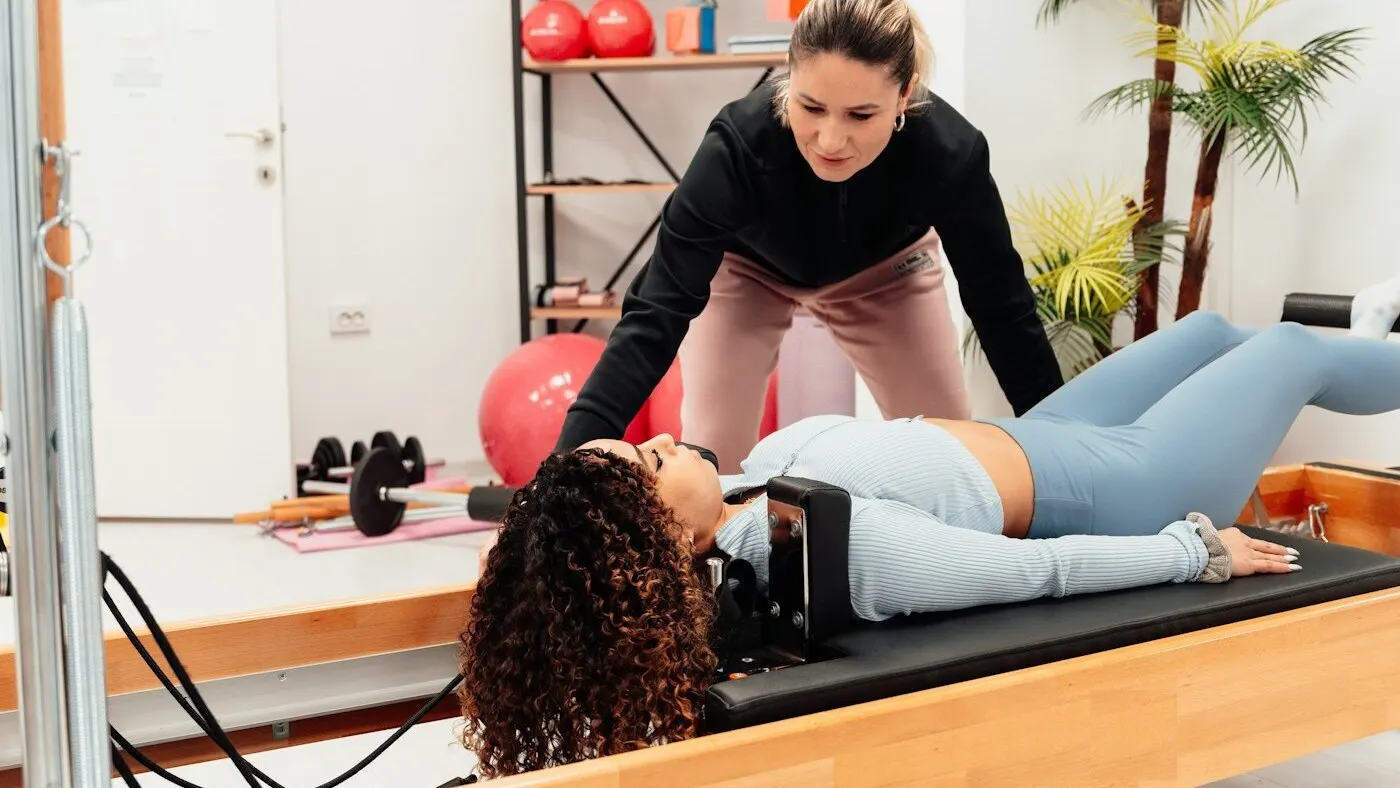
First reformer Pilates class: what to expect, step by step
What happens at a first reformer Pilates class: which class to book, how the springs and carriage work, what to wear, and how sore you'll be afterward.
October 6, 2026 · 12 min read
How-To
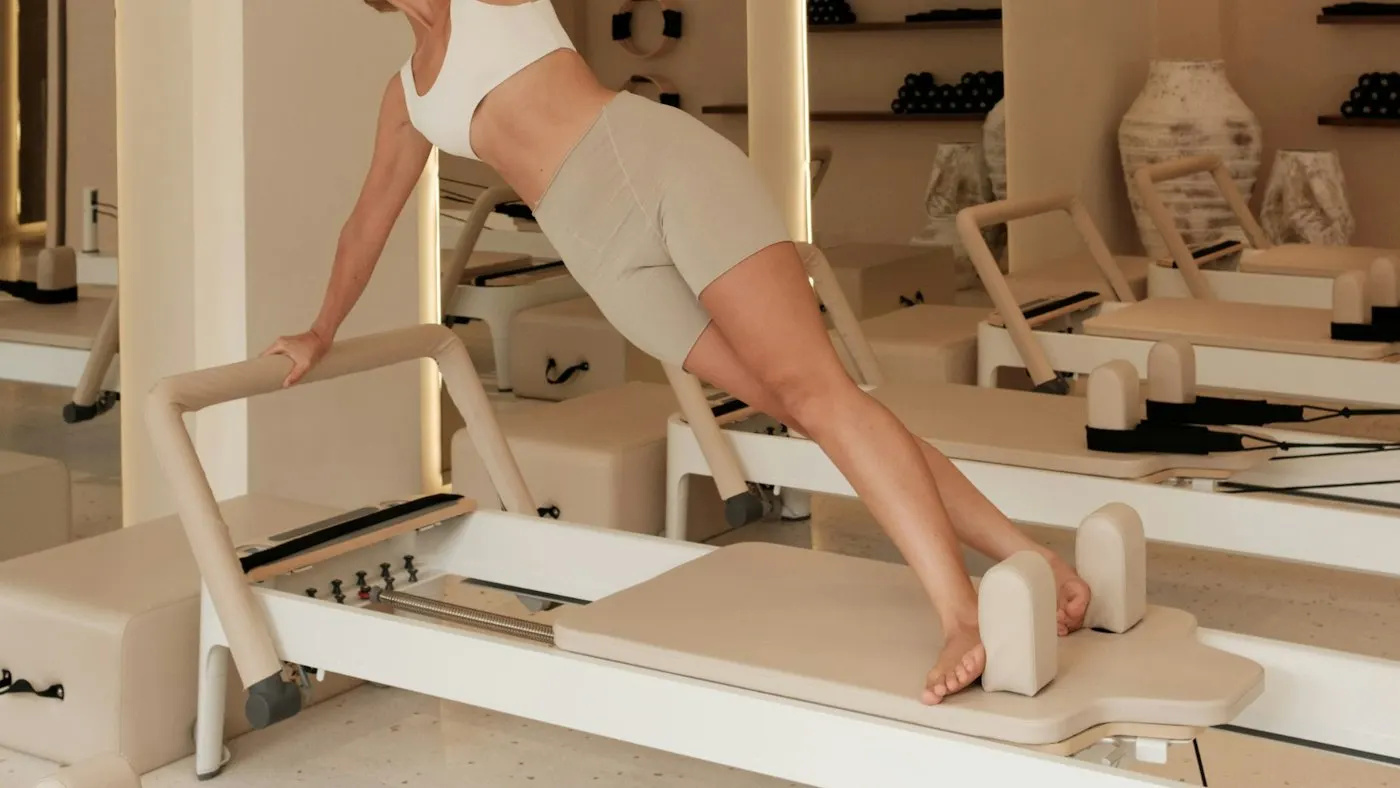
Is a home Pilates reformer worth it? A 5-question checklist
Is a home Pilates reformer worth it? Do the break-even math, check your space and fit, and see what research and owner reviews say before you buy.
October 6, 2026 · 16 min read
How-To
Pilates workout plan: 2–5 day weekly schedules (plus lifting)
An at-home Pilates workout plan with weekly schedules for 2–5 days, sample splits for combining Pilates with strength training, and how to progress.
November 20, 2026 · 27 min read